
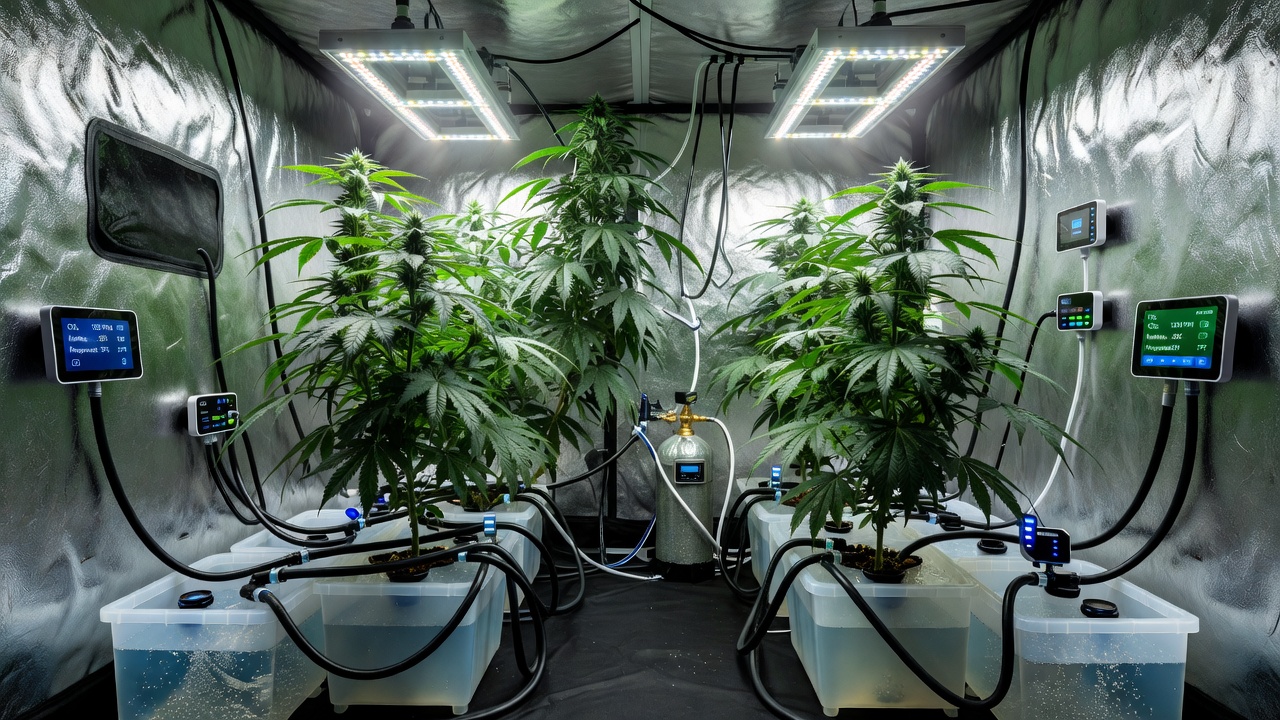
Introduction to CO2 Supplementation in Indoor Cannabis Cultivation
Implementing CO2 supplementation safely transforms indoor hydroponic cannabis setups, especially within grow tents. In 2026, home growers benefit from advanced sensors and efficient delivery methods that boost photosynthesis without risking plant health or personal safety. This guide focuses on hydroponic systems using indoor seeds, integrating seamlessly with modern grow lights. By raising ambient carbon dioxide levels, growers can accelerate metabolic processes, allowing plants to convert light energy into biomass more efficiently during both vegetative and flowering phases. In practice, a typical 4×4 foot tent equipped with a 600-watt LED array sees visible growth spurts within days of stable enrichment, provided temperatures stay between 75-85°F and relative humidity hovers around 50-60 percent during lights-on periods.
CO2 enrichment raises ambient levels to accelerate growth rates, leading to higher yields. However, precise control is essential in enclosed tent environments where ventilation and humidity interact closely with supplementation. For example, introducing CO2 without adjusting exhaust fans can lead to rapid humidity spikes that invite mold; experienced cultivators therefore pair enrichment with dehumidifiers rated for at least 70 pints per day in medium-sized tents. Hydroponic reservoirs also benefit because faster transpiration increases nutrient uptake, but this demands more frequent reservoir checks to maintain EC levels between 1.2-1.8 mS/cm depending on the growth stage.
Optimal PPM Levels for Cannabis in Hydroponics
Maintaining the right CO2 concentration is critical. Most cannabis strains thrive at 1000-1500 PPM during the vegetative and flowering stages when paired with adequate lighting. Levels above 2000 PPM offer diminishing returns and potential stress. In a real-world 5×5 tent running two 1000-watt LEDs, dialing the controller to 1200 PPM during weeks three through six of flower has produced 15-20 percent denser colas compared to ambient runs at 400 PPM. Start supplementation once seedlings establish roots in your hydroponic reservoir, typically around day 10-14 after germination when the first true leaves appear and roots reach three inches. Monitor daily as plant uptake varies with temperature and light intensity; a sudden 10-degree temperature rise can increase demand by 20 percent, requiring controller recalibration.
Use digital controllers calibrated for 2026 models that automatically adjust based on real-time readings. These units often include hysteresis settings so the solenoid valve activates only when levels drop below 1100 PPM, preventing wasteful overshoot. Practical growers log daily averages and correlate them with dry biomass at harvest to fine-tune targets for each specific strain.
Monitoring Techniques and Tools
Invest in reliable NDIR CO2 monitors placed at canopy height. Pair these with apps that log data over weeks, helping refine schedules for maximum efficiency. Regular calibration prevents drift common in older units; most 2026 models recommend a two-point calibration using 400 PPM outdoor air and a certified 1500 PPM test gas every 90 days. Position the sensor midway between the canopy and the top of the tent, away from direct fan blasts that could give false lows.
- Check levels at lights-on and peak intensity periods, ideally 30 minutes after sunrise and again at midday when photosynthetic demand peaks.
- Adjust for tent size to avoid hotspots; in tents larger than 4×4, add a small oscillating fan on low to circulate enriched air without creating negative pressure that pulls in fresh CO2-poor air.
- Combine with temperature and humidity sensors for holistic control, using a single smart hub that triggers ventilation overrides if humidity exceeds 65 percent while CO2 is active.
Many growers also place a secondary backup monitor near the floor to detect stratification, since CO2 is heavier than air and can pool if circulation is inadequate.
Compatible Delivery Systems for Grow Tents
Popular options include CO2 tanks with regulators, generators, and inline injection systems. Tanks suit smaller tents for precise dosing, while generators handle larger spaces but require proper exhaust planning. A 20-pound tank with a single-stage regulator set to 20 PSI typically lasts 10-14 days in a 4×4 tent running 12 hours daily at 1200 PPM. Inline systems connected to the intake duct provide the most uniform distribution; place the injection point six inches upstream of the fan so turbulent airflow mixes the gas thoroughly before it reaches plants.
Integrate delivery near intake fans for even distribution. Avoid direct plant exposure to prevent burns from concentrated gas.
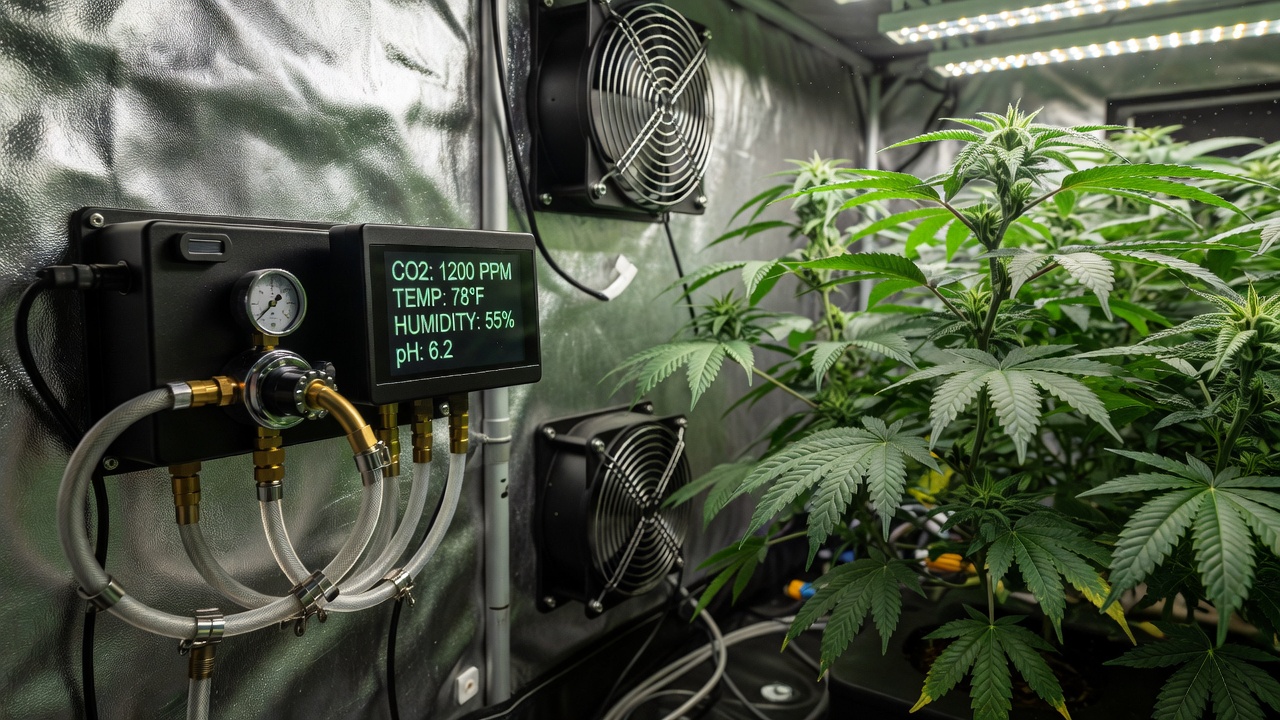
For generators, position the unit outside the tent and duct the output through a HEPA filter to remove combustion byproducts, then run a dedicated exhaust line that activates automatically if PPM exceeds 1800.
Integration with Grow Lights and Indoor Seeds
CO2 works best alongside full-spectrum LED lights common in 2026 setups, allowing higher light intensity without heat stress. Choose indoor seeds bred for compact growth to maximize tent space under enriched conditions. With 1200 PPM available, many cultivators safely increase PPFD from 600 to 900 µmol/m²/s during mid-flower, resulting in faster bud development without light burn. Timing supplementation with light cycles enhances results. Run CO2 during lights-on periods only, shutting off 30 minutes before lights-out to let plants process absorbed gas and avoid unnecessary tank depletion.
Strain Selection for Enriched Environments
Indica-dominant hybrids often respond best to CO2 boosts in hydroponics. Test small batches of new seed varieties to observe individual responses before scaling up. For instance, strains such as Northern Lights or Granddaddy Purple show 25 percent faster node stacking under enrichment, while certain sativa-leaning hybrids may require slightly lower PPM targets around 1100 to prevent excessive stretching. Keep detailed notes on internode length, leaf thickness, and final yield per plant across at least two cycles before committing an entire tent to a new variety.
Safety Protocols and Best Practices
Safety remains paramount. Install leak detectors and ensure tents have emergency ventilation overrides. Never exceed recommended PPM in occupied spaces; follow guidelines from OSHA chemical exposure limits. A practical setup includes a solenoid valve wired to both the CO2 controller and a separate room-level safety monitor that cuts gas flow if levels reach 5000 PPM anywhere in the grow area. Wear protective gear during tank handling and store cylinders upright in ventilated areas. Educate household members on system operation to prevent accidents; label all tanks clearly and keep a simple one-page instruction sheet taped near the tent entrance.
Yield Improvement Strategies for 2026 Equipment
Combine CO2 with automated irrigation and smart grow lights for 20-30% yield gains. Track metrics like biomass and bud density across cycles to optimize future runs. Automated drip systems delivering 1.5 liters per plant per day during peak transpiration allow roots to capitalize on increased photosynthetic output. Experiment with pulsed CO2 delivery using 2026 AI controllers for energy efficiency. This approach minimizes waste while sustaining elevated levels during critical growth windows; pulses of 30 seconds on, 90 seconds off have proven effective in maintaining 1200 PPM with 15 percent less total gas consumption. Finally, document every adjustment to build a personalized cultivation playbook tailored to your tent and hydroponic setup, including photos of canopy development and weekly reservoir analysis results.
Conclusion
CO2 supplementation elevates indoor hydroponic cannabis cultivation when executed with precision. By mastering PPM targets, delivery methods, and safety measures, growers achieve superior results with 2026 technology. Consistent monitoring and integration with quality indoor seeds unlock the full potential of your grow tent operation. Over multiple cycles, the combination of stable enrichment, responsive environmental controls, and careful strain selection routinely delivers the 20-30 percent yield improvements that justify the initial equipment investment.