
Introduction to Cannabis Growing Methods for Beginners
Starting your first cannabis grow can feel overwhelming, but choosing between soil and hydroponics makes a big difference when using easy cannabis seeds. In 2026, beginner growers have more forgiving options than ever, with strains bred for resilience and high success rates. Soil growing mimics natural conditions and offers a forgiving buffer for mistakes, while hydroponics delivers faster growth through nutrient-rich water solutions. This guide compares both methods specifically for novices, covering setup basics, watering differences, and realistic yield expectations.
Easy cannabis seeds, such as autoflowering varieties, simplify the process by eliminating the need for light cycle changes. Beginners often succeed faster with soil because it tolerates minor pH fluctuations and overwatering better than sterile hydro systems. However, hydroponics can produce higher yields in smaller spaces if managed correctly. Understanding these trade-offs helps you pick the method that matches your time, budget, and goals. For instance, a first-time grower in a small apartment might start with a single soil plant to learn the basics before scaling up.
Setup Basics for Soil Growing
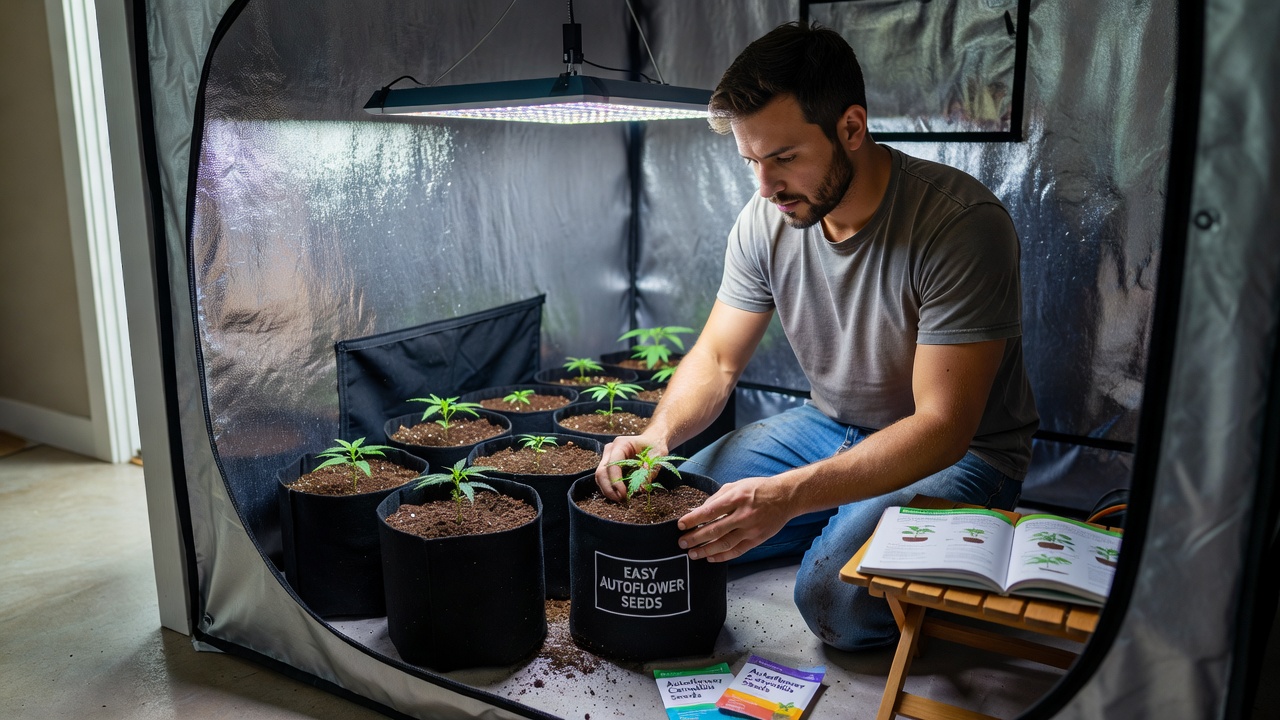
Soil setups require minimal equipment, making them ideal entry points. Start with quality potting mix amended with perlite for aeration and compost for nutrients. Choose 3-5 gallon fabric pots to allow root breathing. Place plants under affordable LED grow lights positioned 18-24 inches above seedlings. A simple grow tent with ventilation fans controls temperature and humidity at 70-80°F and 40-60% RH during vegetative stage.
Soil Mix Recipes and Pot Selection
A practical beginner recipe combines 70% high-quality potting soil, 20% perlite, and 10% compost or worm castings. This blend provides drainage while retaining enough moisture. Fabric pots like 3-gallon Smart Pots prevent root circling and improve oxygenation. Place one easy autoflower seed per pot at a depth of ½ inch, then water lightly until the surface darkens.
Lighting and Environment Controls
Position 100-150W LED panels 18 inches above seedlings, raising them as plants grow to maintain 24 inches distance. Use a timer for 18 hours of light daily. Monitor with a basic hygrometer; if humidity spikes above 60%, add an exhaust fan. Beneficial microbes such as mycorrhizae sprinkled at planting help roots absorb nutrients faster, often visible as stronger stems within two weeks.
Easy seeds thrive in soil without constant monitoring. Add beneficial microbes like mycorrhizae at planting to boost root health. Total startup cost stays under $300 for a small 2×2 foot space. Beginners appreciate how soil hides small errors, such as slightly off pH levels between 6.0-7.0. A common example is accidentally using tap water at pH 7.8; the soil buffers this for several days, giving time to correct with pH-down solution.
Setup Basics for Hydroponic Growing
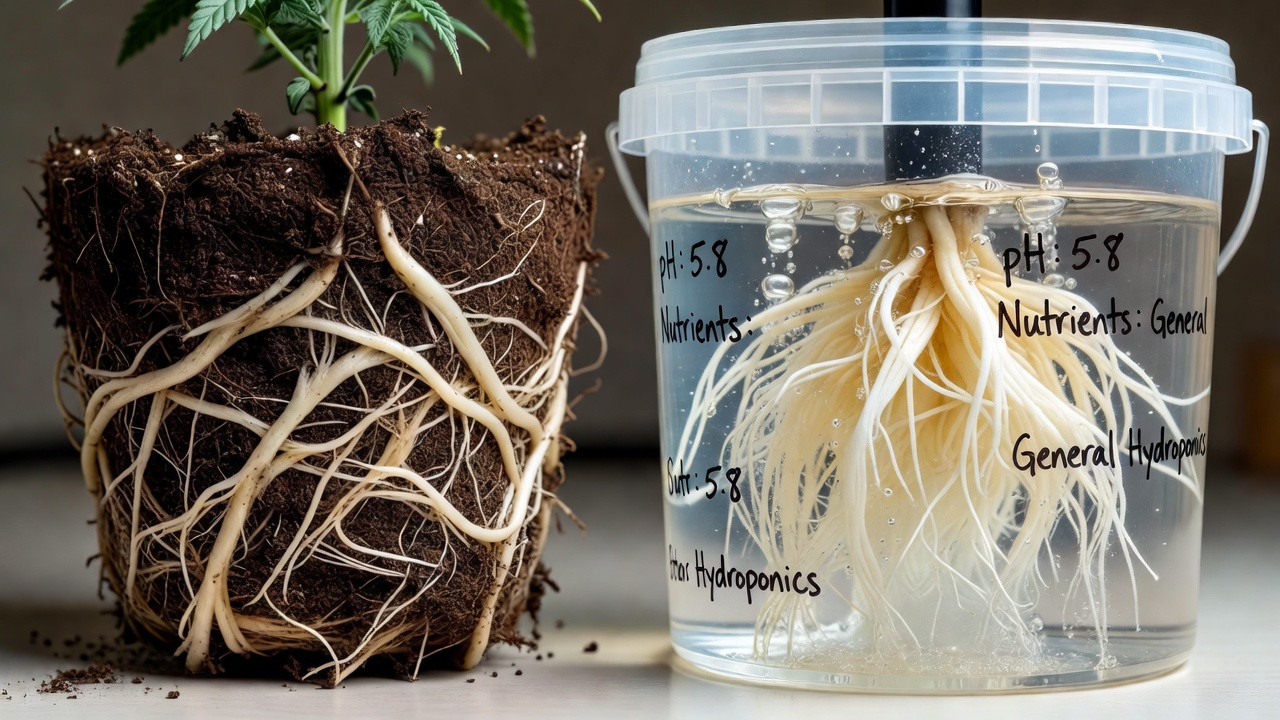
Hydroponic systems demand more precision from day one. Popular beginner options include deep water culture (DWC) buckets or simple ebb-and-flow trays. Use inert media like clay pebbles or rockwool cubes instead of soil. Maintain a nutrient reservoir with pH balanced to 5.5-6.5 and EC levels starting at 0.8 mS/cm. Air stones and pumps oxygenate the water constantly to prevent root rot.
Choosing and Assembling a Beginner System
A single 5-gallon DWC bucket with net pot and air stone works well for one plant. Rinse clay pebbles thoroughly before use to remove dust. Fill the reservoir with filtered water, add nutrients gradually while stirring, then test pH and EC. Position the air pump outside the tent to reduce heat and noise.
LED lights and tents remain similar to soil, but add water chillers if temperatures rise above 72°F. Initial costs reach $400-600 due to pumps and testing kits. Easy cannabis seeds perform well here but require daily checks to avoid system failures that can kill plants quickly. One practical safeguard is keeping a backup battery for the air pump during outages.
Watering and Nutrient Differences
Soil watering follows a simple rule: water when the top inch of soil feels dry, typically every 2-3 days. Use pH-adjusted water at 6.0-7.0 and introduce nutrients gradually after week three. Overwatering risks root issues but soil recovers faster than hydro. Organic amendments release nutrients slowly, reducing feeding frequency.
Soil Feeding Schedule Example
Week 1-3: plain pH-adjusted water only. Week 4-6: add half-strength vegetative nutrients once weekly. Week 7 onward: switch to bloom formula at full strength, flushing with plain water two weeks before harvest. Lift pots to judge weight; a light pot signals watering time.
Hydroponics requires daily reservoir checks and full changes every 7-10 days. Water delivers nutrients directly to roots, accelerating growth but demanding exact EC and pH balance. Beginners often struggle with nutrient burn from overfeeding, though systems like DWC show visible root health at a glance. Both methods benefit from calmag supplements, yet hydro demands more frequent adjustments. A typical fix for early yellowing leaves is raising EC by 0.2 mS/cm while monitoring root color.
Yield Expectations for First-Time Growers
Realistic yields depend on light, genetics, and care. In soil, beginners harvesting easy autoflower seeds can expect 1-3 ounces per plant after 8-10 weeks. Experienced novices reach 4 ounces with optimized conditions. Soil grows produce flavorful buds with robust terpene profiles.
Tracking Progress and Avoiding Common Pitfalls
- Check leaves daily for discoloration.
- Keep a grow journal noting water amounts and observations.
- Harvest when 70% of pistils turn brown for peak potency.
Hydroponics often delivers 20-40% higher yields in the same space, averaging 3-5 ounces per plant for attentive beginners. Faster vegetative growth shortens overall cycles to 7-9 weeks. However, one mistake like a pump failure can wipe out an entire crop, lowering average success rates for true novices compared to soil. Many growers report harvesting 4.5 ounces from a single DWC autoflower after mastering daily EC checks.
Which Method Suits Beginners Best in 2026
Soil remains the superior choice for most first-time growers in 2026. Its forgiving nature pairs perfectly with easy cannabis seeds, allowing focus on learning rather than troubleshooting equipment. Hydroponics suits those with prior plant experience or who prioritize maximum yields and have time for daily monitoring. Many successful home growers start in soil before experimenting with hydro systems later.
Resources like extension.psu.edu provide excellent soil-based growing foundations, while canada.ca offers regulatory insights relevant to home cultivation practices. Choose soil to build confidence and enjoy your first successful harvest with minimal stress. After one or two soil cycles, transitioning to hydro becomes far less intimidating.