
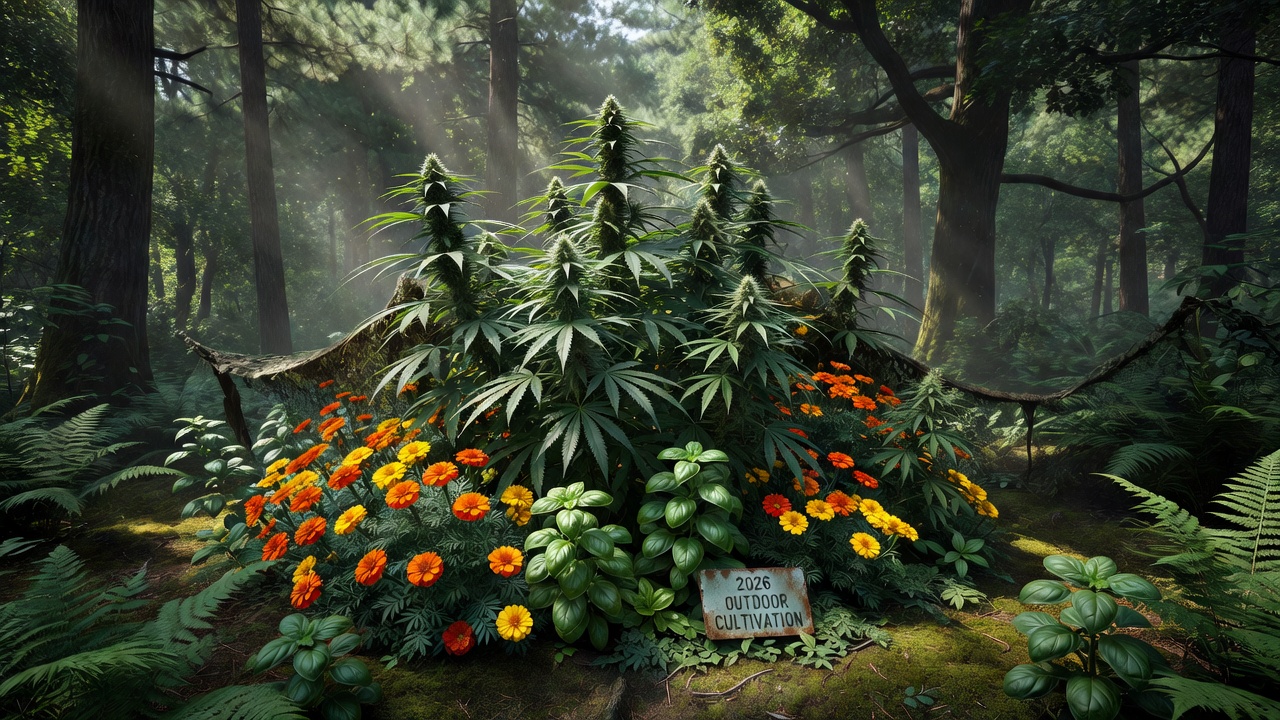
Guerrilla growing demands stealth and resilience, especially when outdoor pests threaten your remote cannabis plants. In 2026, eco-friendly strategies remain essential for home growers seeking sustainable yields without synthetic chemicals. This guide details companion planting, natural repellents, and targeted soil amendments tailored for hidden outdoor sites, plus seed selection tips that prioritize hardy genetics. Success hinges on planning that accounts for limited site access, unpredictable weather, and the constant risk of discovery, all while maintaining an entirely organic approach that protects local ecosystems.
Selecting Resilient Cannabis Strains for Remote Sites
Start with genetics built for outdoor survival. Landrace strains and modern hybrids bred for mold and pest resistance outperform sensitive varieties in guerrilla conditions. Look for Afghan or Thai landraces that develop thick cuticles and rapid growth to outpace common insects. Autoflowering options also suit short seasons at isolated plots where daily checks are impossible. These autoflowers typically finish in 8 to 10 weeks from seed, reducing the window of vulnerability to pests and allowing growers to plant later in spring when soil temperatures stabilize.
Choose seeds from reputable breeders emphasizing organic outdoor performance. These varieties often carry natural terpene profiles that deter aphids and spider mites. Test small batches first to confirm local adaptation before committing an entire remote grow. For example, Afghan Kush and Durban Poison have proven reliable in temperate zones because their dense resin production and sturdy stems resist wind damage and early mold. Thai landraces offer vigorous vertical growth that shades out weeds and tolerates heat spikes. When ordering, request organic-certified stock and start germination indoors four weeks before your planned transplant date so seedlings reach 15 to 20 centimeters before facing field conditions.
Practical Seed-Starting Tips
Soak seeds in water for 18 hours, then place them between moist paper towels inside a dark cupboard at 21 degrees Celsius. Once taproots emerge, transfer to small biodegradable pots filled with a light seed-start mix. Hardening off begins two weeks before transplant by gradually increasing outdoor exposure each day, which builds cuticle strength and prepares plants for the intense UV and temperature swings common at remote sites.
Companion Planting Strategies That Work
Companion planting creates natural barriers and beneficial insect habitats around your cannabis. Marigolds repel nematodes and whiteflies while attracting predatory beetles. Basil and rosemary mask cannabis odors and discourage larger herbivores. Interplant these at the perimeter of your guerrilla patch for maximum effect. French marigolds, in particular, release alpha-terthienyl compounds that suppress root-knot nematodes for up to six weeks when roots remain intact in the soil.
Legumes like clover fix nitrogen in poor soils common at remote locations, supporting vigorous plant health that resists infestation.
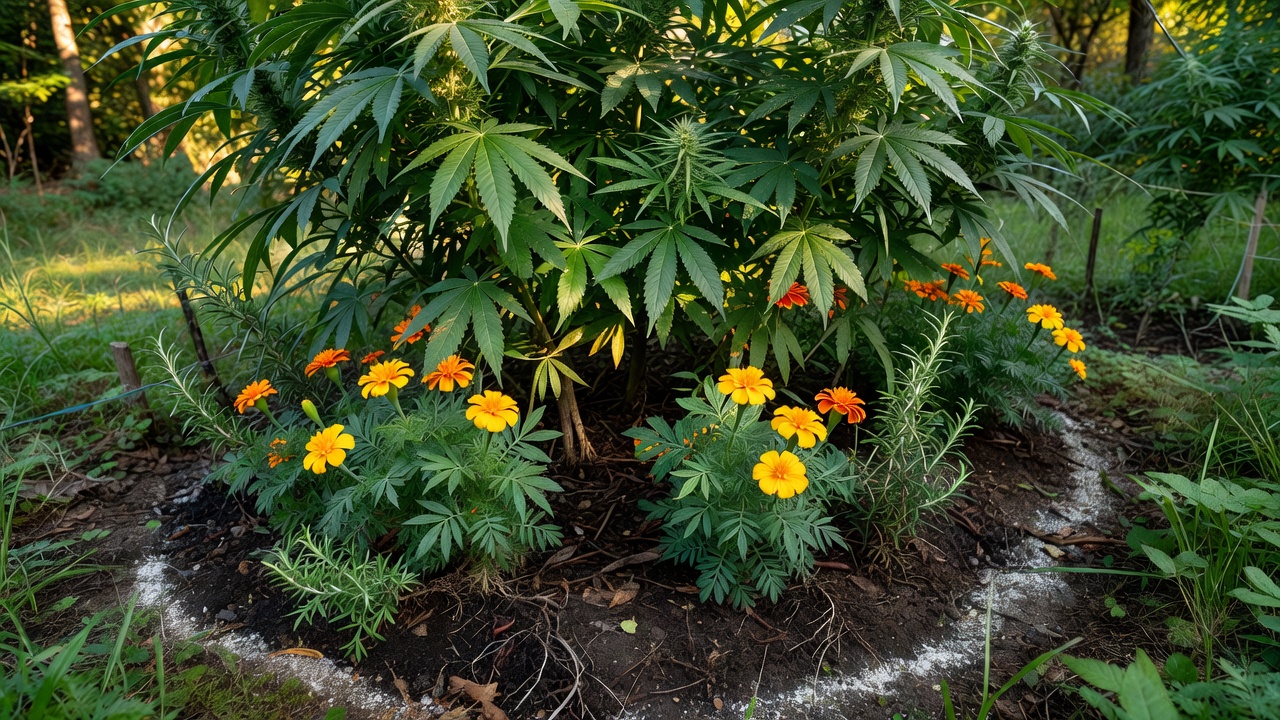
Plant in clusters of three to five companions per cannabis plant to maintain biodiversity without crowding. This polyculture approach mirrors proven organic farming systems and reduces single-crop vulnerability. White clover also serves as living mulch that suppresses weeds and retains moisture, cutting irrigation needs by roughly 30 percent during dry spells.
Companion Layout Example
Position three marigold seedlings and one basil plant in a triangle around each cannabis transplant at 30-centimeter spacing. Add a single rosemary cutting on the north side to provide afternoon shade. This arrangement creates overlapping scent barriers while leaving enough room for airflow that prevents fungal issues.
Applying Natural Repellents Effectively
Garlic and chili sprays provide broad-spectrum deterrence when mixed with neem oil. Prepare batches at home, then transport in dark bottles to preserve potency during hikes to your site. Apply during early morning or dusk to avoid leaf burn and maximize absorption. A reliable recipe calls for two crushed garlic bulbs, two tablespoons of crushed dried chilies, and one teaspoon of pure neem oil blended into one liter of water with a drop of castile soap as emulsifier. Steep overnight, strain, and store in amber glass.
Diatomaceous earth sprinkled around stems creates a physical barrier against slugs and crawling insects. Reapply after heavy rain, which is frequent in many guerrilla regions. Essential oil diffusers made from cotton balls soaked in peppermint or eucalyptus offer passive protection in enclosed micro-sites. Replace these cotton balls every ten days and position them inside small mesh bags tied to lower branches so they do not contact foliage directly.
Soil Amendments for Long-Term Pest Resistance
Healthy soil underpins every successful organic grow. Incorporate mycorrhizal fungi and compost teas to boost root systems and microbial diversity that outcompetes pathogens. Worm castings add enzymes that strengthen plant immunity against common outdoor pests. Apply one cup of worm castings per planting hole and top-dress another half cup monthly during active growth.
Biochar amendments improve water retention and harbor beneficial microbes at dry remote sites. Mix amendments into topsoil during initial site prep, then top-dress mid-season. These inputs align with USDA soil health principles and reduce the need for repeated interventions. For official guidance, consult USDA resources on organic soil management. A typical biochar blend uses 10 percent biochar by volume mixed with finished compost; this ratio has shown to increase water-holding capacity by 25 percent in sandy guerrilla soils.
Step-by-Step Application at Remote Guerrilla Locations
- Scout and clear the site during off-season visits to map sun exposure and existing vegetation.
- Transplant seedlings with pre-mixed companion plants already in biodegradable pots.
- Apply initial repellent sprays and soil amendments immediately after planting.
- Install discreet mulch layers using local leaf litter to hide activity and retain moisture.
- Return bi-weekly to refresh barriers and monitor for new pest pressure.
Always minimize footprints and use natural camouflage to maintain site secrecy throughout the season. When scouting, wear soft-soled shoes and avoid creating new trails; instead, vary entry routes each visit. Carry all materials in a single backpack to limit trips and reduce visible disturbance.
Monitoring and Seasonal Adjustments
Regular observation prevents small issues from becoming crop losses. Note pest patterns tied to weather shifts and adjust plantings accordingly. Keep records of which companions performed best for future seasons. Use a small waterproof notebook to log dates, observed insects, and rainfall amounts so patterns become clear after the first year.
Harvest timing also matters—early collection of mature colas limits exposure to late-season insects. These methods support consistent, chemical-free results that satisfy both yield goals and environmental ethics. Additional EPA insights on reduced-risk pest control are available at EPA.gov. When colas reach 70 percent cloudy trichomes, harvest immediately even if a few lower leaves show minor damage, because late-season caterpillars can destroy entire buds within days.
Conclusion
Integrating resilient seeds, strategic companions, repellents, and soil health creates robust defense systems for any guerrilla cannabis operation. By following these organic practices, growers protect both their plants and the surrounding ecosystem while achieving reliable outdoor harvests year after year. The cumulative effect of choosing hardy genetics, maintaining diverse companions, and nurturing living soil produces plants capable of withstanding pest pressure without compromising secrecy or sustainability.