
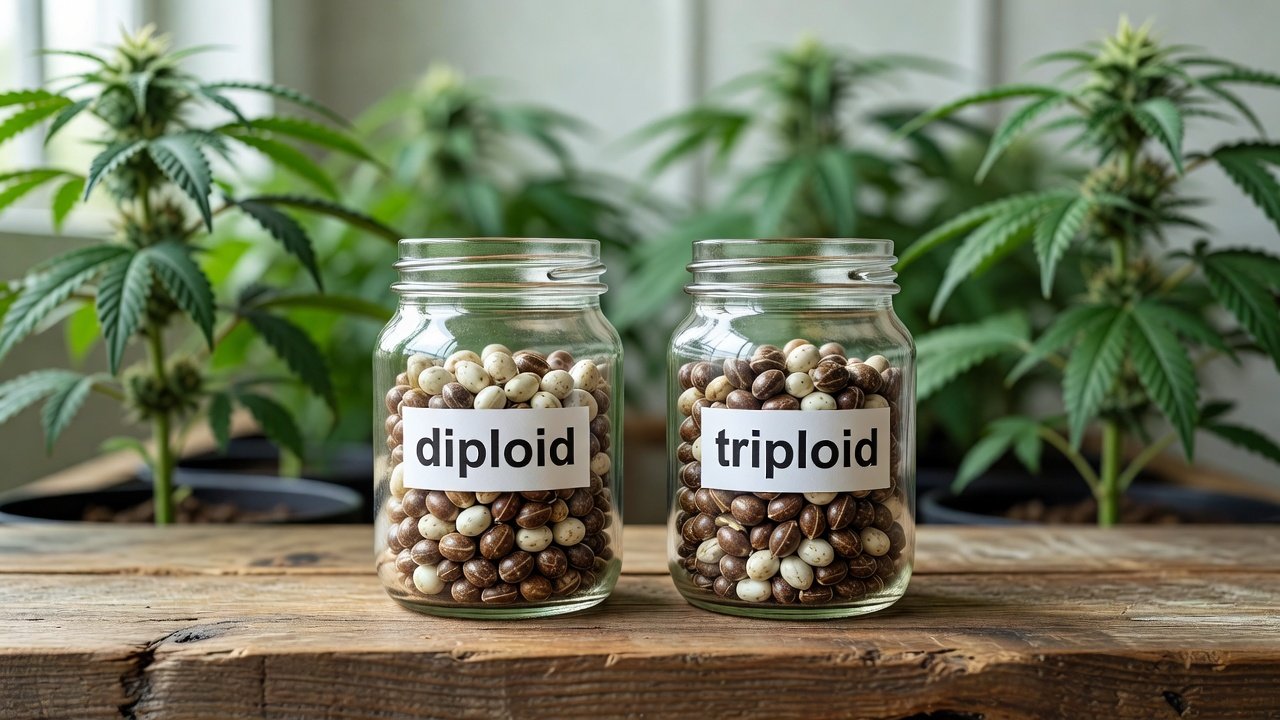
Home growers comparing seed-bank catalogs in 2026 keep running into a new label beside familiar cultivar names: triploid. Ordinary cannabis seed is diploid, carrying two chromosome sets. Triploid seed carries three. That single difference changes how a finished plant responds to pollen, whether you can expect bagseed, and whether the plant can ever enter a breeding project. It does not, by itself, rewrite potency, guarantee a heavier harvest, or turn an unstable cross into a uniform garden.
Ploidy is a buying criterion, not a marketing synonym for feminized seed or for autoflowering seed. Those other labels describe sex expression and flowering response. Chromosome count describes something else: how the plant builds reproductive cells, and what happens when pollen lands on a flower. Flower growers who have lost outdoor or shared-space crops to stray males may decide the premium is worth near-seedless buds. People who want to hunt phenotypes, save seed, or build a line need fertile diploids, full stop.
This guide compares how reputable banks produce each type, what sterility actually means for bagseed and breeding, and the real tradeoffs in vigor, cannabinoid performance, uniformity, and price. Treat it as a filter you apply after you already trust the breeder, not as a strain review and not as a promise that three chromosome sets beat two in every garden.
What diploid and triploid actually mean
Cannabis in the wild and in almost every classic seed line is diploid. In practical terms, the plant inherits one chromosome set from each parent and can pair those chromosomes evenly when it makes pollen or ovules. Even pairing is what lets a healthy diploid set viable seed if a male, or a stressed hermaphrodite, pollinates it. That fertility is a feature when you are selecting keepers and a liability when a neighbor’s pollen finds your cola in week six.
A triploid plant carries three sets. During meiosis the chromosomes cannot pair into neat pairs across the whole genome, so most gametes are incomplete and nonviable. The result, in well-made triploid cannabis, is a plant that can flower normally and still fail to set meaningful seed even when pollen is present. Plant breeders have used the same sterility logic for generations in seedless watermelon, banana, and some ornamental lines. Primary literature on polyploid crop genetics is indexed at the National Center for Biotechnology Information, which is the right place to read the underlying plant science rather than catalog copy.
Sterility is not the same thing as genetic uniformity. A triploid seed is still a sexual product of two parents. If those parents segregate, sister seeds will segregate too. Ploidy stops most of those sisters from becoming parents themselves. It does not freeze a cultivar in place the way a verified clone does, and it does not replace the multi-generation selection that makes a seed line predictable. Buyers who want that predictability in diploid lines should read how banks use advanced backcrossing for stable cannabis genetics, then ask whether a triploid offer was built on parents that already survived that kind of work.
How seed banks produce each type
Diploid seed production is the standard seed-bank workflow. Breeders select fertile parents, make controlled crosses, and harvest seed from pollinated flowers. Quality differences come from how long those parents were inbred or backcrossed, how carefully males were chosen, and whether the bank tests progeny before release. A cheap diploid pack and an expensive diploid pack can share the same chromosome count and still perform nothing alike, because ploidy was never the variable that created stability.
Triploid seed adds a generation of specialized parent building. A bank first produces a tetraploid parent, a plant with four chromosome sets, usually by doubling chromosomes in a diploid line and then confirming the count. That tetraploid is crossed to a normal diploid. The offspring inherit two sets from the tetraploid parent and one set from the diploid parent, landing on three. Seed set on that cross is often lower than a routine diploid cross, which is one reason triploid packs cost more and show up in smaller counts.
Confirmation matters more than the story on the pouch. Serious producers check ploidy with flow cytometry or an equivalent chromosome assay rather than assuming every seedling from a tetraploid cross is triploid. Ask the bank what they test, on which generation, and whether they publish a short method note. If the only evidence is a label, you are paying a triploid price for an unverified claim. The same skepticism belongs on any rare or newly branded release; our notes on sourcing rare cannabis genetics from trusted seed banks cover how to separate a documented project from a renamed catalog entry.
Production method also explains why triploids are a finished product, not a new breeding toolbox you can extend at home. The tetraploid parent is the bank’s intermediate. The seed you germinate is the sterile, or near-sterile, endpoint. You are not buying a shortcut around selection. You are buying the outcome of a cross that was designed so the plant in your tent would be a poor parent.
Sterility, bagseed, and why breeders hit a wall
For a flower grower, sterility is the sales pitch, and it is the part of the pitch with the strongest biological basis. If pollen arrives late in flower, a diploid plant will divert energy into seed and the dried flower will be full of beans. A true triploid usually sets few or no viable seeds under the same pressure. Buds stay closer to an unpollinated crop, which is the practical meaning of seedlessness in cannabis. It is insurance against accidents, not a license to flower next to a male on purpose and expect a perfect result every time. Partial seed set can still happen in poorly verified material or under heavy pollination, so “near-seedless” is the honest phrase.
Bagseed follows directly from that biology. Diploid plants that get pollinated can throw viable seed you might germinate later, with all the usual uncertainty about the pollen parent. Triploid plants generally will not hand you a useful jar of beans. If part of your plan is free seed for next season, triploid packs close that door. That is a feature if you only want smokable flower and a drawback if you treat every seeded cola as a future hunt.
Breeding is the harder stop. A plant that does not make viable pollen or viable ovules cannot be a mother or a father in any reliable program. You cannot backcross it, cub it, or use it to fix a trait. Occasional aneuploid or rare viable seed is a laboratory curiosity, not a breeding plan. Anyone building a line, preserving an heirloom, or chasing a specific chemotype should buy fertile diploid seed from parents with a documented selection history. Ploidy will not compensate for skipping that history.
Yield, vigor, potency, and price
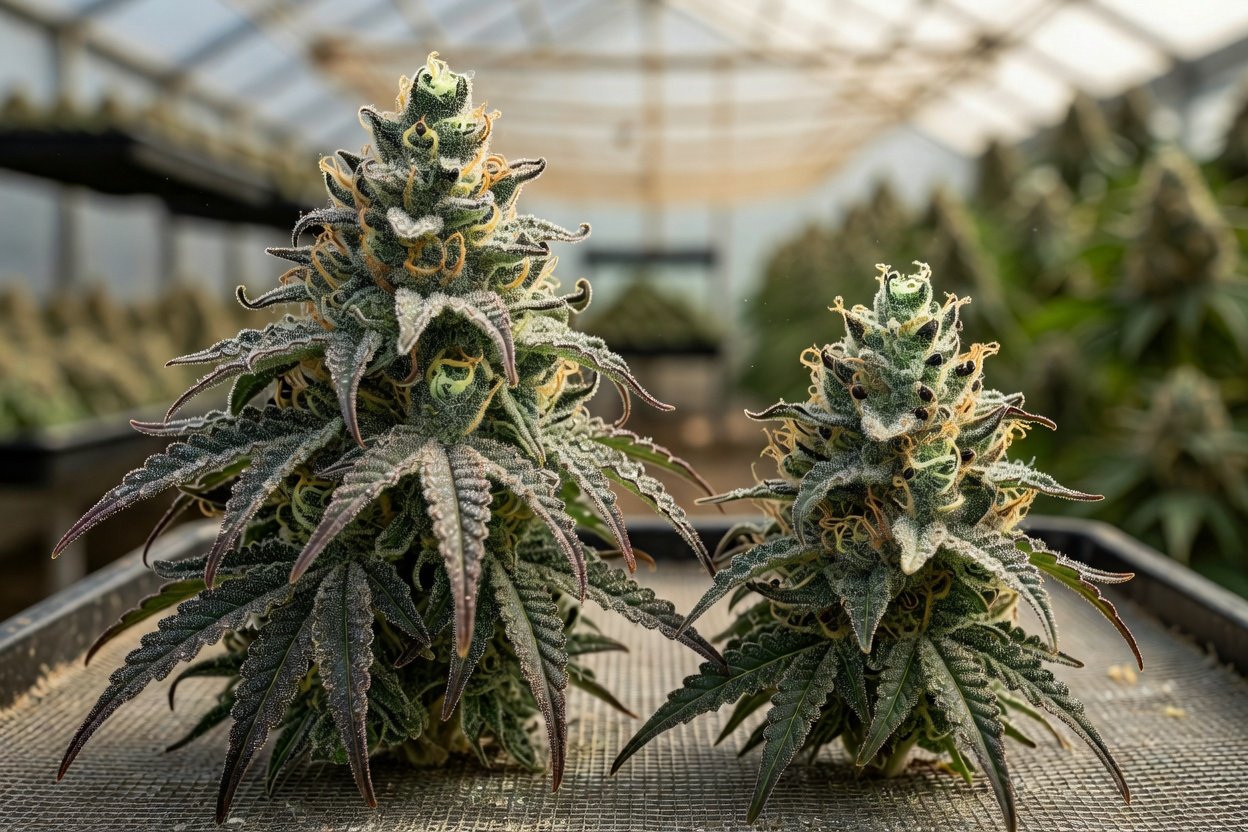
Yield claims need splitting into two situations. In a clean room with no pollen, a triploid does not get a free biomass bonus merely for having an extra chromosome set. Unpollinated diploid flowers are already seedless. Any yield edge has to come from vigor, structure, or the specific parents, not from avoiding seeds that were never going to form. In a garden with real pollination risk, the comparison changes. A diploid crop that seeds out loses sellable or smokable flower weight to bean production and often finishes with harsher, less resinous buds. A triploid that refuses that seed set keeps more of the flower you actually wanted. The advantage is defensive, and it shows up when pollen is a realistic threat.
Vigor is the most oversold part of polyploid marketing. Some polyploid crops show larger cells, thicker leaves, or a stockier habit, sometimes called a gigas effect. Cannabis results are cultivar-specific. Tetraploid breeding stock can be slower, less fertile, or morphologically odd, which is why banks treat it as a parent-building step rather than as flower seed. Triploid progeny may look robust in one cross and ordinary in the next. Buy the plant architecture you can already see in the breeder’s notes, not a theoretical chromosome bonus. Environmental skill still moves yield more than ploidy does: light, root volume, and harvest timing dwarf a third chromosome set.
Potency and minor-cannabinoid balance track parental chemistry far more than chromosome count. A triploid made from modest parents will not out-test a strongly selected diploid. Early published comparisons of triploid cannabis have generally found cannabinoid levels in a similar range to related diploids, with sterility as the consistent difference rather than a automatic THC jump. If high THC is the goal, start with high-THC strains that already show stable genetics, then decide whether those parents are offered as triploid seed. The same logic applies to CBD-forward plants: ploidy does not create the chemotype.
Price is the clearest, least romantic difference. Triploid seed costs more per bean because the bank ran an extra confirmed generation, often harvested fewer seeds per cross, and is selling a specialty lot. You may also get fewer seeds per pack, which raises the cost of a failed germination. Diploid seed from a serious breeder can still be expensive, but you are paying for selection, not for a chromosome assay. If two packs share the same named parents and only ploidy differs, the triploid premium is buying pollination insurance and a breeding dead end. If the parents differ, you are no longer comparing ploidy at all.
Side-by-side buying comparison
Use chromosome count as one column in the decision, after breeder reputation and chemotype. The contrasts below are typical of well-made commercial seed, not guarantees for every untested white-label pack.
- Chromosome sets: diploid seed has two; triploid seed has three, produced by crossing a confirmed tetraploid to a diploid.
- Response to pollen: diploids set viable seed readily; triploids are highly sterile and usually stay near-seedless.
- Bagseed: possible from pollinated diploids; generally not a usable outcome from triploids.
- Breeding value: diploids can be parents; triploids cannot support a normal selection program.
- Clean-room yield: no reliable ploidy advantage; parent quality and grow skill dominate.
- Yield under pollination pressure: triploids protect flower weight that diploids lose to seed.
- Vigor and structure: variable in both; do not assume thicker leaves or faster growth from triploid seed.
- Potency: inherited from parents, not awarded by an extra chromosome set.
- Uniformity: depends on how stable the parents were, in both categories.
- Price and pack size: triploids usually cost more per seed and are sold in smaller lots.
- What to verify: for triploids, ploidy testing; for diploids, generation history and progeny notes.
Neither column replaces basic seed-bank hygiene. Germination rates, shipping freshness, and whether the bank will stand behind a failed pack still decide whether the genetics you paid for ever reach a pot. A verified triploid with weak parents is a worse flower buy than a proven diploid that finishes the way the breeder described.
Who should buy which: flower growers versus breeders
Choose triploid seed if your only job for the plant is finished flower and pollination is a real risk you cannot fully control. That includes outdoor plots near other gardens, balconies, shared rooms where someone else may flower a male, and any run where a late hermaphrodite would ruin a jar. The premium makes sense when seeded flower has already cost you a harvest, and when the bank can show that the lot was confirmed triploid rather than merely descended from a tetraploid project. Pick cultivars whose diploid versions you would already smoke. Sterility will not rescue a terpene profile you dislike.
Stay with diploid seed if you pheno-hunt, keep mothers for clones, intend to reverse or pollinate anything, swap cuts with an eye toward seed, or simply want the option of bagseed after an accident. Breeders, preservation growers, and anyone stacking traits across seasons should treat triploid packs as off-limits for the nursery, even if the flower reviews sound strong. You can still run a triploid alongside a diploid keeper as a smokable comparison, but only the diploid remains breeding stock. If you want both seedless insurance and a breeding path, buy both ploidies of related material on purpose instead of hoping one pack does both jobs.
A practical split for mixed gardens: put triploids in the spaces you cannot isolate, and keep a small diploid library under stricter pollen control for selection. Do not pay triploid prices for an indoor tent that has never seen outside pollen and that you already run with tested clones or trusted feminized diploids. The insurance is worth the invoice only where the risk is real. Conversely, do not talk yourself into diploid seed for a windy outdoor plot solely because the pack is cheaper if a single male down the road has seeded you before. Cheap seeded flower is not a bargain.
Questions to send the seed bank before you pay
Write the bank before checkout if the listing is vague. You want short, checkable answers, not a new adjective on the same cultivar.
- Was ploidy confirmed on the seed lot or only on the tetraploid parent, and by what method?
- What is the diploid parent, and how many generations of selection sit behind both sides of the cross?
- What seed count and germination expectation come with the higher price?
- Do they position the pack as finished flower seed only, with no breeding claim attached?
Evasive answers are a reason to buy a documented diploid instead. Polyploid labeling is new enough in cannabis retail that unsupported claims will travel faster than lab notes. Your leverage as a buyer is refusing packs that cannot explain the third chromosome set.
Make the ploidy decision on purpose
Triploid cannabis seed is a better buy than ordinary diploid seed only when seedlessness under pollen pressure is the problem you are paying to solve, and only when the parents were already worth growing. It is not a vigor tonic, not a potency upgrade, and not a more stable genome in the breeding sense. Diploid seed remains the right buy for anyone who needs fertile plants, lower specialty pricing, or a line they can continue. In 2026 the disciplined order is still breeder, chemotype, and grow environment first, then chromosome count as the filter that either protects a flower crop or keeps a breeding project alive.
Spend the premium where a seeded harvest has a real chance of happening. Keep fertile diploids where you still want offspring. That split, not a catalog badge, is the whole ploidy decision.