
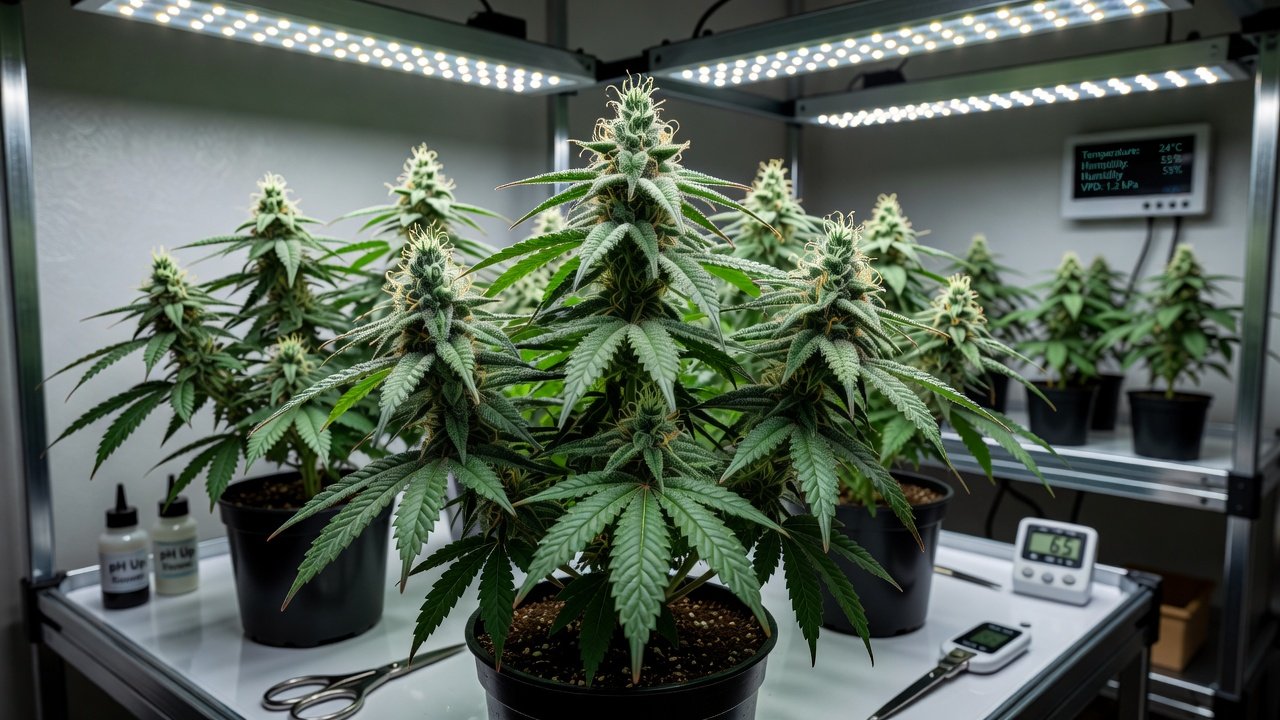
Backcrossing remains one of the most powerful tools available to home cannabis breeders seeking to stabilize elite traits sourced from reputable seed banks. In 2026, with increasing access to high-quality genetics, growers can methodically reinforce characteristics such as potency, flavor, disease resistance, and yield while minimizing unwanted variation. This technique involves repeatedly crossing a hybrid offspring back to one of its parents, concentrating desirable alleles and gradually fixing the genetic profile. The result is a line that performs more predictably across generations, which is essential for both personal cultivation and long-term preservation of unique seed-bank selections.
Understanding Backcrossing in Modern Cannabis Breeding
Backcrossing, often abbreviated as BC1, BC2, or higher, works by using a recurrent parent that already expresses the target trait. Each successive backcross increases the percentage of the recurrent parent’s genome in the progeny. For cannabis, this is particularly useful when a seed-bank strain offers exceptional resin production or terpene complexity but also carries less desirable traits like longer flowering times. Through controlled backcrossing, breeders can retain the prized qualities while shedding the negatives over multiple generations.
Genetic theory supports that after five or six backcrosses, the progeny can approach 98 percent genetic identity to the recurrent parent. However, cannabis is dioecious and highly heterozygous, so real-world results require careful selection at every step. Home growers must track phenotypes rigorously rather than relying solely on theoretical percentages. For example, a grower starting with an elite OG Kush selection might backcross repeatedly to lock in its signature earthy aroma while reducing a tendency toward airy buds.
Why Backcrossing Outperforms Simple Inbreeding
Unlike selfing or sibling crosses, backcrossing concentrates the recurrent parent’s genome faster. Practical guidance includes maintaining a minimum population of 20 plants per generation to spot outliers. Many home breeders label each plant with colored tags noting traits such as internode length and pistil density, allowing quick culling of plants that deviate from the target profile.
Selecting Elite Parent Plants from Seed Banks
Choosing the right starting material is critical. Begin with feminized or regular seeds from established banks known for transparent lineage information. Evaluate multiple seeds from the same batch to identify the strongest individual expressing the desired trait. Grow at least six to ten plants to account for natural variation, then select the single best female and male (or reversed female) for the initial cross.
- Document every plant’s growth rate, node spacing, aroma, and resistance markers.
- Use lab testing where possible to confirm cannabinoid and terpene profiles before breeding decisions.
- Isolate the chosen recurrent parent in a dedicated space to prevent accidental pollination.
Once the initial F1 hybrid is created, the backcrossing phase begins using the recurrent parent as the pollen or seed donor. A concrete example: if the recurrent parent is a high-CBD cultivar from a European seed bank, label its clones “RP-1” and keep them under 18/6 light in a separate tent throughout the entire project.
Step-by-Step Backcrossing Process for Home Growers
The practical workflow starts with the BC1 generation. Pollinate the selected hybrid female with pollen from the recurrent parent. Harvest seeds, germinate a large population, and again select individuals closest to the recurrent parent phenotype. Repeat this process, advancing to BC2, BC3, and beyond while maintaining detailed records of each generation’s performance.
Key environmental controls include consistent lighting schedules, stable temperatures between 20–26 °C, and strict pest management to avoid stressing the breeding population. Many successful home breeders also employ tissue culture or cloning techniques to preserve the exact recurrent parent across multiple backcross cycles, ensuring genetic consistency.
BC1 Through BC3: Detailed Milestones
In BC1, collect at least 100 seeds and grow 50 plants. Select the top five females that most closely match the recurrent parent’s bud density and terpene profile. For BC2, repeat with 40 seeds and narrow to three keepers. By BC3, uniformity should be evident in 80 percent of the crop. Always reverse the same recurrent-parent clone for pollen to avoid introducing new variables.
Verifying Genetic Stability When Buying and Testing Seeds
After several backcross generations, stability testing becomes essential. Grow out at least 20–30 plants from the stabilized line and observe uniformity in height, flowering time, bud structure, and chemical profile. Low variation indicates successful trait fixation.

Compare results against the original seed-bank description and any third-party grow reports available online.
Additional verification can include small-scale stress tests such as fluctuating humidity or minor nutrient imbalances to confirm resilience. Stable lines should maintain performance even under non-ideal conditions typical of home grows. For instance, run a side-by-side test where half the plants receive 10 percent less nitrogen; stable progeny will still finish with consistent resin coverage.
Evaluating Long-Term Breeding Outcomes and Reliability
Long-term success is measured not only by uniformity in the current generation but also by how well the line breeds true when crossed with unrelated cultivars. Test the stabilized backcross line in hybrid combinations to ensure it transmits the locked traits reliably. Track data across at least three seasons, noting any genetic drift or reversion to unwanted characteristics.
Resources such as NCBI’s cannabis genetics publications provide peer-reviewed insights into inheritance patterns that can guide evaluation criteria. Consistent documentation and open sharing within grower communities further strengthens collective knowledge of reliable genetics. Practical tip: keep a shared spreadsheet with columns for flowering days, yield in grams per watt, and dominant terpenes observed by each participating grower.
Conclusion
Advanced backcrossing empowers home growers to transform promising seed-bank acquisitions into dependable, true-breeding lines. By combining careful parent selection, methodical generational advancement, and rigorous stability testing, enthusiasts can achieve genetic reliability that rivals commercial breeding programs. The techniques outlined here, when practiced with patience and precision, deliver consistent results season after season while preserving the unique qualities that make cannabis cultivation rewarding.