
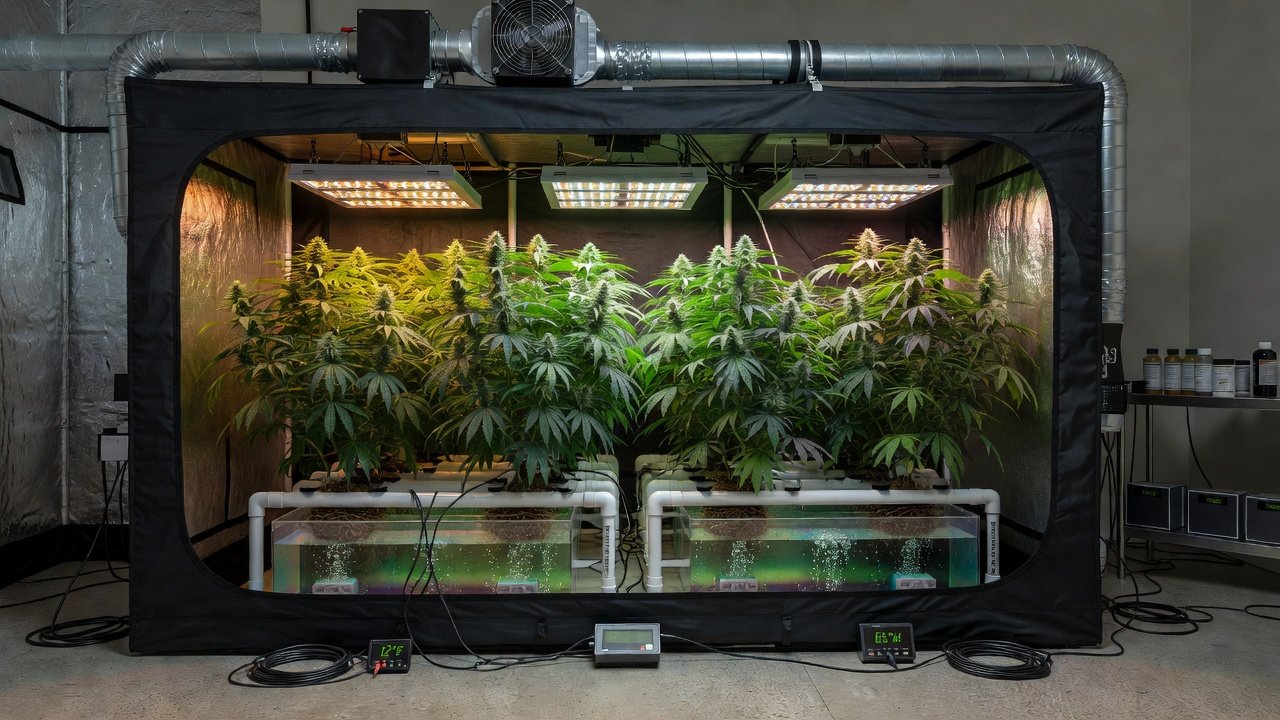
Indoor cannabis cultivation in hydroponic setups has evolved significantly, with lighting technology playing a pivotal role in success within confined grow tents. As of 2026, growers face a key decision between traditional High-Pressure Sodium (HPS) lights and modern Light-Emitting Diode (LED) systems. This comparison examines critical factors including energy efficiency, heat output, spectrum flexibility, and effects on plant yields to help home cultivators make informed choices for their hydroponic setups. Understanding these differences helps both novices and experienced growers optimize their environments while managing costs and plant health effectively.
Energy Efficiency in Hydroponic Grow Tents
HPS lights have long been a staple in indoor growing due to their powerful output, yet they consume substantial electricity. A typical 1000W HPS fixture draws significant power, leading to higher utility bills over multiple grow cycles. In contrast, LED grow lights offer superior efficiency, often converting 40-60% more electricity into usable light while using less wattage overall. For hydroponic systems where tents run 12-18 hours daily, this difference translates to meaningful savings. For example, a grower running a 4×4 tent for an 8-week flowering cycle might see HPS electricity costs exceed $150 monthly, whereas an equivalent LED setup could reduce that to under $80.
Many modern LEDs include dimming capabilities and smart controls that optimize energy use across vegetative and flowering stages. Home growers report reducing their monthly energy costs by 30-50% when switching from HPS to full-spectrum LEDs. Energy.gov highlights how efficient lighting technologies lower consumption without sacrificing performance, a principle directly applicable to cannabis hydroponics. Practical guidance includes using timers and smart plugs to automate dimming—run LEDs at 80% power during early vegetative growth and ramp up to full intensity only when plants reach 12 inches tall. Monitoring with a kill-a-watt meter provides real-time data, allowing adjustments that prevent waste during off-peak hours.
Heat Management Challenges and Solutions
Heat production remains a major consideration in enclosed grow tents, especially with hydroponic reservoirs that can overheat. HPS lamps generate intense heat that requires robust ventilation systems, exhaust fans, and sometimes air conditioning to maintain optimal temperatures around 70-80°F. This added equipment increases both initial setup costs and ongoing energy demands. In a typical 3×3 tent, an HPS fixture might raise ambient temperatures by 15°F, forcing growers to install inline fans rated at 200+ CFM plus carbon filters.
LEDs produce far less radiant heat, allowing growers to position lights closer to the canopy without risking burns or stressing plants. In smaller tents, this reduces the need for extensive cooling infrastructure. Proper airflow is still essential, but the overall thermal load decreases dramatically with LEDs, creating more stable environments for root zones in hydro systems. Concrete examples include hanging a 600W LED at 18 inches above the canopy in a 4×4 tent while keeping reservoir temperatures at 68°F using only a small clip-on fan. Install digital hygrometers at canopy level and root zone to track differentials; aim for no more than a 5°F gap. Beginners should start with passive intake vents paired with a 100 CFM exhaust fan, upgrading only if humidity spikes above 60% during lights-on periods.
Spectrum Options for Cannabis Growth Phases
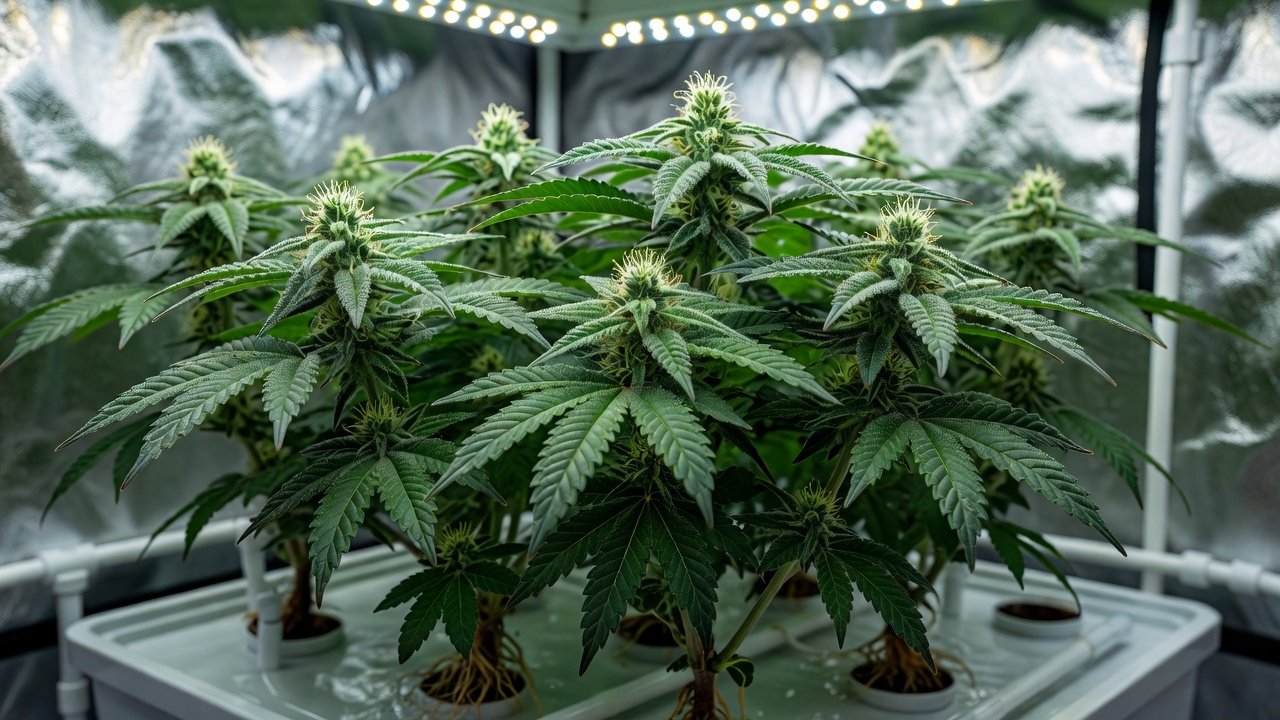
HPS lights emit a yellow-orange spectrum ideal for flowering but lack the blue wavelengths beneficial during vegetative growth. Growers often supplement with MH (metal halide) bulbs early on, requiring bulb changes that add complexity. LEDs provide customizable full-spectrum options with adjustable ratios of blue, red, and far-red light tailored to each phase.
- Vegetative stage: Higher blue light promotes compact, leafy growth. Target 400-500nm wavelengths at 300-600 PPFD for the first three weeks.
- Flowering stage: Enhanced red and UV wavelengths boost bud development and resin production. Shift to 600-700nm dominance at 800-1000 PPFD once pistils form.
- Full cycle: Many 2026 LED models offer preset modes or app control for seamless transitions. Use weekly spectrum tweaks via smartphone to match plant responses visible in leaf color and stretch.
This flexibility allows precise spectrum tuning without hardware swaps, improving plant health in hydroponic environments where nutrient uptake depends on strong photosynthesis. A practical example: an autoflower grower using a tunable LED can extend far-red light by two hours at dusk to encourage faster flowering without manual bulb swaps, resulting in denser colas and fewer leggy stems.
Yield Impacts and Quality Considerations
Yield comparisons show LEDs often match or exceed HPS outputs when properly configured, with many cultivators achieving 1.5-2 grams per watt in optimized tents. HPS can deliver dense buds but may produce more stretch and lower cannabinoid profiles due to spectrum limitations. LEDs frequently result in higher terpene and THC content thanks to targeted wavelengths and reduced plant stress. In hydroponic setups, maintain consistent PPFD across the canopy by measuring at multiple points with a PAR meter; adjust hanging height weekly as plants grow.
Factors like light intensity, hanging height, and coverage area influence results. In hydroponics, consistent PPFD levels from LEDs support faster nutrient absorption and robust root systems, leading to healthier plants overall. Real-world tests in 2026 demonstrate that quality LEDs minimize light burn while maximizing canopy penetration. For a 5-plant hydro DWC system in a 4×4 tent, position two 300W LEDs 20 inches above the canopy during flower to reach 1.8 g/W yields while keeping terpene levels elevated, as confirmed by lab tests showing 2-3% higher myrcene content versus HPS-grown counterparts.
Recommendations for Indoor Seeds and Strains
Selecting lights depends on the cannabis varieties being grown. Indica-dominant seeds that stay compact thrive under efficient LEDs with strong blue spectra in early phases. Sativa-leaning strains benefit from broader spectrum coverage to control height in limited tent spaces. Autoflowering seeds perform well with full-spectrum LEDs due to their fixed timelines and sensitivity to environmental consistency. Start seeds in rockwool cubes under 200 PPFD for the first 10 days, then increase intensity gradually to avoid shock.
For hydroponic beginners, starting with a 300-600W LED panel suits most 4×4 tents. Experienced growers managing multiple strains may prefer modular LED systems or hybrid setups. Always match light wattage to tent size and plant count to avoid under- or over-lighting during critical phases. A step-by-step approach: week 1 vegetative at 50% power, week 4 at 75%, and full intensity only after flipping to flower. Test different strains side-by-side in the same tent to compare responses, noting that Northern Lights indica hybrids often finish with tighter buds under LEDs while Sour Diesel sativas require extra far-red to limit height below 4 feet.
Conclusion and Final Guidance
While HPS lights remain viable for budget-conscious growers prioritizing raw flowering power, LEDs represent the modern standard for energy-efficient, low-heat cannabis cultivation in hydroponic grow tents. Their spectrum versatility and yield potential make them ideal for home enthusiasts seeking consistent results across growth stages. Evaluate your specific setup, seed types, and local electricity rates before deciding, and consider consulting resources from agricultural extensions for tailored advice. Track one full grow cycle with detailed notes on kWh usage, temperature logs, and final yields to refine future decisions and achieve repeatable success.