
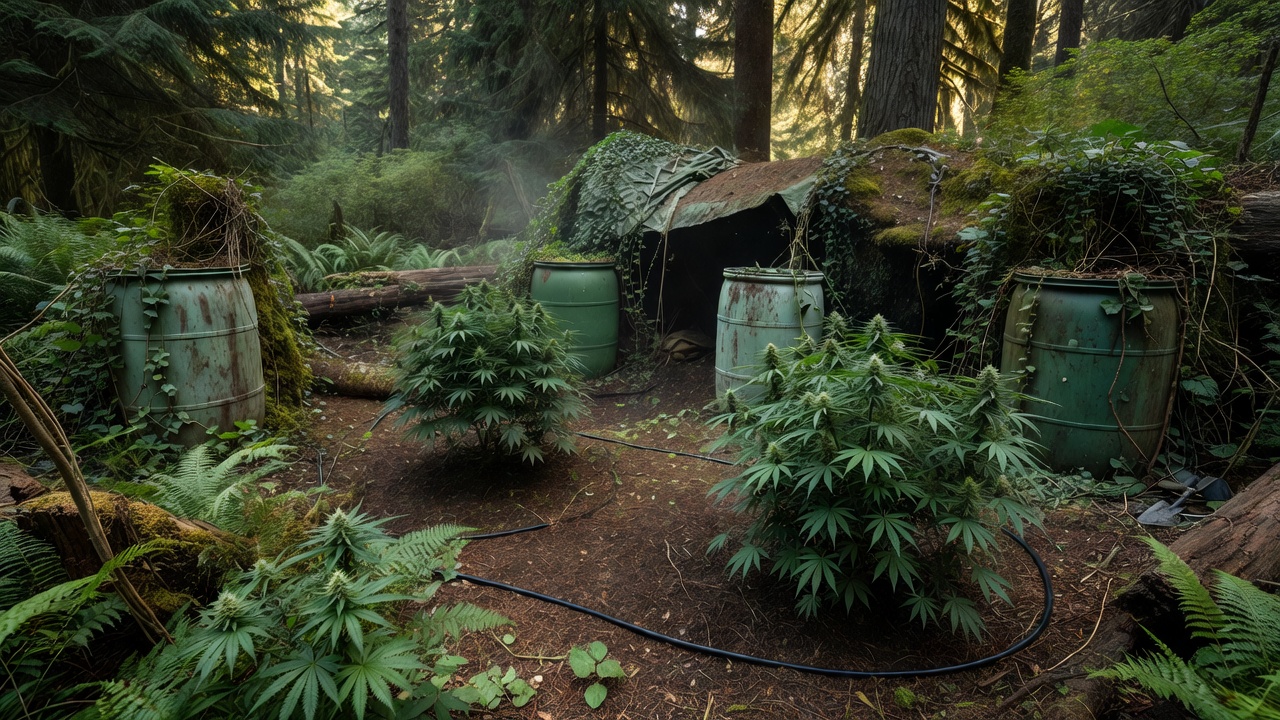
Guerrilla cannabis cultivation in remote outdoor locations demands careful planning to balance water needs with the risks of detection. In 2026, growers face increasing scrutiny in wild areas, making low-profile irrigation systems essential. This guide explores proven methods for collecting and distributing rainwater efficiently while selecting seeds that thrive in unpredictable conditions. Success hinges on understanding local microclimates and preparing for both drought and sudden downpours that can either nourish or damage plants.
Understanding Guerrilla Growing Challenges
Remote sites often lack reliable water sources, forcing cultivators to rely on natural rainfall or carried supplies. Detection risks rise with visible equipment, so setups must blend into the environment. Variable weather patterns in 2026 further complicate matters, requiring adaptable strategies that conserve every drop. For instance, a site in a forested valley might receive 30 percent more rain than an exposed ridge just two miles away, so mapping these differences before planting prevents wasted effort.
Successful guerrilla operations prioritize sustainability to avoid depleting local resources, which could draw attention from authorities or landowners. Integrating rainwater systems reduces trips to the site and maintains plant health during dry spells. A practical example involves pre-positioning 55-gallon barrels at the start of the season so that a single storm can supply enough water for two weeks of growth without return visits. This approach also limits soil compaction from repeated foot traffic that might otherwise create visible paths.
Selecting Resilient Outdoor Cannabis Seeds
Choosing the right genetics forms the foundation of any remote grow. Opt for strains bred for outdoor resilience, such as those with strong resistance to mold, pests, and fluctuating temperatures. Autoflowering varieties often perform well in guerrilla settings due to their rapid cycles and compact size. Growers in northern latitudes have reported success with autoflowers that finish in 70 to 85 days, allowing harvest before late-season patrols intensify.
Look for landrace-influenced hybrids that tolerate drought once established. These seeds develop deep root systems capable of accessing groundwater, minimizing supplemental irrigation needs. Always source from reputable breeders offering detailed growing information tailored to variable climates. Testing a small number of seeds indoors first lets cultivators verify germination rates and early vigor before committing an entire remote plot to unproven stock.
Key Traits for Guerrilla Seeds
- Fast flowering times to evade seasonal patrols.
- High resistance to common outdoor pathogens.
- Adaptability to poor soil and irregular watering.
- Discreet growth patterns that avoid tall, obvious stalks.
Setting Up Rainwater Collection Systems
Effective collection begins with camouflaged catchment areas. Use natural slopes or existing foliage to funnel rain into hidden barrels or bladders. Bury tanks partially underground where possible to maintain a low profile and protect against freezing in cooler months. Positioning the top rim just below ground level and covering it with a layer of leaves and twigs makes the setup nearly invisible even from a few feet away.
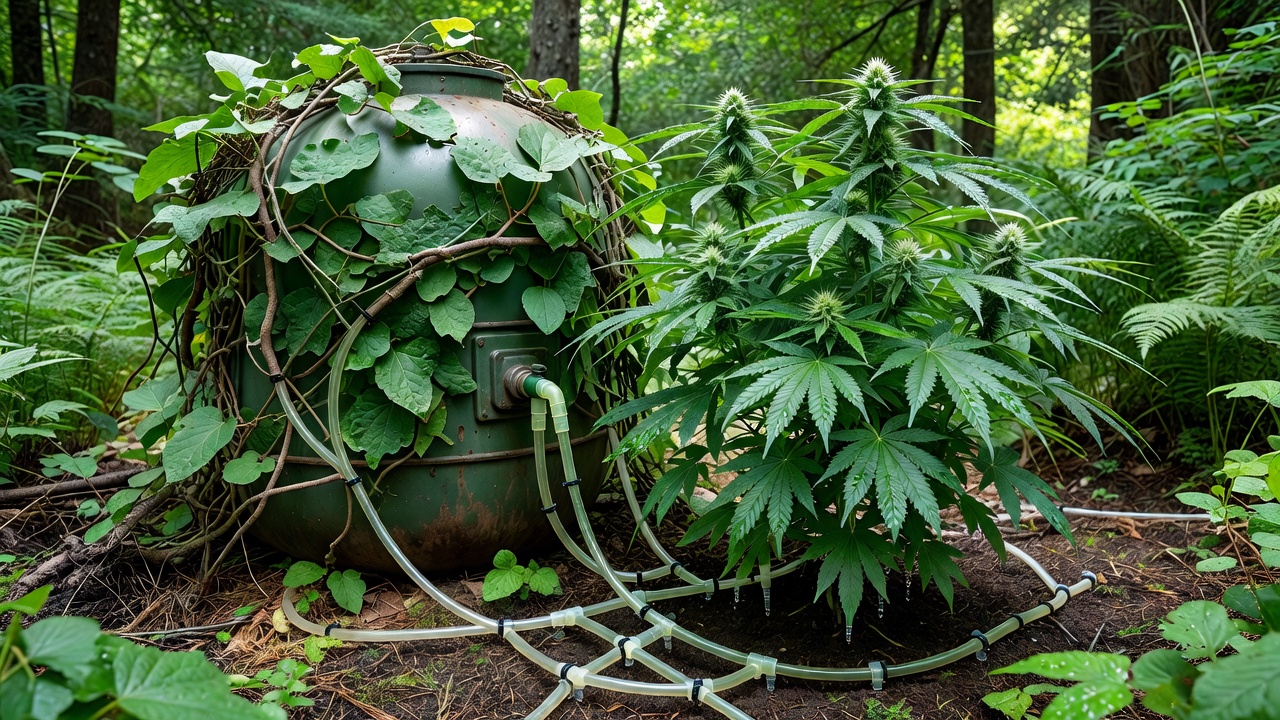
Install fine mesh screens over collection points to filter debris and deter wildlife. Connect multiple barrels in series using discreet black tubing that matches surrounding vegetation. This setup captures substantial volumes during storms without requiring frequent maintenance visits. One grower in the Pacific Northwest collected over 400 gallons from a single three-day rain event by linking four barrels along a natural drainage line.
Efficient Irrigation Techniques
Drip irrigation delivers water directly to root zones, dramatically reducing evaporation and runoff. Pair systems with timers or gravity-fed valves activated only during low-light hours to further minimize visibility. Position emitters under mulch layers for added concealment. Using 1-gallon-per-hour drippers spaced 12 inches apart around each plant ensures even moisture without creating surface puddles that could attract animals or reveal the site.
Schedule watering based on soil moisture tests rather than fixed routines. Overwatering invites root issues and creates detectable wet spots. Incorporate moisture-retaining amendments like coco coir or perlite into planting holes to stretch collected rainwater further. A simple finger test—inserting a finger two inches into the soil—tells growers whether irrigation is truly needed, preventing both underwatering stress and wasteful over-application.
Water Distribution Best Practices
- Map plant locations in advance to run tubing along natural paths.
- Use pressure-compensating drippers for even flow across uneven terrain.
- Flush lines periodically with collected rainwater to prevent clogs.
- Monitor for leaks that could create visible trails or puddles.
Sustainable Practices and Optimization
Integrate companion planting with water-efficient herbs to improve soil moisture retention naturally. Rotate sites yearly to prevent soil depletion and reduce the chance of repeated discovery. Track rainfall data from nearby weather stations to anticipate collection volumes. Recording weekly rainfall totals on a small waterproof notepad helps predict how long stored water will last and informs decisions about adding more barrels in future seasons.
These methods align with broader environmental guidelines from sources like the EPA water research program, promoting responsible resource use in sensitive ecosystems. Reusing greywater from cleaning tools adds another layer of efficiency when properly filtered. Filtering used water through a simple cloth-and-charcoal setup before returning it to barrels prevents introducing contaminants that could harm plants or leave chemical traces.
Minimizing Detection Risks
Every component must prioritize stealth. Paint containers in earth tones and conceal them with branches or rocks. Avoid shiny surfaces that reflect sunlight, and time all maintenance for dawn or dusk. Digital mapping apps help plan routes that avoid trails frequented by hikers or officials. Marking coordinates on an offline GPS device rather than carrying printed maps reduces the chance of leaving physical evidence if stopped.
Regular site checks should focus on subtle indicators like wilting leaves rather than large-scale interventions. This disciplined approach ensures long-term success while protecting both the crop and the grower. Conducting checks no more than once every ten days and varying approach routes further lowers the probability of establishing recognizable patterns that could be noticed by others.
Conclusion
Mastering irrigation and rainwater collection transforms challenging remote locations into viable guerrilla cannabis sites. By combining resilient seed selection with low-impact water systems, growers achieve sustainable yields without compromising security. Apply these techniques consistently to optimize results season after season. Over multiple years, refining these methods based on site-specific observations leads to higher success rates and reduced risk, turning initial trial-and-error into reliable, repeatable practices.