

Buying cannabis seeds from seed banks requires careful scrutiny to ensure stable genetics and reliable results. Unstable strains can lead to poor yields, hermaphroditism, or inconsistent growth, wasting time and resources for home growers. This guide outlines essential red flags to watch for when purchasing from seed banks, focusing on packaging, breeder reputation, and lineage issues that directly affect plant performance. Home cultivators investing dozens of hours per cycle benefit from avoiding these pitfalls through methodical evaluation at every step.
Why Stable Cannabis Genetics Matter for Home Growers
Stable cannabis genetics determine everything from germination rates to final harvest quality. Unstable strains often produce plants with varying phenotypes, leading to uneven canopies and reduced potency. In 2026, with increasing market options, discerning buyers must prioritize genetics that deliver consistent results across multiple grows. For instance, a stable indica-dominant hybrid might reliably finish in 8-9 weeks of flower with 18-22% THC, while an unstable version could stretch unevenly and finish anywhere from 7 to 11 weeks, complicating harvest schedules in limited grow spaces.
Investing in quality seeds pays dividends through higher yields and fewer cultivation headaches. Poor genetics frequently trace back to rushed breeding or improper stabilization, issues that reputable banks avoid through rigorous testing. Consider a practical example: a grower ordering 10 seeds from an untested cross might see only 6 viable plants, with three showing unexpected sativa stretch that outgrows a 4×4 tent. Stable lines, by contrast, allow precise training techniques like low-stress training to produce uniform colas weighing 1-2 ounces each. Testing multiple runs with the same stable strain builds data on optimal nutrients and lighting, often boosting overall yield by 25-40% compared to chasing new unstable varieties each cycle.
Visual Cues on Seed Packaging and Presentation
Seed packaging offers immediate clues about professionalism and authenticity. Look for crisp, professionally printed labels with detailed strain information, batch numbers, and breeder contact details. Vague descriptions or missing data suggest low-quality operations. Concrete guidance includes checking for UV-protective mylar or glass vials that protect against light degradation during shipping. Reputable banks print harvest dates or lot codes that let growers trace origins back to specific mother plants.
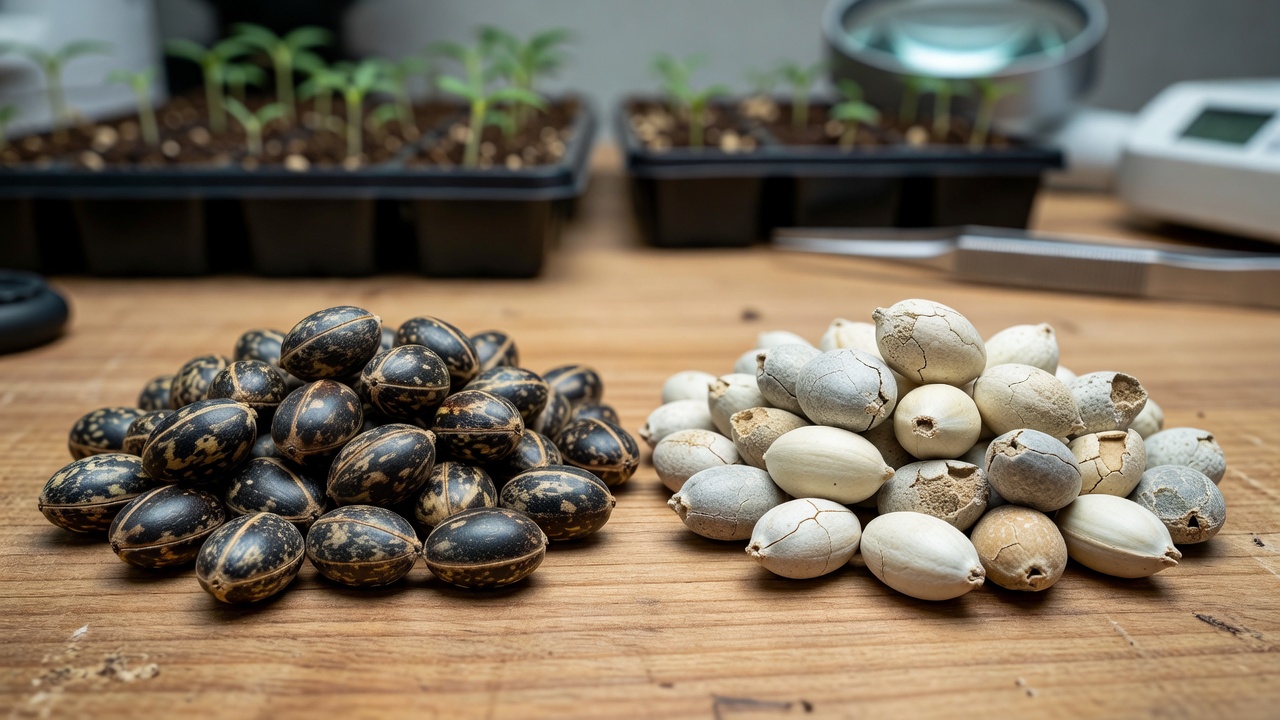
Examine the seeds themselves if possible through clear windows or descriptions. Healthy cannabis seeds appear dark, firm, and patterned with tiger stripes. Light-colored or damaged seeds indicate poor storage or inferior breeding practices that compromise viability. A practical test involves gently pressing a seed between thumb and forefinger; viable ones resist cracking and sink when dropped in water, whereas inferior stock often floats or shows cracks after minimal handling. Growers report germination drops of 50% or more when seeds come from banks using cheap paper envelopes instead of moisture-proof containers.
Additional red flags include overly flashy designs without substance, spelling errors, or generic stock imagery. These elements point to resellers rather than dedicated banks focused on quality cannabis genetics. For example, packaging featuring cartoonish illustrations and vague claims like “super potent” without terpene breakdowns or parentage details frequently correlates with seeds that produce 30% lower resin output than advertised.
Evaluating Breeder Reputation and Track Record
Breeder reputation serves as a cornerstone for reliable purchases. Established names with years of documented success and transparent breeding histories typically offer superior stability. Research forums and grow reports to verify claims before committing. A useful tactic is searching for multi-year grow journals on the same strain; consistent reports of 500+ gram per square meter indoor yields signal reliable stock.
New or unknown breeders warrant extra caution. Check for independent lab tests on cannabinoid profiles and genetic stability. Absence of such data often signals untested stock prone to undesirable traits. In practice, request COAs showing less than 5% variance in THC across tested batches. Without this, a grower might encounter plants testing at 12% instead of the claimed 25%, directly reducing extract yields.
Community feedback on platforms dedicated to cannabis cultivation reveals patterns of success or failure. Consistent complaints about low germination or genetic drift should prompt avoidance of those sources entirely. Look for breeders whose strains appear repeatedly in award-winning grow reports over several seasons rather than one-off hype cycles.
Genetic Lineage Red Flags Impacting Yields
Lineage documentation reveals potential weaknesses hidden in the strain’s background. Overly complex crosses without stabilization often result in unpredictable offspring that fail to reach advertised yields. Growers should map out at least three generations of ancestry when possible.
- Multiple generations of unproven hybrids increase risks of hermaphroditism under stress. A strain with three consecutive polyhybrid crosses may throw male flowers after a single light leak, ruining an entire crop.
- Absence of landrace influences can reduce vigor and resilience in certain environments. Pure modern hybrids often lack the pest resistance found in Afghan or Jamaican landraces, requiring extra IPM measures that add cost and labor.
- Claims of extreme THC levels without supporting pedigree data frequently prove exaggerated. Cross-reference advertised percentages against third-party lab results from similar lineages to avoid disappointment at harvest.
Always request or review full lineage details. Reputable banks provide this information openly, allowing growers to anticipate growth patterns and avoid disappointing harvests. For example, knowing a strain descends from a stable Skunk #1 x Haze cross helps predict its 10-week flower time and need for extra nitrogen in veg.
Practical Checks Before Finalizing Your Purchase
Before buying cannabis seeds, cross-reference the bank against known lists of trusted vendors. Verify secure payment options and clear return policies as indicators of legitimacy. Start by confirming the bank offers tracked shipping and discreet packaging to minimize interception risks during delivery.
Request germination guarantees and storage recommendations. Banks unwilling to provide these details may prioritize sales over customer success with their products. A strong guarantee typically covers 80-90% germination when following provided instructions, such as maintaining 70°F and 80% humidity during the first 72 hours.
Finally, start with smaller orders to test quality. This approach minimizes risk while building confidence in specific seed banks and their cannabis genetics offerings. Ordering 3-5 seeds of a new strain allows full evaluation over one full cycle before scaling to larger purchases for perpetual grows.
Conclusion
Spotting red flags early protects your investment in cannabis cultivation. By examining packaging, vetting breeders, and analyzing lineage, home growers can confidently select stable genetics that deliver strong yields. Apply these checks consistently when buying cannabis seeds to build successful grows year after year. For further reading on industry standards, consult resources from Leafly and established cultivation guides. Documenting each purchase with photos of packaging and resulting plants creates a personal reference library that improves future decisions and reduces recurring mistakes.