
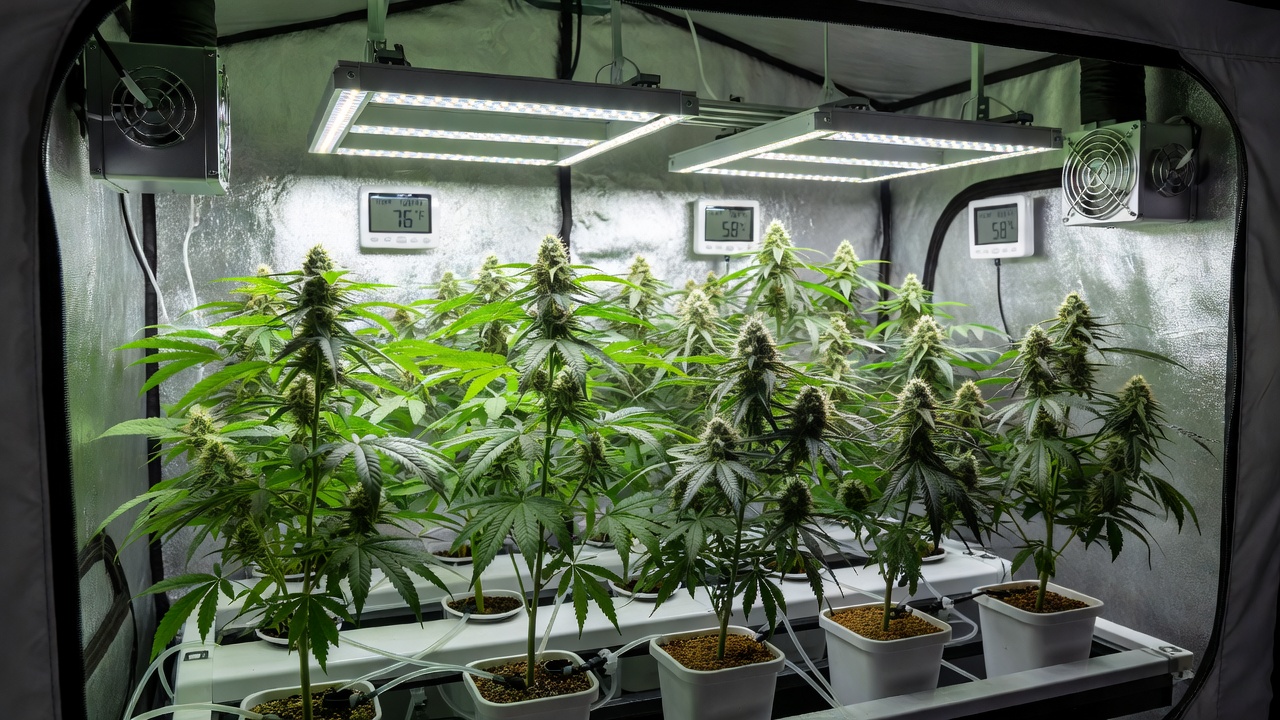
Indoor hydroponic cannabis cultivation in grow tents demands precise control over environmental factors to achieve robust growth and abundant harvests. Temperature and humidity directly influence plant metabolism, nutrient uptake, and disease resistance, making them critical for success in confined spaces. This guide explores stage-specific ranges, essential monitoring equipment, strategies for managing grow light heat, and seamless integration with quality indoor seeds. Home growers can avoid pitfalls like mold while boosting yields through proactive management. In practice, a 4×4 foot tent housing six plants in a deep water culture system benefits from daily checks that keep conditions within tight tolerances, preventing the rapid swings common in small air volumes.
Why Temperature and Humidity Matter in Hydroponic Setups
Hydroponic systems deliver nutrients directly to roots, so aerial conditions become the primary variables growers must master. Elevated temperatures accelerate transpiration but risk stressing plants, while improper humidity encourages pathogens. In grow tents, limited air volume amplifies these effects, requiring consistent monitoring throughout the lifecycle. Proper ranges support optimal vapor pressure deficit (VPD), which enhances photosynthesis and resin production. Beginners often overlook how hydroponic roots lack soil buffers, making plants more sensitive to fluctuations. Maintaining stable conditions prevents issues like nutrient lockout or slowed growth. Authoritative resources such as the EPA’s indoor air quality guidelines highlight the importance of humidity control in enclosed environments to reduce microbial risks. For example, a sudden 5°C spike during lights-on can raise VPD beyond 1.5 kPa, causing leaves to wilt even when roots receive ample solution.
Concrete guidance includes placing sensors at multiple canopy heights and logging readings every 15 minutes. In a typical 3×3 tent, pairing a 6-inch inline fan with a variable speed controller keeps air exchange at 4-6 times per hour without creating excessive wind that damages tender shoots. This stability directly translates to faster vegetative growth and denser flowers later on.
Optimal Ranges Across Growth Stages
Each phase requires tailored settings. During germination and seedling stage, maintain temperatures between 20-25°C with humidity at 65-80% to encourage root development without damping off. Vegetative growth thrives at 22-28°C daytime and 18-24°C at night, paired with 50-70% relative humidity to promote vigorous foliage. Flowering demands the most precision: lower temperatures to 20-26°C and humidity to 40-55% to maximize bud density and terpene retention while minimizing mold. Late flowering may dip humidity further to 35-45%. Nighttime drops of 4-6°C help mimic natural conditions and enhance resin. These ranges integrate well with premium indoor seeds selected for tent environments, delivering consistent performance.
- Seedling: 20-25°C, 65-80% RH
- Vegetative: 22-28°C, 50-70% RH
- Flowering: 20-26°C, 40-55% RH
Practical examples show that seedlings started in rockwool cubes under 18/6 lighting reach transplant size in 10-14 days when humidity stays above 70%. During vegetative stage, growers often run a small ultrasonic humidifier on a timer to maintain the upper end of the range until plants fill half the tent volume. In flowering, switching to a dehumidifier with auto-drain prevents spikes above 55% that invite botrytis in thick colas. Tracking VPD values between 0.8-1.2 kPa during veg and 1.0-1.5 kPa in flower provides a more accurate target than temperature or humidity alone.
Essential Monitoring Equipment for Grow Tents
Reliable tools form the foundation of successful cultivation. Digital hygrometers with data logging track fluctuations over 24 hours, while smart controllers automate adjustments via exhaust fans and humidifiers. Infrared thermometers allow non-contact leaf temperature readings, crucial for accurate VPD calculations in hydroponics. Integrate sensors near the canopy and root zone for comprehensive oversight. Wi-Fi enabled devices send alerts to mobile apps, enabling remote corrections. Pair these with CO2 monitors for advanced setups. Quality equipment prevents costly errors and supports peak performance from indoor seeds optimized for controlled environments.
A common setup uses a sensor placed 15 cm below the light and another at root level. When the canopy sensor reads 26°C and 48% RH while the root sensor shows 22°C, the calculated VPD guides whether to increase exhaust or add moisture. Many growers calibrate devices monthly with salt-test kits to ensure accuracy within ±2% RH. Over one full cycle, logged data reveals patterns such as afternoon heat spikes from lights, allowing preemptive fan speed increases that save 10-15% on electricity.
Adjusting Conditions Around Grow Lights
LED and HID lights generate significant heat that raises tent temperatures, especially during lights-on periods. Position lights 30-60 cm above plants and use dimmers or raise fixtures during peak heat. Exhaust systems with variable speed fans maintain airflow without drying leaves excessively.
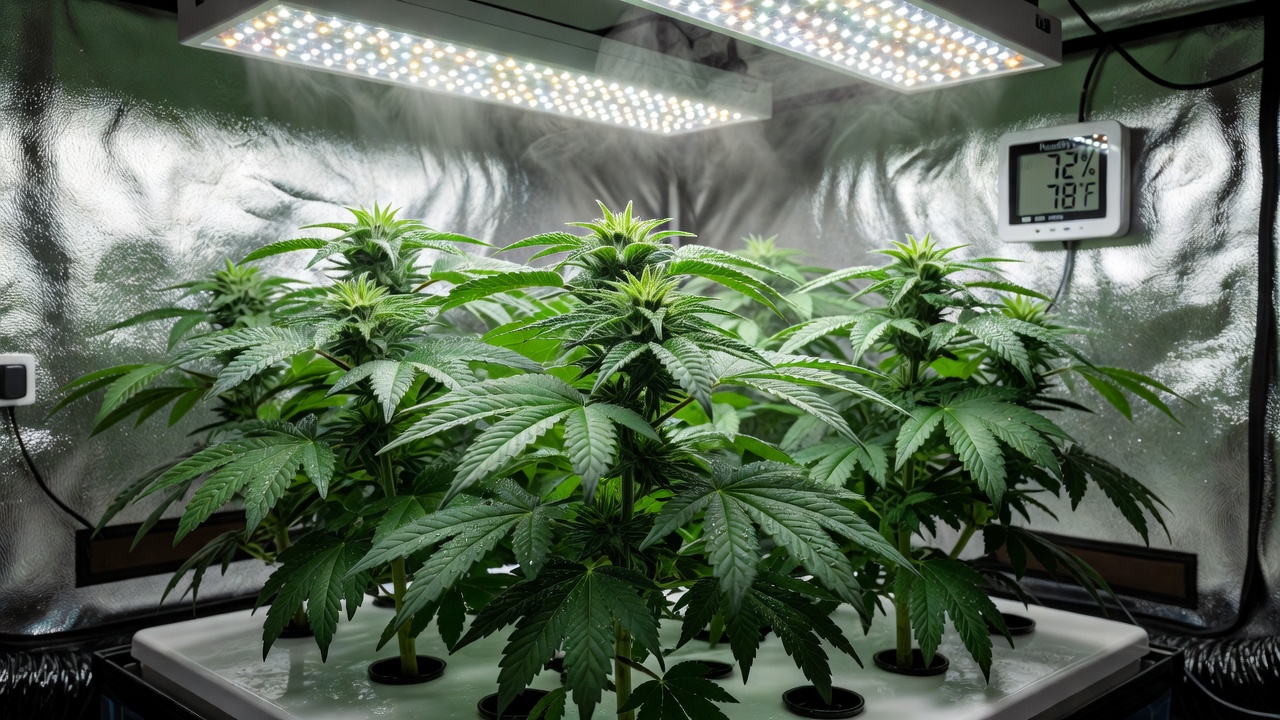
During flowering, schedule lights to avoid extreme daytime spikes. Reflective tent walls distribute light evenly while reducing hot spots. Monitoring leaf surface temperature ensures it stays 1-3°C below air temperature for ideal transpiration rates. These adjustments maximize light efficiency without compromising humidity targets. In a concrete example, a 600W LED in a 4×4 tent may raise air temperature 4°C within 30 minutes of turning on; growers counter this by running the exhaust fan at 60% speed 15 minutes before lights activate. Dimming to 80% during the first two weeks of flower further stabilizes conditions while still delivering adequate PPFD for bud sites.
Preventing Mold and Maximizing Yields
High humidity during flowering invites powdery mildew and bud rot in dense hydroponic canopies. Implement oscillating fans for constant air movement and maintain proper plant spacing. Regular defoliation improves circulation while preserving light penetration. Combine environmental control with disease-resistant indoor seed strains to further reduce risks. Consistent VPD management accelerates growth cycles, leading to heavier harvests. Track environmental data across multiple grows to refine protocols and achieve reliable high yields year after year.
Additional steps include weekly inspections of bud interiors with a magnifying loupe and immediate removal of any suspect material. In tents with limited vertical space, training plants to a flat canopy reduces microclimates where humidity lingers. Many cultivators report that maintaining 45% RH and gentle airflow throughout late flower cuts mold incidence by over 80% compared with uncontrolled environments.
Integrating Indoor Seeds for Peak Performance
Selecting seeds bred for indoor hydroponics ensures genetic compatibility with tent conditions. Fast-flowering varieties respond well to precise humidity drops in late bloom. Start with high-quality genetics that exhibit strong resistance to environmental stress. Acclimate seedlings gradually to target ranges, using propagation domes initially. This integration amplifies the benefits of optimized temperature and humidity, resulting in superior potency and volume. Many enthusiasts report 20-30% yield increases through disciplined environmental management paired with elite indoor seeds.
Practical selection criteria include checking breeder notes for recommended VPD tolerance and flowering time under 12/12 lighting. Starting seeds in a dedicated propagation tent at 24°C and 75% RH for the first five days, then moving them into the main tent at 22°C and 65% RH, minimizes transplant shock. Over successive cycles, growers refine their approach by noting which strains finish with the highest terpene levels when humidity is tapered to 38% in the final two weeks.
Conclusion
Mastering temperature and humidity in hydroponic grow tents unlocks the full potential of cannabis cultivation. By applying stage-specific ranges, investing in monitoring tools, managing light heat, and choosing suitable indoor seeds, growers consistently avoid mold and achieve impressive yields. Dedication to these fundamentals transforms home setups into productive, efficient operations. Consistent record-keeping and small incremental adjustments compound over time, turning average results into reliable, high-quality harvests that rival commercial facilities.