
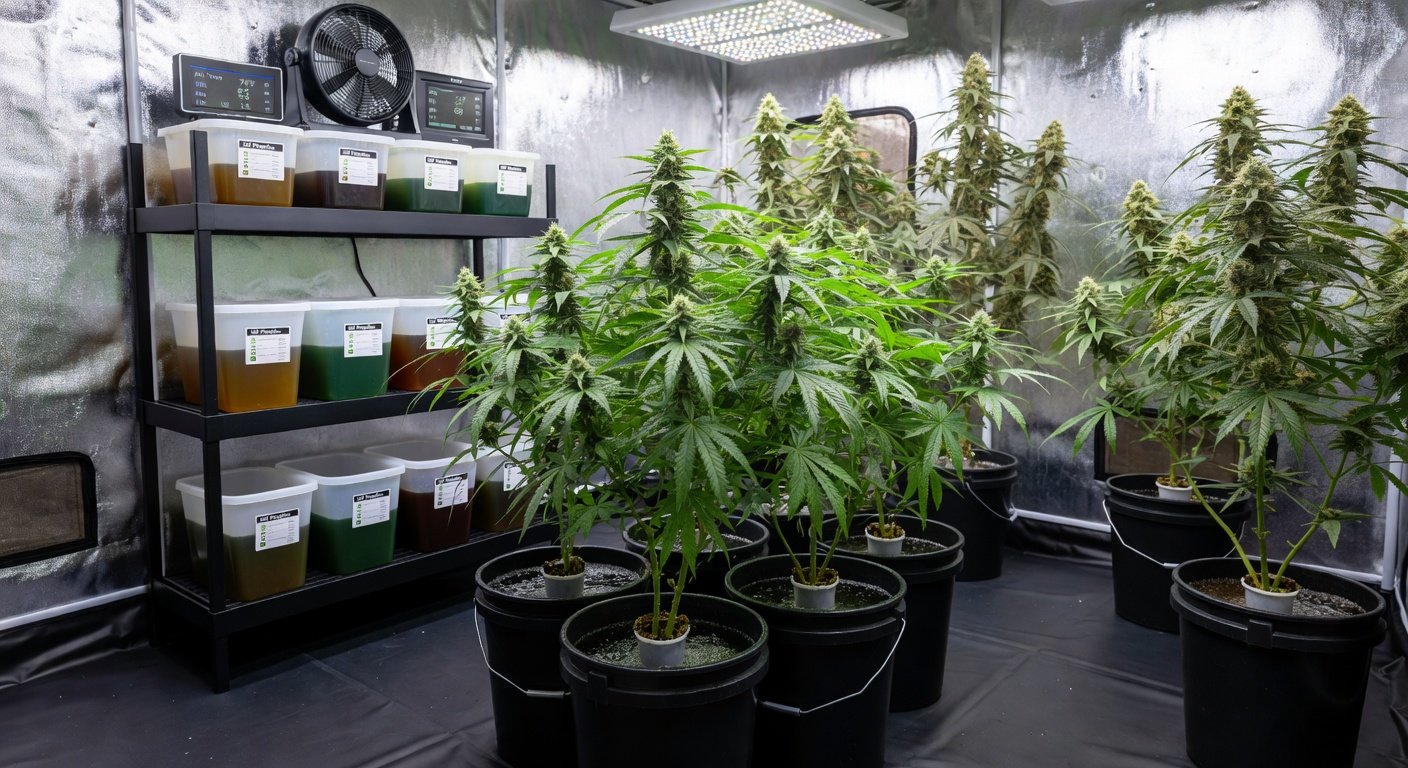
Introduction to Hydroponic Cannabis Cultivation in 2026
Hydroponics has revolutionized cannabis growing, offering precise control over nutrients and water to boost yields and quality. For home growers and enthusiasts in 2026, advancements in automated systems and sustainable tech make it easier than ever to cultivate high-performance strains from premium seeds. This guide covers the latest hydroponic setups, nutrient strategies, troubleshooting, and a comparison with soil methods, helping you maximize your harvest while minimizing environmental impact.
Understanding Hydroponic Systems for Cannabis
Hydroponics grows plants without soil, using nutrient-rich water solutions. It’s ideal for cannabis because it accelerates growth cycles—often 20-30% faster than soil—and allows for denser planting. In 2026, systems are smarter, with IoT sensors monitoring pH, EC (electrical conductivity), and oxygen levels in real-time via apps.
Key benefits include reduced water usage (up to 90% less than soil) and no soil-borne pests, perfect for indoor home setups. For seed buyers, hydroponics pairs well with high-THC or auto-flowering strains that thrive in controlled environments.
Latest Hydroponic Systems Suitable for Cannabis in 2026
2026 brings innovative systems tailored for cannabis. Here’s a breakdown of the top options:
- Deep Water Culture (DWC): Roots dangle in oxygenated nutrient water. Affordable for beginners, with 2026 models featuring auto-top-off reservoirs and UV sterilizers to prevent algae.
- Nutrient Film Technique (NFT): A thin film of nutrients flows over roots in channels. Efficient for veg stages, now with modular LED-integrated channels for space-saving vertical grows.
- Aeroponics: Roots misted with nutrients in air. High oxygen delivery yields bigger buds; 2026 innovations include nano-bubble tech for finer mists and better absorption.
- Ebb and Flow (Flood and Drain): Trays flood periodically. Versatile for various strains, enhanced by AI pumps that adjust cycles based on plant needs.
- Vertical Hydroponics: Tower systems stacking plants. Sustainable for urban growers, with 2026 solar-powered variants reducing energy costs.
Choose based on space: DWC for small tents, vertical for apartments. Pair with full-spectrum LEDs mimicking sunlight for optimal cannabinoid production.
Setting Up Your Hydroponic Cannabis System
Starting a hydroponic grow requires planning. Here’s a step-by-step guide for a basic DWC system, scalable to others:
- Gather Materials: Reservoir (20-50 gallons), air pump with stones, net pots, grow medium (clay pebbles or rockwool), pH/EC meter, and cannabis seeds or clones. Invest in a 2026 smart controller for automation.
- Prepare the Space: Use a grow tent (4×4 ft for 4-6 plants) with ventilation, exhaust fans, and humidity control (40-60% RH). Ensure 18/6 light cycle for veg, 12/12 for flower.
- Assemble the System: Fill reservoir with RO water, add nutrients (start at 1/4 strength for seedlings). Place air stones to maintain DO >6ppm. Insert plants into net pots with medium.
- Germinate and Transplant: Soak seeds in pH 5.8 water for 24 hours, then into rockwool cubes. Transplant to system after roots show (7-10 days).
- Monitor and Adjust: Keep pH 5.5-6.5, EC 1.0-2.5 mS/cm. Change reservoir every 1-2 weeks.
For advanced setups like aeroponics, add mist nozzles calibrated to 5-10 micron droplets. Total setup cost: $300-800 for home scale.
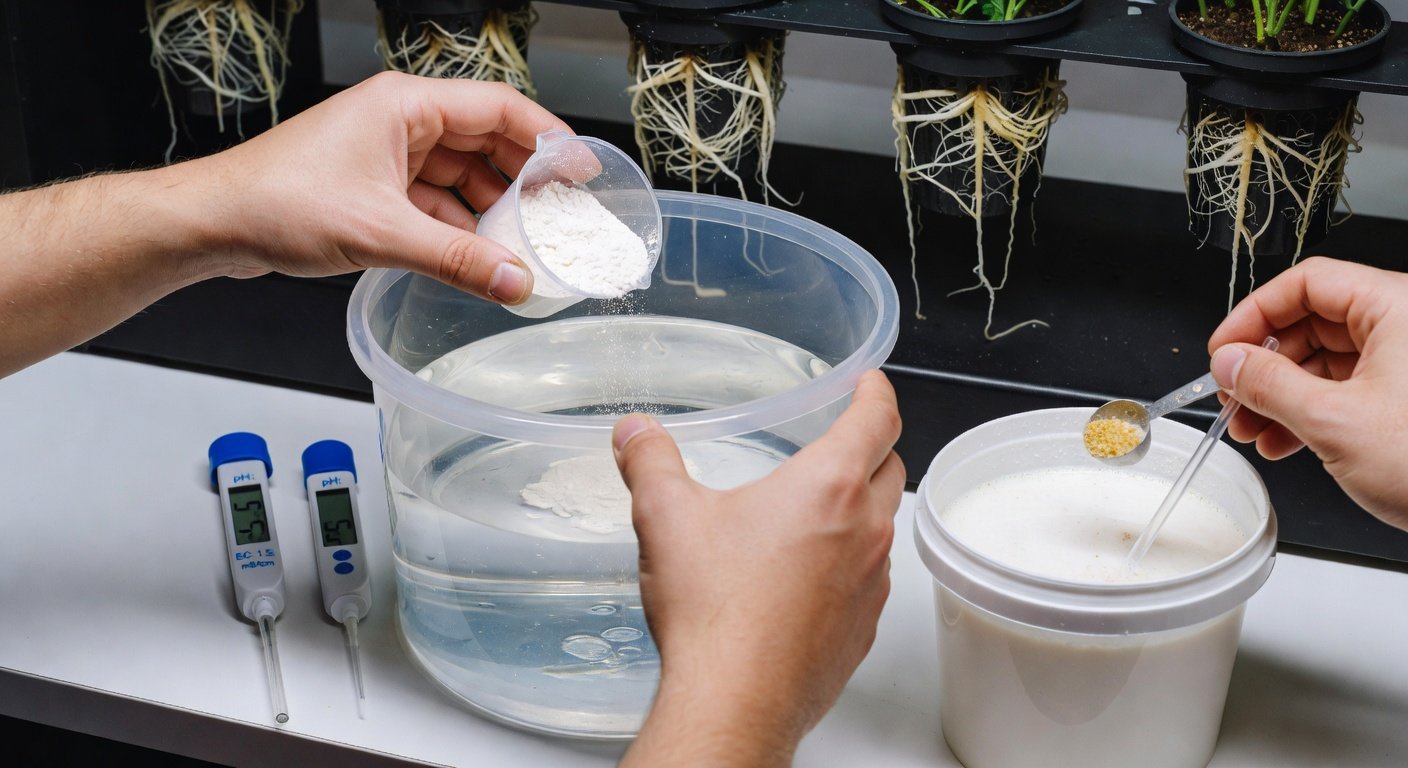
Nutrient Management in Hydroponic Cannabis Grows
Nutrients are the backbone of hydroponics—no soil means direct delivery. Use cannabis-specific formulas with NPK ratios: high nitrogen (3-1-2) for veg, high phosphorus/potassium (1-3-4) for flower.
In 2026, bio-engineered nutrients include microbial additives for root health and silica boosters for pest resistance. Mix step-by-step:
- Start with base nutrients (e.g., General Hydroponics Flora series).
- Add cal-mag if using RO water to prevent deficiencies.
- Supplements: Bloom boosters for yields, enzymes for root pruning.
Schedule: Flush every 2 weeks with plain water. Monitor leaves for signs—yellowing tips indicate pH issues, purple stems suggest phosphorus lockout. Sustainable tip: Recycle runoff with filters, reducing waste by 70%. For more on sustainable nutrient practices, check the EPA’s sustainable agriculture guidelines.
Troubleshooting Common Hydroponic Issues
Even with 2026 tech, problems arise. Here’s how to fix them:
pH Imbalances
Symptoms: Nutrient burn or lockout. Solution: Calibrate meter, adjust with pH up/down solutions. Aim for stability; auto-dosers in new systems prevent this.
Root Rot
Caused by low oxygen or pathogens. Fix: Increase aeration, use beneficial bacteria like Hydroguard. In aeroponics, clean misters weekly.
Nutrient Deficiencies
Nitrogen: Pale leaves—boost N. Calcium: Spotty growth—add calmag. Test EC to avoid overfeeding.
Pests and Algae
Prevent with IPM: Neem oil sprays, UV lights. Algae in reservoirs? Blackout covers and hydrogen peroxide treatments.
Pro tip: Log data with apps like GrowBuddy for predictive troubleshooting.
Hydroponics vs. Soil-Based Methods: A Comparison for Advanced Growers
For seasoned cultivators, hydroponics shines in speed and control but demands more attention than soil.
| Aspect | Hydroponics | Soil |
|---|---|---|
| Yield | 20-50% higher; faster cycles (8-10 weeks) | Steady but slower (10-12 weeks) |
| Setup Cost | $500+ initial; ongoing nutrients | $100-300; organic amendments |
| Maintenance | Daily monitoring; precise | Forgiving; less frequent |
| Sustainability | Water-efficient; recyclable | Soil health buildup; natural |
| Strain Suitability | Best for hybrids needing consistency | Ideal for organic, terpene-rich grows |
Hydro wins for commercial-scale home grows, especially with 2026 strains optimized for soilless media. Soil offers flavor depth but risks overwatering. Hybrid approaches, like coco coir with hydro nutrients, blend benefits.
Innovations in 2026: Efficiency and Sustainability for Seed Buyers
2026 hydroponics emphasizes green tech. AI-driven systems like Grobo’s latest predict harvests via camera scans, optimizing light and CO2. Closed-loop recirculating systems cut water use by 95%, aligning with global regs.
For sustainability, bio-degradable reservoirs and LED efficiencies reduce carbon footprints. Seed buyers should select strains like Blue Dream or Gorilla Glue autos, bred for hydro resilience—higher resin, faster finishes.
Integrate solar panels for off-grid grows; per the U.S. Department of Energy, this slashes costs. These innovations make hydroponics accessible, yielding 1-2 lbs per plant for enthusiasts.
Conclusion
Embracing 2026 hydroponic systems empowers cannabis growers to achieve superior yields sustainably. From setup to troubleshooting, mastery comes with practice. Start small, experiment with nutrients, and watch your seeds flourish into potent harvests. Happy growing!