
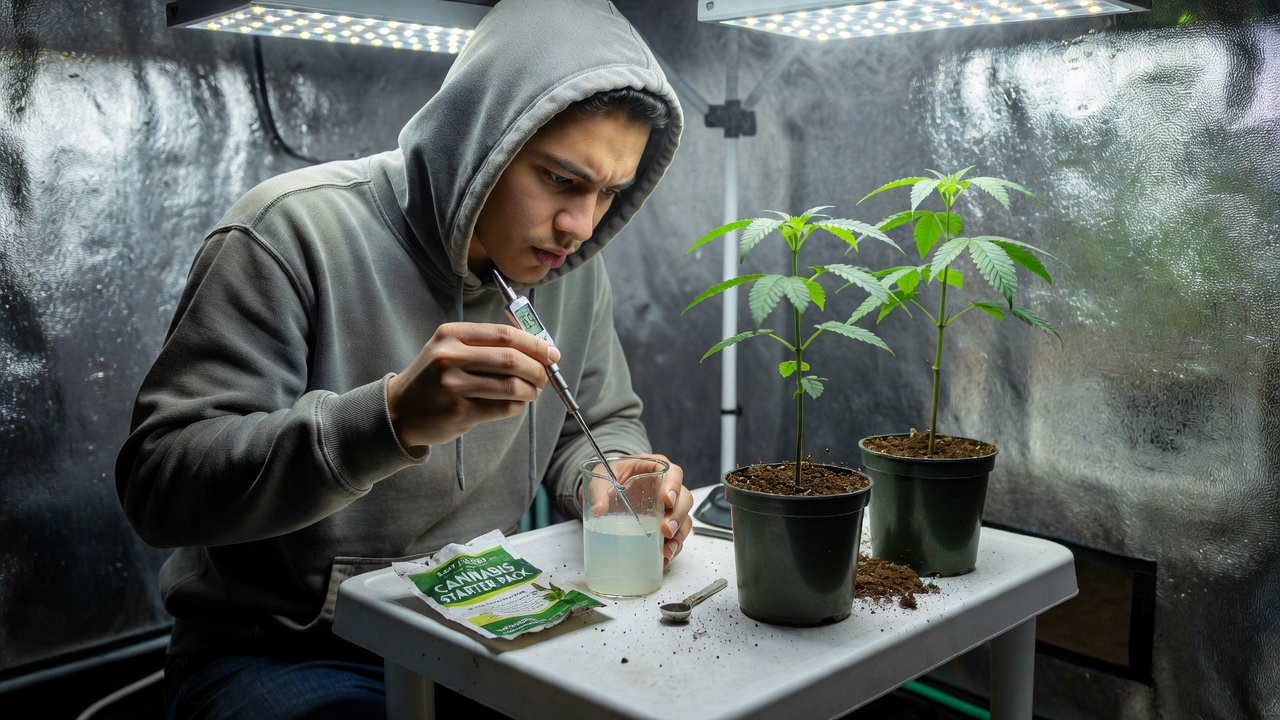
Starting your first cannabis grow with easy seeds is an exciting journey, but understanding pH and EC is essential for healthy plants and bountiful harvests. These two measurements control how well your plants absorb nutrients, preventing common issues like deficiencies or toxicities that can stunt growth or ruin yields. For beginners, mastering these basics early sets the foundation for success in any home setup, whether soil, coco, or hydroponics. This guide breaks down the science in simple terms, explains why balance matters, and provides practical steps using affordable tools. Many new growers find that consistent monitoring turns unpredictable results into reliable, high-quality harvests.
What Is pH and Why Does It Matter for Cannabis?
pH measures the acidity or alkalinity of your growing medium and nutrient solution on a scale from 0 to 14, with 7 being neutral. Cannabis thrives in slightly acidic conditions, ideally between 6.0 and 7.0 for soil grows and 5.5 to 6.5 for hydro or coco. When pH drifts outside this range, nutrients become locked out even if present in the solution, leading to yellowing leaves, slow growth, or burnt tips. For example, at a pH below 5.8 in hydro systems, iron and manganese become overly available while phosphorus uptake drops sharply.
Easy cannabis seeds, bred for resilience, still suffer when pH imbalances occur during critical stages like seedling or flowering. Maintaining proper pH ensures roots uptake nitrogen, phosphorus, and potassium efficiently. Many first-time growers overlook this, resulting in frustrated attempts and wasted resources. Regular checks prevent these problems and promote vigorous plants from the start.
pH Targets by Medium and Stage
In soil, aim for 6.2–6.8 throughout the cycle because soil microbes help buffer swings. In coco coir or rockwool, keep the solution between 5.8 and 6.2 to compensate for the medium’s lower buffering capacity. During the first two weeks after germination, stay on the lower end of the range (5.8–6.0) to encourage rapid root development. As plants enter flowering, gradually raise the target toward 6.3–6.5 so phosphorus and potassium remain available for bud formation.
Understanding EC and Nutrient Strength
EC, or electrical conductivity, gauges the concentration of dissolved salts and nutrients in your water or medium. Measured in millisiemens per centimeter (mS/cm) or parts per million (ppm), it indicates how strong your nutrient mix is. Beginners often overfeed, pushing EC too high and causing nutrient burn, while underfeeding leads to deficiencies. A practical rule is to start seedlings at 0.4–0.6 mS/cm and raise the value only after the third set of true leaves appears.
For easy cannabis strains, start with low EC around 0.8-1.2 mS/cm during vegetative growth and gradually increase to 1.4-1.8 mS/cm in flowering. Balanced EC works hand-in-hand with pH to avoid toxicity buildup. Without monitoring, salts accumulate in the medium, stressing roots and reducing yields. This is especially important in recirculating systems where imbalances compound quickly.
EC Adjustments Through the Growth Cycle
- Seedling stage: 0.4–0.8 mS/cm to avoid burn on tender roots.
- Vegetative stage: 1.0–1.4 mS/cm, increasing every seven days as leaf mass grows.
- Flowering weeks 1–4: 1.4–1.6 mS/cm to support bud sites.
- Flowering weeks 5–8: 1.6–1.8 mS/cm, then taper back to 1.2 mS/cm in the final two weeks for a clean flush.
Affordable Tools for Accurate Measurement
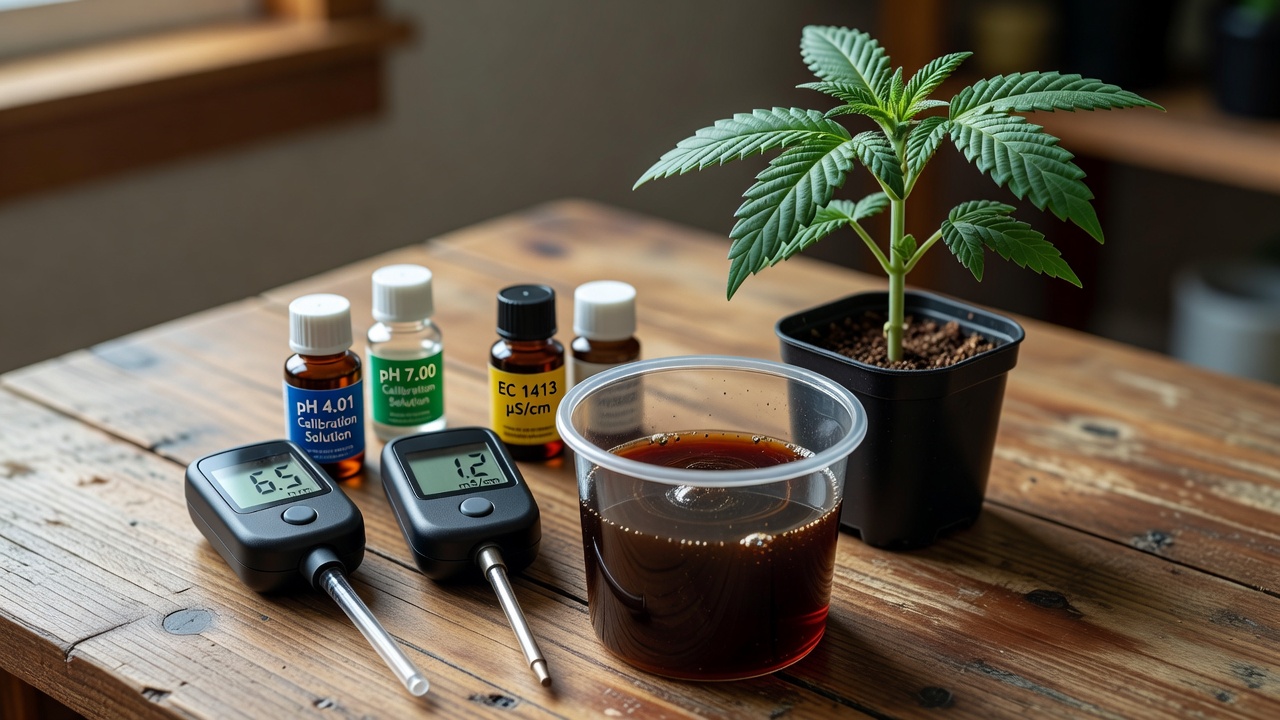
You do not need expensive lab equipment to monitor pH and EC effectively. Digital pH pens and EC meters from brands like Apera or Bluelab offer reliable readings for under $100. Combo meters that test both parameters simplify the process for beginners. Calibration solutions and storage liquids keep tools accurate over time. Store pH pens upright in storage solution and never let the probe dry out; replace the cap after every use.
Additional basics include pH up and down solutions (phosphoric acid or potassium hydroxide based), distilled water for mixing, and a simple syringe for precise adjustments. Many growers also use inexpensive soil pH test kits as backups. These tools fit any budget while delivering professional results when used correctly.
Simple Steps to Measure and Adjust Levels
Begin by calibrating your meters with fresh solutions before each use. For hydro setups, test the nutrient reservoir directly; in soil, measure runoff water after watering. Aim for consistent readings at the same time daily to spot trends early. Always test temperature first—EC readings rise roughly 2 % per degree Celsius above 25 °C—so cool the sample if needed.
To adjust pH, add small amounts of pH up or down while stirring, then retest after 15 minutes. For EC, dilute with plain water if too high or add nutrients gradually if low. Always adjust pH after mixing nutrients, as they naturally alter acidity. Document readings in a grow journal to refine your routine across growth phases.
Daily Monitoring Routine Example
- Measure reservoir or runoff at 8 a.m. before lights come on.
- Record pH, EC, and water temperature in a simple spreadsheet.
- If pH has drifted more than 0.3 units overnight, adjust in 0.1 increments.
- Flush with plain water every 10–14 days in soil or coco to reset EC to baseline.
Common Mistakes and How to Avoid Them
One frequent error is ignoring temperature effects—warm solutions read higher EC, so measure at room temperature. Another is skipping calibration, leading to false readings and improper adjustments. Overcorrecting pH swings rapidly damages roots, so make changes slowly. A safe practice is to add no more than 0.5 ml of pH adjuster per liter at a time and wait ten minutes before retesting.
Beginners sometimes use tap water without checking its baseline EC, introducing unwanted minerals. Always start with filtered or RO water for control. Finally, neglecting weekly flushes allows salt buildup; incorporate plain water flushes every 2-3 weeks to reset levels and maintain root health through harvest.
Optimizing Growth from Seed to Harvest
With easy cannabis seeds, consistent pH and EC monitoring accelerates vegetative growth and maximizes resin production in flower. Track levels weekly, adjusting based on plant response like leaf color and growth rate. This proactive approach minimizes stress and supports robust development in small home spaces. Watch for early warning signs: dark green, clawing leaves often signal high EC, while pale new growth usually means pH is locking out iron or nitrogen.
By harvest, balanced conditions yield denser buds and better terpene profiles. Combine these practices with proper lighting, ventilation, and watering schedules for optimal results. Resources from the EPA on water quality further inform safe nutrient practices.
Conclusion
Grasping pH and EC transforms beginner cannabis growing from guesswork into predictable success. Using affordable tools and following straightforward measurement steps prevents nutrient issues, ensuring your easy seeds reach their full potential. Stay vigilant, adjust thoughtfully, and enjoy the rewarding process from seed to harvest.