
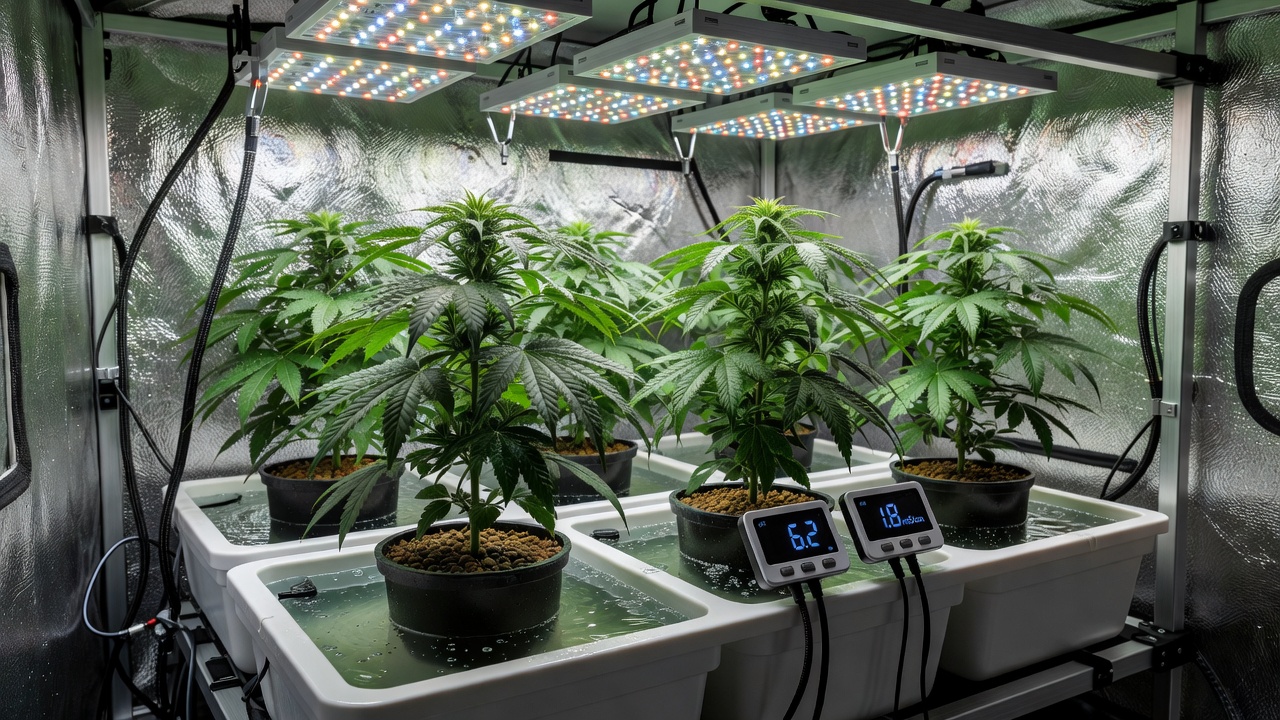
Indoor cannabis cultivation in hydroponic systems within grow tents demands exact control over pH and electrical conductivity (EC) to ensure vigorous growth and abundant harvests. In 2026, home growers increasingly rely on these metrics to optimize nutrient uptake, especially when working with sensitive indoor-bred seeds under artificial lighting. Proper balancing prevents deficiencies, toxicities, and stunted plants while boosting overall yields. For instance, maintaining stable parameters in a typical 1.2 m x 1.2 m tent housing four plants can raise final dry weight by 25 percent compared with unmanaged reservoirs.
Understanding pH and EC Fundamentals for Hydroponics
pH measures the acidity or alkalinity of your nutrient solution on a scale of 0 to 14, with cannabis thriving in slightly acidic ranges. For hydroponic setups, maintain pH between 5.5 and 6.5 to facilitate absorption of essential elements like nitrogen, phosphorus, and potassium. Deviations outside this window lock out nutrients, leading to visible symptoms such as yellowing leaves or weak stems. A practical example: if pH climbs to 7.2 during week three of vegetative growth, iron and manganese become unavailable even though they remain dissolved; leaves develop interveinal chlorosis within four days.
EC, or electrical conductivity, quantifies the concentration of dissolved salts and nutrients in the solution. Measured in millisiemens per centimeter (mS/cm), optimal EC for cannabis during vegetative growth sits between 1.2 and 1.8, rising to 1.8–2.2 during flowering. Monitoring both parameters daily allows growers to fine-tune solutions before issues escalate in confined tent environments. Beginners should test at the same time each morning, recording values in a simple spreadsheet to spot trends before they affect root health.
Essential Monitoring Tools for Grow Tents
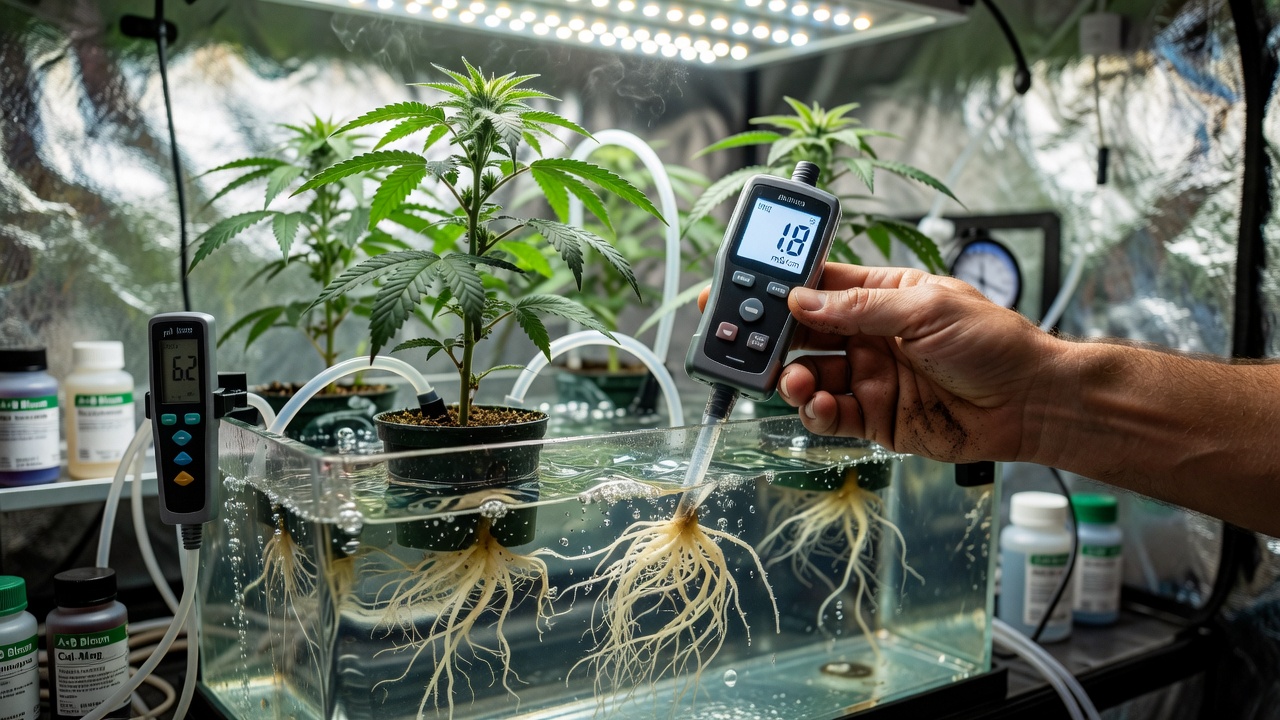
Reliable tools form the backbone of any successful hydroponic operation. Digital pH meters with automatic temperature compensation provide accurate readings, while EC pens or inline monitors track nutrient strength continuously. Calibration solutions should be used weekly to maintain precision, as drift in readings can mislead adjustments. A common grower routine involves storing the meter in storage solution and rinsing the probe with distilled water after every use.
Additional accessories include pH up and down solutions, EC-resistant reservoirs, and data-logging apps that record trends over time. In grow tents, position sensors away from direct light and heat sources to avoid skewed results. Regular maintenance of these instruments ensures consistent performance throughout the grow cycle. Many growers also keep a backup analog pH test kit for verification during power outages or meter failures.
Step-by-Step Daily Monitoring Routine
- Stir reservoir for 30 seconds.
- Measure temperature first, then pH and EC.
- Log readings and compare to previous three days.
- Make micro-adjustments of no more than 0.1 pH or 0.2 EC at a time.
Common Pitfalls with Indoor Cannabis Seeds
Indoor-bred cannabis seeds often exhibit heightened sensitivity to pH fluctuations due to their genetic selection for controlled environments. A frequent mistake is starting seedlings in overly concentrated solutions, where EC exceeds 1.0, causing root burn and poor establishment. Always begin with lower EC levels around 0.8–1.0 and gradually increase as plants mature. One documented case showed 60 percent of seedlings damping off when started at EC 1.4; lowering the initial strength to 0.9 eliminated the loss.
Another pitfall involves ignoring temperature effects on pH stability. Warm tent conditions above 24°C can accelerate pH swings, especially with organic nutrients. Growers should test solutions at the same temperature as the reservoir and adjust for seasonal variations in indoor climates. Overlooking these factors commonly results in reduced germination rates and uneven canopy development. Using a small aquarium heater with thermostat in the reservoir can stabilize both temperature and pH drift during winter months.
Adjusting pH and EC Under Various Grow Lights
Different lighting technologies influence transpiration rates and thus nutrient demand. LED setups, popular for energy efficiency, produce less heat and allow higher EC levels without stressing plants, often supporting values up to 2.4 during peak bloom. In contrast, high-intensity discharge (HID) lights increase evaporation, necessitating more frequent pH monitoring and dilution to prevent salt buildup. Growers running 600 W HPS fixtures typically top up with 3–5 liters of pH-balanced water every other day.
Under full-spectrum LEDs, maintain slightly lower pH (5.8–6.2) to enhance micronutrient uptake like iron and manganese. For HID systems, raise EC gradually while ensuring adequate ventilation to manage humidity. These light-specific tweaks can increase yields by 15–20 percent when combined with consistent reservoir changes every 7–10 days. A side-by-side trial in identical tents confirmed a 180 g increase per plant when parameters were matched to the lighting type.
Advanced Strategies for Optimal Nutrient Uptake
Beyond basic monitoring, advanced techniques include implementing automated dosing systems that respond to real-time pH and EC data. Recirculating hydro setups benefit from weekly nutrient resets to eliminate accumulated metabolites that alter conductivity. Foliar feeding at adjusted pH levels during early veg can supplement root uptake when tent conditions fluctuate. Apply a 5.8 pH foliar spray at lights-off to avoid leaf burn.
Consider strain-specific responses: indica-dominant varieties often tolerate higher EC, while sativas prefer leaner solutions. Incorporate beneficial microbes to stabilize pH naturally and improve root-zone health. For authoritative guidance on hydroponic nutrient management, refer to resources from University of Minnesota Extension. Tracking environmental variables alongside solution metrics enables predictive adjustments that sustain peak performance. Many experienced cultivators also run parallel reservoirs, alternating between full-strength and half-strength batches to fine-tune individual plant needs.
Troubleshooting and Yield Optimization Techniques
When pH drifts upward, add small increments of phosphoric acid while stirring thoroughly and retesting after 30 minutes. EC spikes from evaporation require topping up with pH-balanced water rather than concentrated nutrients. Yellowing foliage often signals pH lockout rather than deficiency, so always verify solution parameters first. A practical checklist includes checking root color, solution smell, and recent temperature swings before adding any corrective agents.
To maximize yields, integrate these practices into a weekly schedule: Monday for full testing, Wednesday for minor tweaks, and Friday for reservoir maintenance. Documenting results across multiple grows reveals patterns unique to your tent setup and seed stock, leading to progressively larger harvests under optimized conditions. One grower logged six consecutive cycles and improved average yield from 380 g to 520 g per square meter simply by refining the adjustment schedule.
Conclusion
Precise pH and EC management transforms hydroponic cannabis cultivation in grow tents from trial-and-error into a science-driven process. By mastering monitoring tools, avoiding seed-related pitfalls, tailoring adjustments to lighting, and applying advanced uptake strategies, home growers achieve healthier plants and superior yields. Consistent application of these techniques ensures reliable results season after season.