

Growing feminized photoperiod cannabis from seed requires precise nutrient management to support healthy female plants throughout their lifecycle. Understanding NPK ratios—the balance of nitrogen (N), phosphorus (P), and potassium (K)—is essential for robust growth, resin production, and maximum yields. This guide outlines proven feeding strategies tailored specifically to feminized seeds, covering vegetative and bloom phases while addressing soil versus hydroponic methods. Photoperiod feminized plants offer growers extended vegetative periods that can be adjusted based on desired plant size, but this flexibility demands careful attention to how nutrient demands evolve. By matching NPK delivery to each developmental window, cultivators reduce the risk of stress-induced hermaphroditism and achieve denser, more resinous flowers at harvest.
Why NPK Matters for Feminized Photoperiod Plants
Feminized seeds produce nearly all female plants, eliminating the need for sexing but demanding consistent nutrition to avoid stress that could trigger hermaphroditism. Photoperiod strains rely on light cycle changes to flower, giving growers extended control over vegetative growth. Proper NPK application fuels photosynthesis in veg and supports bud development in bloom without causing lockout or toxicity. Because these genetics are often bred for high cannabinoid output, any prolonged imbalance in nitrogen, phosphorus, or potassium can reduce terpene profiles and overall potency. For example, a grower who maintains steady 3-1-2 ratios during early vegetative growth typically sees thicker stems and faster node spacing compared with plants fed generic all-purpose fertilizers.
Beginners often overlook how ratios shift dramatically between phases. Excess nitrogen late in bloom leads to harsh smoke and reduced potency, while insufficient phosphorus stunts flower formation. Monitoring pH and EC alongside NPK prevents most issues before they appear in the leaves. Practical observation shows that plants receiving gradual ratio changes rather than abrupt switches display fewer signs of interveinal chlorosis or tip burn. Keeping a simple spreadsheet that logs weekly EC, pH, and visual notes helps identify trends before deficiencies become severe.
Vegetative Phase NPK Ratios and Timeline
During the vegetative stage, which typically lasts 4–8 weeks for photoperiod plants, focus on nitrogen-dominant formulas. Target an NPK ratio around 3-1-2 or 4-2-3 to encourage lush foliage and strong root systems. Start seedlings with very light feeds at 25% strength for the first two weeks, gradually increasing to full vegetative strength by week three. In practice, this means mixing 1–2 ml per liter of a concentrated vegetative nutrient such as a 4-2-3 liquid formula during the initial transition, then scaling to the manufacturer’s recommended dosage once the fourth set of true leaves appears.
Water every 2–3 days or when the top inch of soil feels dry. In hydro systems, maintain a constant low EC of 0.8–1.2 mS/cm with daily reservoir checks. Supplement with calmag and trace minerals to support rapid cell division common in feminized genetics. A common schedule used by many indoor growers involves adding 0.5 ml/L of calmag alongside the base nutrient from week two onward, especially when running LED lighting that increases transpiration rates.
Seedling to Early Vegetative Transition
- Week 1–2: ¼ strength vegetative nutrients
- Week 3–4: Full strength, add beneficial microbes
- Week 5+: Monitor for nitrogen excess and adjust downward if tips darken
Organic growers often incorporate a light top-dress of worm castings or a nitrogen-rich amendment such as blood meal at week three to sustain microbial activity without risking salt buildup. Hydroponic users may refresh the reservoir every five days rather than weekly during peak vegetative growth to keep dissolved oxygen levels high and prevent algae formation.
Bloom Phase Adjustments for Maximum Resin
Transition to bloom nutrients once you switch to a 12/12 light cycle. Shift ratios to 1-3-4 or 0-5-4 to prioritize phosphorus and potassium for bud swelling and terpene production. Reduce nitrogen sharply after the first three weeks of flower to prevent leafy buds. Many cultivators begin this transition by mixing a 1-3-2 bloom base at 50% strength for the first seven days, allowing plants to acclimate before moving to full recommended strength around day ten of flower.
Feeding frequency increases slightly in early bloom, then tapers as plants ripen. Flush with plain pH-balanced water for 7–14 days before harvest. This practice improves flavor and smoothness, especially important for feminized varieties bred for high cannabinoid output. During weeks four through six, growers frequently add a PK booster containing 0-13-14 at 1–2 ml/L once weekly to push resin gland development without overshooting and causing nutrient lockout.
Week-by-Week Bloom Feeding Outline
- Weeks 1–3: 1-3-2 base formula, light nitrogen residual acceptable
- Weeks 4–6: 0-5-4 or 0-13-14 booster emphasis, nitrogen near zero
- Weeks 7–9: Reduced volume feeds, begin flush preparation
Soil Versus Hydroponic Applications
Soil growers benefit from organic amendments and slow-release formulas that buffer minor ratio mistakes. Use living soil or amended supersoil with compost teas for microbial support.
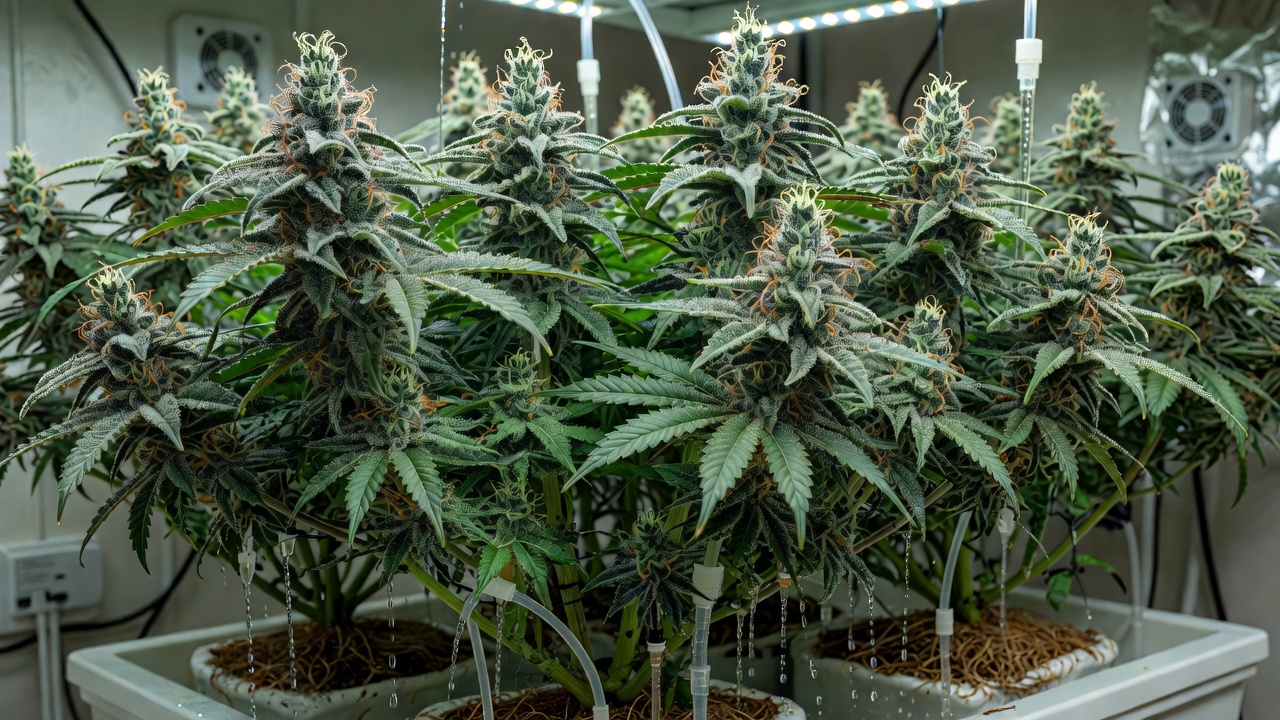
Hydroponic setups demand more precision because nutrients reach roots instantly. Maintain lower overall concentrations and change reservoirs weekly to avoid salt buildup common in recirculating systems. A typical living-soil recipe includes equal parts compost, aeration material, and mineral amendments such as basalt rock dust, providing a slow-release nitrogen source that lasts well into mid-flower.
Regardless of medium, always check runoff EC and pH. Soil targets 6.0–6.8 while hydro stays between 5.5–6.2. Yield-focused growers often add silica and beneficial bacteria in both methods to strengthen stems supporting heavy colas. In hydro, adding 1 ml/L of potassium silicate during weeks two through five of veg has been shown to increase stem diameter measurably, reducing the need for extensive staking later.
Preventing Nutrient Burn and Deficiencies
Nutrient burn appears as crispy leaf edges from overfeeding, while deficiencies show as yellowing or spotting. Start conservatively and increase strength only after observing positive response over several days. Feminized plants can be sensitive to salt-based synthetics, so many home growers prefer organic lines for gentler uptake. When switching between organic and synthetic regimens, always allow a one-week transition period using plain water to avoid microbial die-off or sudden pH swings.
Common fixes include flushing with three times the pot volume in pH’d water, then resuming at reduced strength. Regular leaf tissue analysis or simple visual scouting keeps issues from spreading across the canopy. For instance, if lower leaves begin showing magnesium mottling, a single calmag foliar spray at 1 ml/L often corrects the symptom within four days while the root zone is simultaneously flushed.
Yield Optimization Tips for Home Growers
Combine correct NPK timing with environmental controls for top results. Maintain 75–82°F daytime temperatures and 45–55% humidity in bloom. Train plants using low-stress techniques during veg to create multiple colas that utilize the boosted phosphorus later. Track every feed in a journal to refine ratios across future grows. Many experienced cultivators also incorporate weekly compost tea applications in soil grows during the final vegetative week and first two bloom weeks to boost microbial diversity and nutrient availability.
Many successful cultivators reference university extension resources such as those from University of Minnesota Extension for foundational plant nutrition principles that apply directly to cannabis cultivation. Combining these evidence-based guidelines with strain-specific observations allows home growers to fine-tune NPK programs that consistently deliver above-average yields.
Conclusion
Mastering NPK ratios for feminized photoperiod cannabis transforms average harvests into exceptional ones. By following phase-specific schedules, choosing the right medium, and watching plant signals closely, home growers can consistently produce potent, high-yielding female plants while avoiding the most common nutrient pitfalls. With careful record-keeping and gradual adjustments, even first-time cultivators can achieve professional-grade results from seed to harvest.