

What Are F1 Hybrid Cannabis Seeds?
In the evolving world of cannabis cultivation, F1 hybrid seeds represent a pinnacle of genetic engineering tailored for growers. As of 2026, these seeds are gaining traction among home enthusiasts and professional breeders alike. F1 hybrids are the first-generation offspring from crossing two distinct, purebred parent lines—often called inbred lines or pure strains. This crossbreeding process, rooted in classical plant genetics, produces offspring that inherit a balanced mix of traits from both parents.
Unlike traditional cannabis seeds, which might result from open pollination or less controlled breeding, F1 hybrids are meticulously developed in controlled environments. Seed banks produce them by selecting parent strains for specific desirable qualities, such as potency, yield, or resistance to pests. The result? Plants that exhibit remarkable uniformity in growth patterns, flowering times, and cannabinoid profiles. For home growers, this means less guesswork and more reliable harvests.
The Science of Hybrid Vigor in Cannabis
Hybrid vigor, or heterosis, is the magic behind F1 seeds’ appeal. This phenomenon occurs when the hybrid offspring outperform their parents in key areas like growth rate, yield, and resilience. In cannabis, hybrid vigor manifests as taller plants with denser buds, faster vegetative growth, and enhanced resistance to environmental stresses like heat, drought, or pathogens.
Why does this happen? At a genetic level, inbreeding in parent lines masks deleterious recessive genes. When crossed, the F1 generation benefits from a broader genetic diversity, leading to improved metabolic efficiency and vigor. Studies on plant hybrids, including cannabis analogs like hemp, show yield increases of up to 30% compared to non-hybrids. For instance, research from agricultural extensions highlights how heterosis boosts photosynthesis and nutrient uptake, translating to bigger, healthier plants.
For cannabis enthusiasts, this vigor is a game-changer. Imagine starting with seeds that all germinate at the same rate and mature uniformly—no more culling runts from your grow op. This predictability is especially valuable in 2026’s regulated markets, where consistent quality can make or break a home grower’s success.
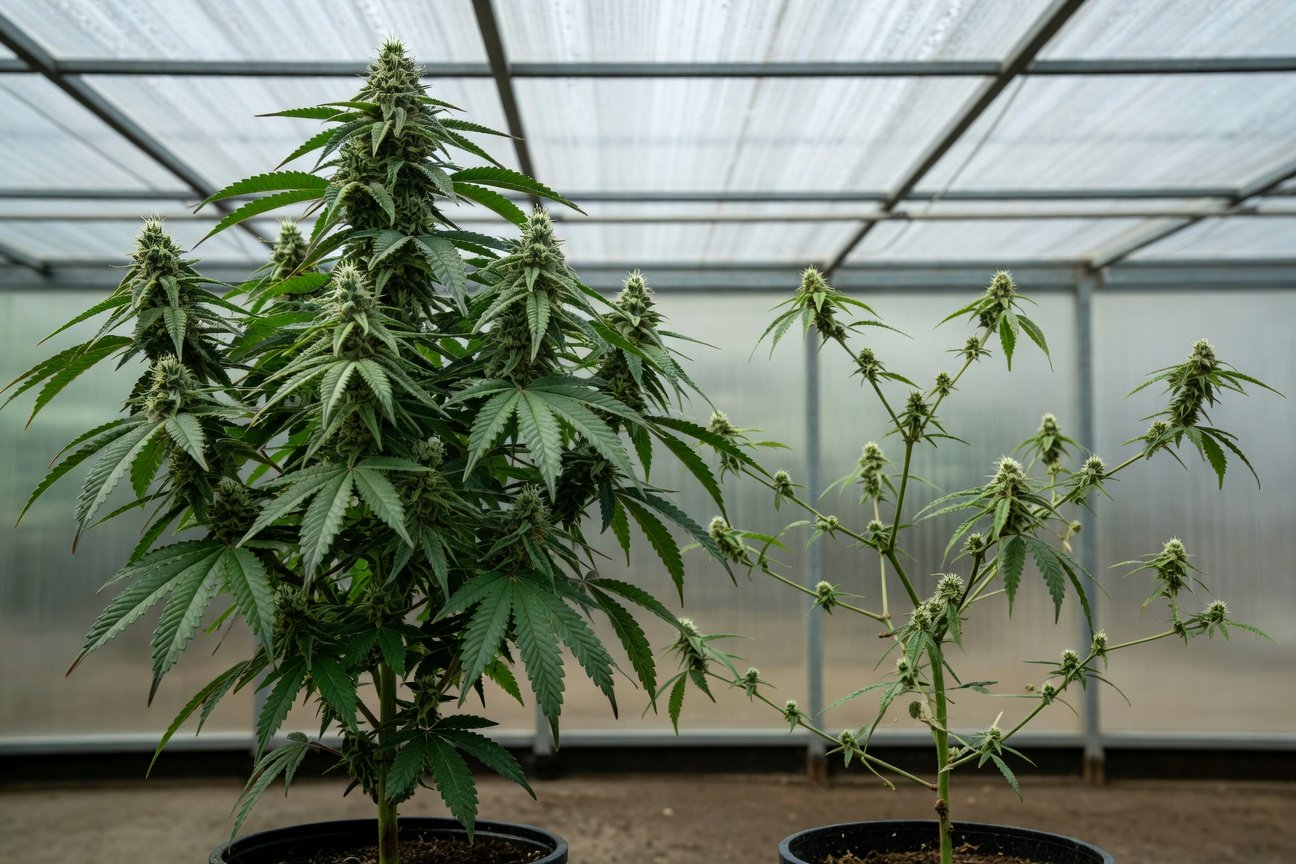
Visualizing hybrid vigor: A side-by-side comparison of F1 hybrid plants (left) showing uniform, robust growth versus traditional seeds (right) with varied sizes and health.
Superior Stability: Why F1 Hybrids Outshine Other Seeds
Stability is where F1 hybrids truly excel over standard feminized or autoflowering seeds. Traditional seeds can exhibit genetic variability due to polyhybrid backgrounds or unstable breeding lines, leading to inconsistent phenotypes. You might get a plant that’s too stretchy for indoor spaces or one that hermaphrodites under stress.
F1 hybrids, by contrast, offer genetic homogeneity. Since they’re the direct result of a single controlled cross, all plants from a pack should express the same core traits. This stability extends to cannabinoid and terpene profiles, ensuring your harvest delivers the expected effects—whether that’s a balanced hybrid high or a potent indica relaxation. In terms of pest and disease resistance, F1s often inherit fortified defenses from their parents, reducing the need for chemical interventions in organic grows.
Compared to IBLs (inbred lines), which can suffer from inbreeding depression (weaker vigor), or polyhybrids (mix of multiple strains, leading to roulette-like results), F1s strike the perfect balance. They’re not as fragile as purebreds but far more predictable than bagseed or mass-market options.
How to Identify F1 Hybrid Offerings in Seed Bank Catalogs
Spotting F1 hybrids in 2026’s seed bank catalogs is straightforward once you know the markers. Reputable banks like those affiliated with major genetics providers clearly label them as “F1 Hybrids” or “First-Generation Hybrids.” Look for descriptions emphasizing “uniformity,” “stability,” or “true-breeding potential in the first generation.”
Key indicators include:
- Parentage Details: Catalogs will list two specific parent strains, e.g., “Blue Dream x OG Kush F1.” Avoid vague terms like “mixed genetics.”
- Yield and Growth Specs: Expect claims of high uniformity, such as “95%+ phenotypic consistency” or “synchronized flowering within 7 days.”
- Breeder Credentials: Seek banks partnered with research institutions or those using marker-assisted selection for verified F1 status.
- Packaging Notes: F1 packs often highlight “hybrid vigor” and warn that F2 generations (self-crossed F1s) may lose stability—stick to fresh F1s.
Pro tip: Cross-reference with independent reviews on forums or sites like Leafly, but always verify through the bank’s lab certifications for genetic purity.
Key Traits to Look for When Buying F1 Hybrid Seeds
When selecting F1 hybrids, prioritize traits aligned with your goals. For potency seekers, opt for those with stable THC/CBD ratios—aim for parents known for consistent lab-tested profiles. Yield-focused growers should eye hybrids from high-producing lines, targeting 400-600g/m² indoors.
Essential traits include:
- Resilience: Choose F1s with mold-resistant or heat-tolerant parents, ideal for variable climates.
- Flowering Time: Uniform 8-10 week cycles prevent staggered harvests.
- Structure: Bushy indicas for SCROG or tall sativas for outdoor trellising.
- Terpene Stability: Consistent aromas and flavors, like earthy kush notes or citrusy hazes.
Budget-wise, F1s cost 20-50% more than standard seeds due to R&D, but the ROI in reliable yields justifies it. Always buy from licensed banks to ensure compliance with 2026’s seed import regs.
Pairing F1 Hybrids for Indoor vs. Outdoor Grows
F1 hybrids shine in tailored setups. For indoor grows, select compact, fast-finishing F1s like those from indica-dominant crosses. Their stability minimizes light leaks or humidity issues affecting uniformity. Pair with LED lighting for energy efficiency, and expect dense colas perfect for small tents.
Outdoor enthusiasts should go for sativa-leaning F1s with robust stems and pest resistance. These thrive in natural sunlight, leveraging hybrid vigor for massive yields in summer months. In temperate zones, choose early-flowering hybrids to beat fall frosts.
Hybrid pairing example: Indoors, try an F1 of Northern Lights x White Widow for mold resistance in humid rooms. Outdoors, a Skunk #1 x Haze F1 offers vigorous growth suited to sunny fields. For mixed ops, versatile F1s like Gelato crosses bridge both environments seamlessly.
Remember, F1s’ predictability allows precise nutrient schedules—use organic feeds to amplify their vigor without overcomplication.
Benefits for Breeders and Growers Seeking Predictable Results
For breeders, F1 hybrids are a foundation for advanced projects. Their stability makes them ideal parents for creating new lines, as you can isolate traits without genetic drift. Home breeders can experiment with F1s to develop custom strains, saving on trial-and-error.
Growers benefit from reduced risks: Predictable results mean fewer failed crops and optimized space usage. In 2026’s home grow scene, where enthusiasts share harvests online, F1s ensure brag-worthy consistency. Plus, their vigor supports sustainable practices—stronger plants need less water and inputs.
According to agricultural research, hybrid systems like F1s can increase overall farm efficiency by 25%. For cannabis, this translates to hobbyists yielding pro-level quality without a greenhouse.
Explore more on plant hybrid vigor through University of Minnesota Extension, a trusted resource for growers.
Embracing F1 Hybrids for Your Next Grow
In summary, F1 hybrid cannabis seeds offer unmatched stability and vigor, revolutionizing home cultivation. By identifying them in catalogs and selecting key traits, you can pair them perfectly for indoor or outdoor success. Whether you’re a novice enthusiast or seasoned breeder, these genetics deliver predictable, superior results. Start with a pack today and experience the difference—your plants will thank you with bountiful, uniform harvests.