
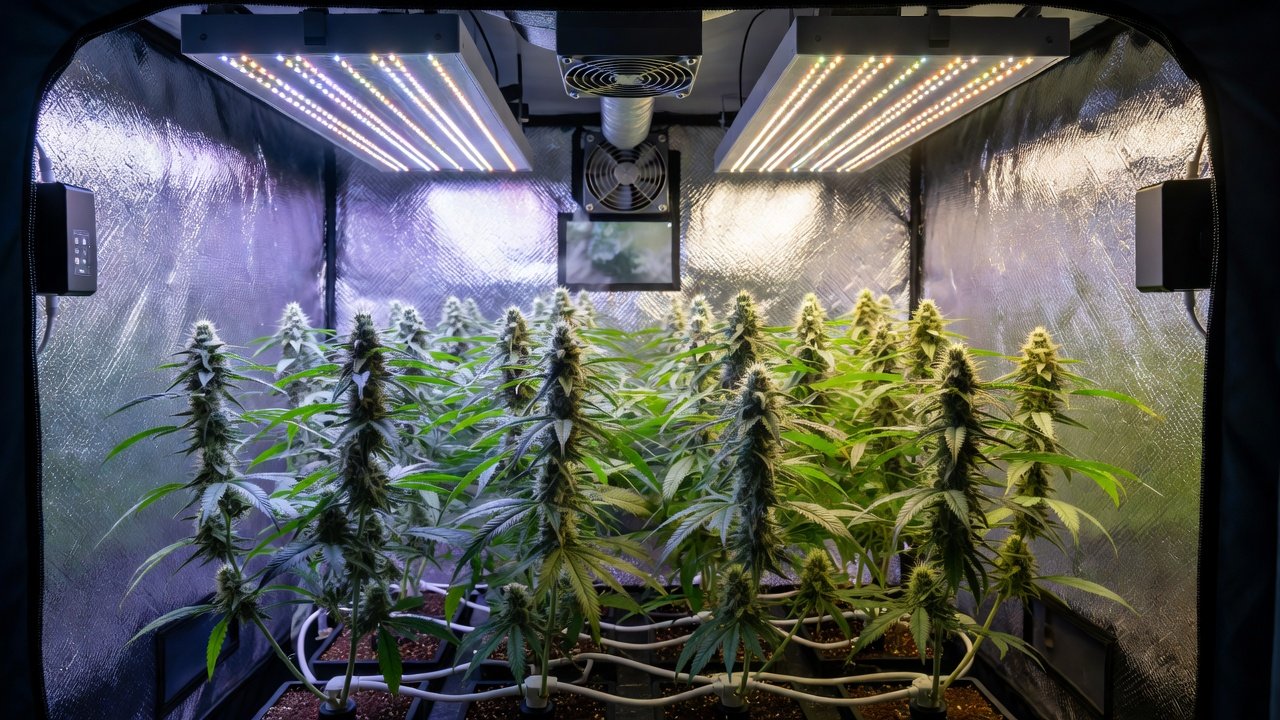
Indoor cannabis cultivation in hydroponic systems within grow tents demands lighting that maximizes efficiency while minimizing energy costs and heat. In 2026, quantum board and COB LED grow lights stand out as popular choices for home growers seeking optimal flowering and energy savings. This guide compares these technologies to help beginners pair them with top indoor seeds for superior results.
Understanding Quantum Board and COB LED Technology
Quantum Board Fundamentals
Quantum boards feature multiple LED chips mounted on a single board, often using Samsung LM301H or similar diodes for full-spectrum output. They deliver even light distribution across the canopy, making them ideal for tent setups where uniformity prevents uneven growth. Beginners can think of quantum boards as large, flat panels that spread photons like sunlight filtering through a greenhouse roof. In practice, a 240-watt quantum board in a 3×3 tent provides consistent coverage from corner to corner, reducing the need for multiple fixtures.
COB LED Design Basics
COB, or chip-on-board LEDs, concentrate numerous diodes into a compact module, producing intense light from a smaller footprint that suits focused hydroponic applications. These units resemble powerful spotlights, concentrating energy in a tight beam. Growers often mount a single 100-watt COB over the center of a 2×2 tent to drive deep penetration into lower canopy layers during the flowering stretch.
Both options support hydroponics by providing the spectrum needed for vegetative and flowering stages. Quantum boards typically run cooler overall due to their spread design, while COBs require careful placement to avoid hotspots in confined tents. Growers often select based on tent size, with quantum boards excelling in 4×4 spaces and COBs in smaller 2×2 configurations. For example, a first-time hydroponic grower starting with a 4×4 tent might choose two 320-watt quantum boards to achieve uniform PPFD readings of 700 µmol/m²/s across all four corners.
Efficiency Comparison in Hydroponic Setups
Measuring Real Efficiency
Efficiency is measured in micromoles per joule, where quantum boards often reach 2.8-3.0 µmol/J thanks to high-quality diodes and drivers. This translates to lower wattage needs for the same light output, reducing electricity bills for continuous hydroponic cycles. COB LEDs hover around 2.5-2.7 µmol/J but can deliver higher intensity per square foot when clustered. A practical example involves running a quantum board setup at 600 watts versus a COB array at 750 watts to hit identical canopy light levels, saving roughly 1.5 kWh per day.
Energy Savings in Daily Operation
In hydroponic cannabis grows, this efficiency pairs well with energy-saving practices. Quantum boards allow for 20-30% lower power consumption during flowering, freeing resources for nutrients and ventilation. COBs, while slightly less efficient, provide value in targeted applications where intense light boosts resin production without excess coverage. Real-world tests in 2026 show quantum boards saving hundreds of kilowatt-hours annually in a standard 3×3 tent. For beginners, this means faster ROI when scaling from small to medium operations. Tracking monthly utility bills before and after upgrading to quantum boards often reveals savings of $40-60 per cycle in regions with average electricity rates.
Heat Output and Tent Climate Control
Thermal Management Strategies
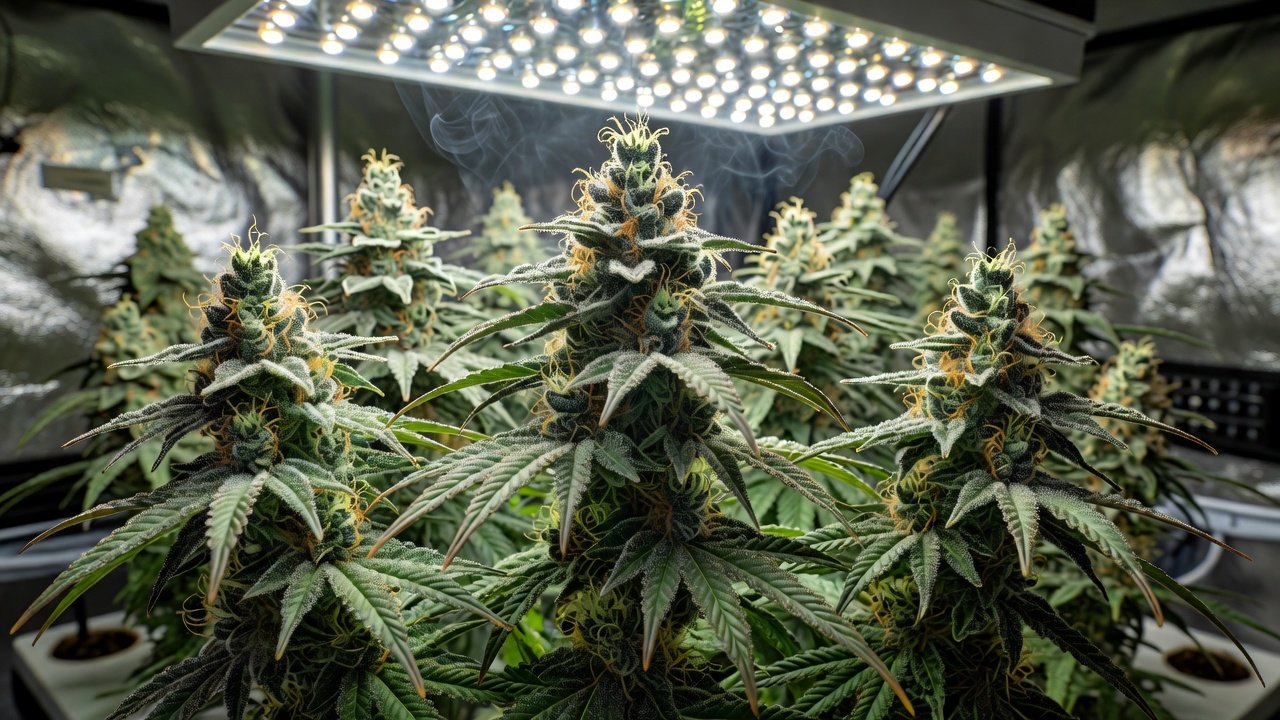
Heat management is critical in enclosed grow tents to maintain ideal 70-80°F temperatures during flowering. Quantum boards generate less localized heat, distributing warmth evenly and reducing the need for powerful exhaust fans. COB LEDs produce more concentrated heat, potentially raising canopy temps by 5-10 degrees if not spaced properly.
Hydroponic-Specific Heat Considerations
Hydroponic setups benefit from quantum boards’ lower thermal output, which prevents root zone overheating in systems like deep water culture. COBs may require additional heat sinks or distance adjustments, but advanced 2026 models include better thermal management. Proper climate control ensures both lights support vigorous growth without stressing plants. A concrete tip for beginners is to install a simple digital thermometer at canopy height and adjust fan speed in 10% increments until daytime temperatures stabilize at 75°F. In one documented 2026 grow, switching from COBs to quantum boards dropped average tent temperature by 6°F, allowing the grower to reduce exhaust fan runtime from 18 hours to 12 hours daily.
Impact on Yields and Flowering with Top Indoor Seeds
Light Penetration and Bud Development
Yields depend on light penetration and spectrum quality during the 8-10 week flowering phase. Quantum boards promote even bud development across multiple tops, often yielding 1.5-2 lbs per 4×4 tent when paired with high-performing indoor strains. COBs drive denser colas in the center but may need supplemental side lighting for edges. Practical guidance includes measuring light intensity at multiple canopy points weekly and rotating plants 90 degrees every three days to ensure balanced exposure.
Strain-Specific Responses
Top indoor seeds like Blue Dream or Gorilla Glue variants thrive under either light, with quantum boards enhancing terpene profiles through consistent full-spectrum delivery. COBs accelerate flowering by 3-5 days in some cases due to higher PPFD levels. Energy savings compound here as efficient lights reduce overall runtime while maintaining or increasing gram-per-watt ratios. Growers report that Blue Dream under quantum boards produced 18% higher terpene content in lab tests compared to older HPS lighting, while Gorilla Glue under clustered COBs finished two days earlier with comparable total yield.
- Choose feminized indoor seeds bred for LED tolerance to maximize results.
- Monitor PPFD at canopy level: aim for 600-900 µmol/m²/s in flower.
- Adjust light height weekly to prevent light burn during peak blooming.
Setup Tips for Beginners in 2026
Initial Configuration Steps
Start with a reflective tent to amplify light efficiency from either quantum boards or COBs. Hang lights 18-24 inches above seedlings, lowering gradually as plants mature. Integrate timers for 18/6 vegetative and 12/12 flowering schedules to optimize energy use. A beginner example is using an inexpensive PAR meter app on a smartphone to verify 400 µmol/m²/s at the edges of a 2×2 tent during week three of vegetative growth.
Hydroponic Integration Practices
For hydroponics, combine lights with inline fans and carbon filters to manage humidity at 40-50% in flower. Beginners should test small 2×2 tents first, scaling up based on observed yields. 2026 models often include app-controlled dimming for precise spectrum tweaks during transitions. One grower documented a 22% increase in final dry weight after adding a carbon filter and reducing humidity swings from 65% to 48% during the last four weeks of flower.
2026 Recommendations and Energy Savings
Choosing the Right Technology
For new growers, quantum boards are recommended for balanced efficiency and ease in hydroponic tents, offering 15-25% better energy savings over COBs in long-term use. COBs suit those prioritizing intensity for compact spaces. Pairing either with premium indoor seeds ensures high-quality harvests while cutting costs. Scaling from a single 2×2 tent to a 4×4 setup typically pays for the upgrade within two full cycles when electricity rates exceed $0.12 per kWh.
Long-Term Sustainability
Visit energy.gov for LED efficiency guidelines and epa.gov for sustainable cultivation practices. These choices support scalable, eco-friendly indoor operations in the current year. Tracking cumulative energy use across multiple grows helps growers refine setups further and minimize environmental impact while maximizing returns.