
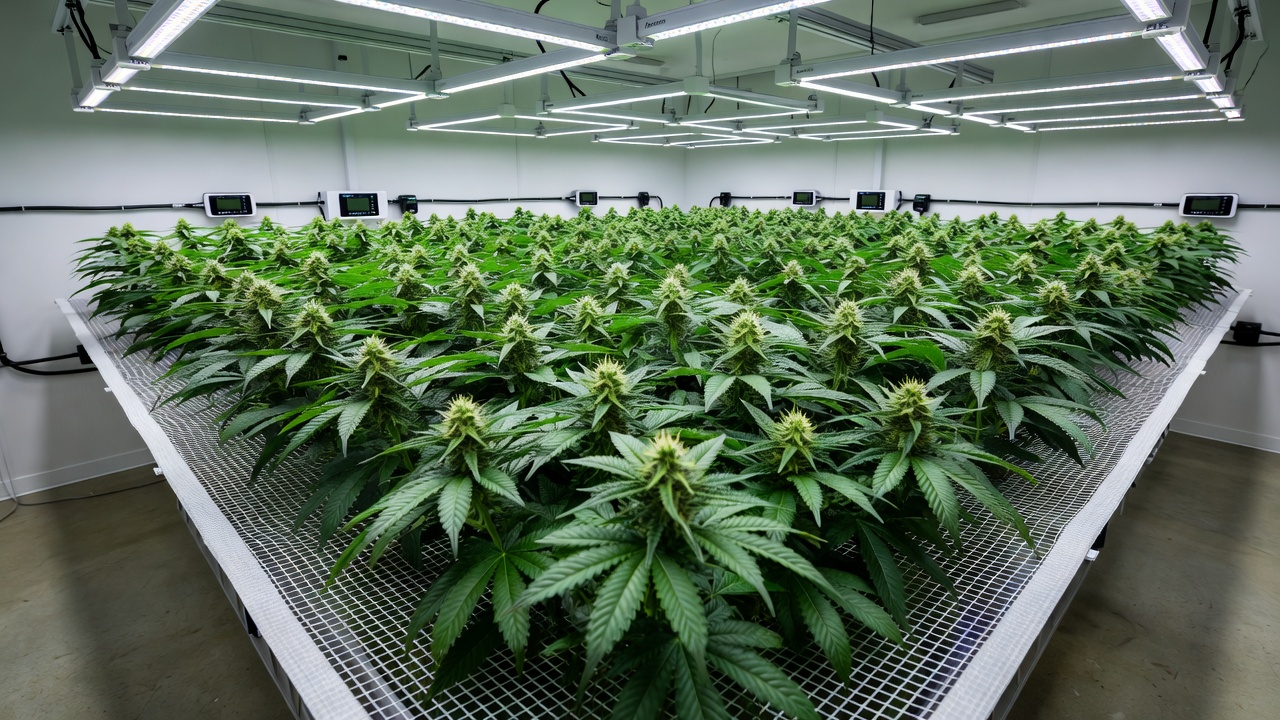
The Screen of Green (SCROG) method transforms how home growers maximize space and light with feminized photoperiod seeds. By weaving branches through a horizontal screen, cultivators create an even canopy that boosts bud production in controlled indoor environments. This guide focuses on photoperiod feminized varieties, which allow precise control over the vegetative and flowering stages, making them ideal for SCROG setups in 2026. Growers who adopt this technique often report more uniform bud development and reduced wasted light compared with traditional sea-of-green approaches. The method suits small tents, closets, or dedicated grow rooms where vertical space is limited but horizontal coverage can be optimized through careful training.
Why SCROG Works Best with Feminized Photoperiod Seeds
Feminized photoperiod seeds eliminate male plants, ensuring nearly all specimens develop into resinous females. Unlike autoflowers, photoperiod strains respond to light cycle changes, giving growers flexibility to extend the vegetative phase until the screen fills completely. This synergy results in higher yields per square foot compared to traditional methods. In practice, a single feminized photoperiod plant trained under SCROG can occupy an entire 60 by 60 centimeter square, producing multiple top colas instead of one dominant apex.
Photoperiod genetics also recover well from training stress, which is essential for SCROG. In 2026, many seed banks offer stabilized feminized lines bred specifically for indoor training techniques, reducing the risk of hermaphroditism under intense manipulation. For instance, varieties such as stabilized Gelato or OG Kush crosses tolerate repeated bending and tucking without showing male flowers. This genetic stability allows growers to push plants further into the screen without constant worry about pollen sacs forming during the critical transition to flower.
Selecting Suitable Genetics for SCROG
When choosing seeds, prioritize indica-dominant or balanced hybrids with strong lateral branching. Sativa-leaning strains may stretch excessively and require earlier topping. Always start with verified feminized stock from reputable breeders to avoid the 1-2 percent chance of male intersex traits that can appear under high-stress training.
Screen Placement and Grow Room Setup
Position your SCROG screen 30-45 cm above the pots once plants reach 20-30 cm in height. Use sturdy materials like nylon netting or metal fencing secured to tent poles or frame walls. Ensure the screen remains level to promote uniform growth across all branches. A common practical setup uses 5-centimeter square grid netting in a 120 by 120 centimeter tent, allowing four plants to fill the canopy evenly.
Account for plant stretch during the transition to flower. In photoperiod setups, expect 50-100% vertical growth after flipping lights, so adjust screen height accordingly. Adequate airflow beneath the screen prevents mold, while LED fixtures should hang 30-60 cm above the canopy for optimal penetration without light burn. Oscillating fans placed below the screen at low speed keep humidity consistent and strengthen stems as they weave through the grid.
Optimizing Environment Beneath the Screen
Maintain daytime temperatures between 22-26 °C and nighttime drops of 4-6 °C. Relative humidity should sit at 55-65 % during vegetation and drop to 45-50 % once flowering begins. These parameters reduce the risk of powdery mildew forming on lower leaves that receive less direct light.
Training Female Plants Through the Screen
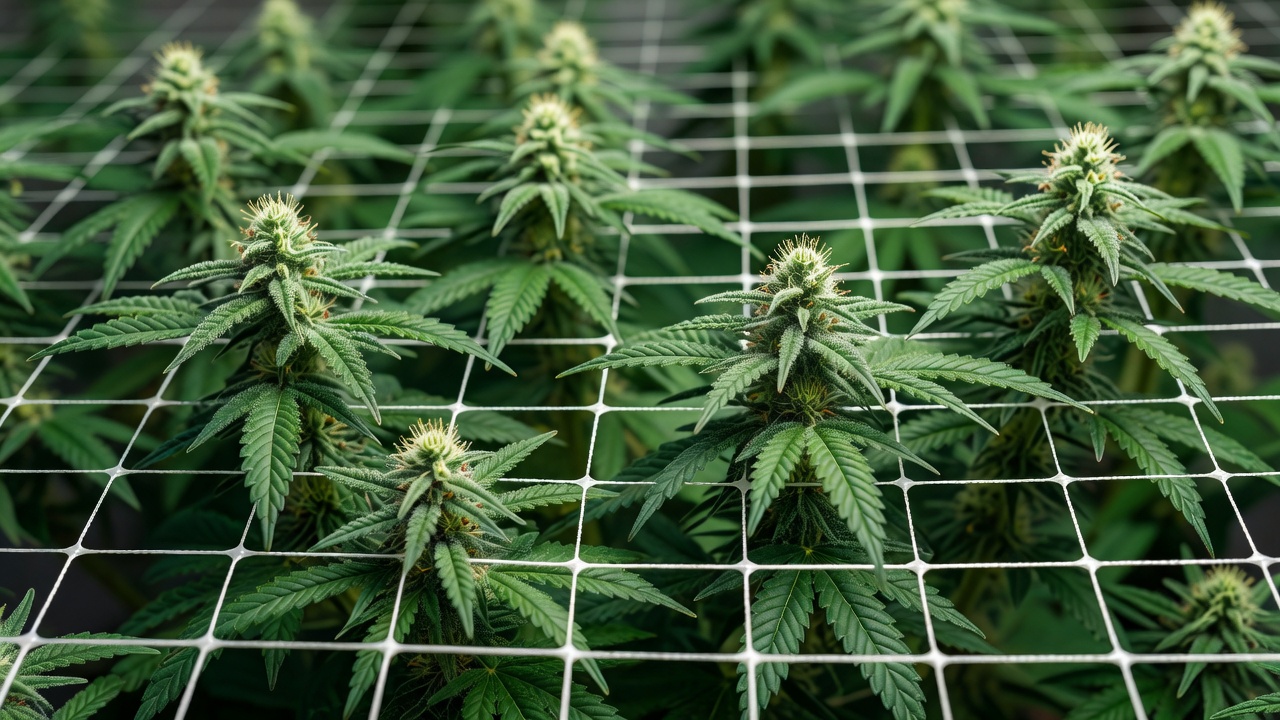
Begin low-stress training early in veg by gently bending branches horizontally and tucking them under the screen grid. Aim to fill every 10×10 cm square with one main cola site. Top plants once or twice before the screen fills to encourage lateral branching. A typical schedule involves topping at the fourth or fifth node, then again two weeks later if growth remains vigorous.
Monitor for nutrient burn or slow recovery, especially with feminized photoperiod strains that can be sensitive during early training. Rotate plants weekly for even exposure. Consistent defoliation of lower fan leaves improves airflow and directs energy to upper bud sites. Remove only the largest fan leaves that shade multiple nodes, leaving smaller leaves that still contribute to photosynthesis.
Step-by-Step Weaving Technique
- Identify the longest branches and bend them parallel to the screen.
- Tuck each branch tip under the nearest grid line so the growing tip faces upward.
- Repeat every three to four days as new growth emerges.
- Once 70 % of squares contain a tip, stop training and prepare for the light flip.
Timing Light Cycles for Optimal Penetration
Keep plants in 18/6 or 20/4 light during vegetative growth until the screen reaches 70-80% coverage. Then switch to 12/12 to initiate flowering. This timing ensures maximum bud sites receive direct light without shading issues common in untrained grows. Many growers use a 20/4 schedule to accelerate vegetative filling when space is tight.
In 2026 LED systems, use full-spectrum fixtures with adjustable intensity. Maintain 600-900 PPFD at canopy level during flower for dense buds. Avoid sudden light changes that stress feminized plants and trigger unwanted male flowers. Gradual intensity increases over three days after flipping help plants adjust without stress.
Increasing Yields and Avoiding Common Pitfalls
SCROG can double yields when executed properly by creating an even light field. Supplement with CO2 enrichment and precise VPD control to push production further in modern 2026 setups. Harvest when trichomes turn milky with 10-15% amber for peak potency. In a well-managed 120 by 120 centimeter tent, experienced growers routinely harvest 400-600 grams of dried flower.
Common mistakes include flipping too early, leading to sparse screens, or over-defoliating which slows recovery. Always use sterilized tools to prevent pathogens. Overcrowding branches causes weak colas and poor airflow. For authoritative cultivation resources, consult usda.gov and cdc.gov guidelines on safe growing practices. Another frequent error is neglecting root-zone health; ensure pots have adequate drainage and feed with balanced nutrients that include silicon for stronger stems.
Post-Harvest Handling for Maximum Quality
- Trim fan leaves immediately after cutting plants.
- Hang branches in a dark room at 18-20 °C with 50 % humidity.
- Allow 10-14 days for slow drying before jarring.
- Cure for at least three weeks, burping jars daily for the first week.
Conclusion
Implementing SCROG with feminized photoperiod seeds delivers superior results for dedicated home growers. Focus on patient training, proper timing, and environmental stability to achieve record yields in 2026 while sidestepping typical setbacks. With consistent attention to detail, even first-time SCROG users can surpass previous harvest weights and produce top-shelf flowers suited for both personal use and small-scale sharing.