
Understanding Hermaphroditism in Feminized Cannabis Seeds
Feminized cannabis seeds have revolutionized home growing by promising all-female plants, which produce the resinous buds enthusiasts crave. However, hermaphroditism—the development of both male and female reproductive parts on the same plant—remains a frustrating issue that can ruin harvests. In 2026, with advanced breeding techniques available, understanding and preventing hermies is crucial for home growers aiming for high-quality, all-female yields.
Hermaphroditism occurs when a female plant produces pollen sacs alongside pistils, leading to self-pollination and seeded buds. This not only reduces potency but also spreads unwanted genetics. For photoperiod strains, which rely on light cycle changes to flower, specific factors amplify this risk. Let’s dive into the main causes and how to combat them.
Main Causes of Hermaphroditism
The roots of hermaphroditism lie in a mix of genetics and environment. While feminized seeds are bred to eliminate male chromosomes, instability can still emerge under pressure.
Genetic Instability
At the core, hermies stem from genetic predisposition. Feminized seeds are created by stressing female plants to produce male pollen, which is then used to pollinate other females. If the original mother plant had latent hermaphroditic traits, these can pass on. In photoperiod grows, where plants are exposed to longer vegetative cycles, unstable genetics may not surface until flowering.
Reputable breeders like those affiliated with the International Hemp Association mitigate this by selecting stable female clones over generations. However, cheaper or unregulated seeds from unverified sources often carry hidden instabilities. A 2025 study from the University of Guelph highlighted that up to 15% of low-quality feminized seeds show hermie tendencies due to poor breeding practices.
Environmental Stressors in Photoperiod Grows
Photoperiod cannabis thrives on 18/6 light during veg and 12/12 for flower, but disruptions can trigger survival mechanisms like hermaphroditism. Key stressors include:
- Light Leaks and Irregular Schedules: Even brief exposure to light during the dark period mimics dawn, fooling the plant into thinking it’s time to reproduce. In 2026 setups with LED lights, timer failures are common culprits.
- Temperature Fluctuations: High heat (above 85°F/29°C) during flowering stresses the plant, prompting male flower development. Cold snaps below 60°F/15°C can also induce hermies as a protective response.
- Nutrient Imbalances: Over-fertilization with nitrogen late in flower or potassium deficiencies can disrupt hormone balance, leading to sex reversal.
- Physical Damage: Pruning errors, pest attacks, or transplant shock in photoperiod plants under extended light cycles exacerbate genetic weaknesses.
According to Leafly’s guide on cannabis cultivation, environmental stress accounts for 70% of hermie cases in home grows, making prevention a top priority.
Practical Prevention Strategies for 2026 Grows
Armed with knowledge, home growers can implement targeted strategies to safeguard their feminized photoperiod plants. Focus on genetics first, then optimize your environment.
Selecting Stable Female Plants from Reputable Breeders
Your foundation starts with quality seeds. In 2026, choose breeders with proven track records, such as those using colloidal silver for feminization and rigorous testing. Look for:
- Seeds certified stable through multiple generations.
- Lab-tested for genetic purity—many now offer QR codes linking to results.
- Strains bred specifically for photoperiod resilience, avoiding those with S1 (selfed) lineages prone to instability.
Avoid bargain seeds from unknown vendors; instead, opt for established names. For troubleshooting as a buyer, request grower testimonials or check forums like GrowWeedEasy for strain reviews. This ensures you’re starting with genetics less likely to hermie under stress.
Optimal Lighting Schedules for Photoperiod Strains
Precision in lighting is non-negotiable. Use high-quality timers and blackout curtains to maintain strict 12/12 cycles. In 2026, smart grow lights with app controls (like those from Mars Hydro) allow monitoring to prevent leaks.
Transition gradually: Start with 14/10 for pre-flower to ease the shift, reducing shock. Aim for full-spectrum LEDs at 300-600 PPFD during flower, ensuring even coverage to avoid hot spots that stress plants unevenly.
Stress Reduction Techniques
Minimize environmental pressures with these techniques:
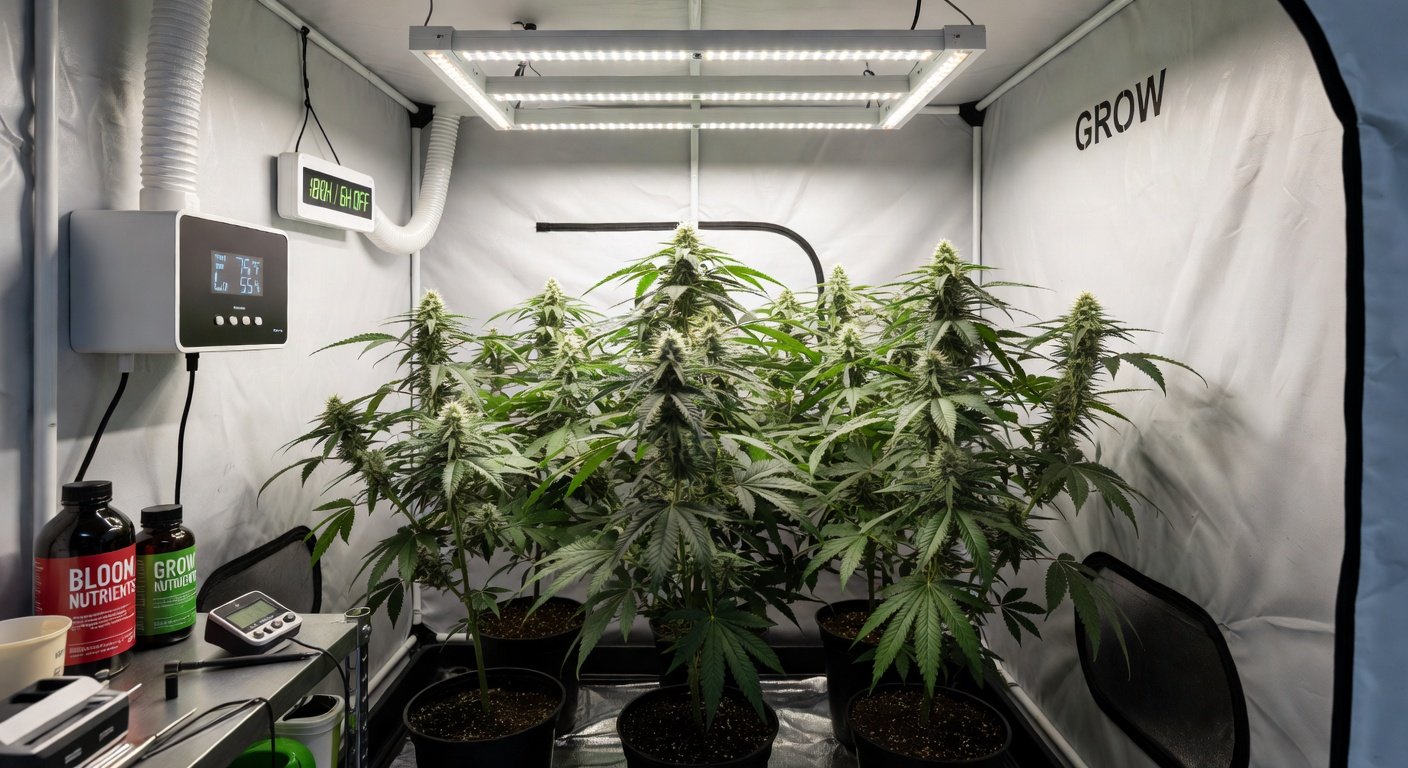
- Maintain Ideal Conditions: Keep temps at 70-80°F (21-27°C) day and 60-70°F (15-21°C) night. Use hygrometers and fans for 40-50% humidity in flower.
- Balanced Nutrition: Follow a bloom formula with balanced NPK (e.g., 1-3-4 ratio). Flush every two weeks to prevent buildup. Organic options like compost teas build resilience.
- Gentle Training: Use low-stress training (LST) over high-stress topping in photoperiod veg. Avoid defoliation past week 3 of flower.
- Pest and Disease Management: Integrated pest management (IPM) with neem oil prevents damage. Early detection via weekly inspections keeps plants happy.
For advanced growers, CO2 supplementation at 800-1200 ppm can buffer stress, but monitor closely to avoid overload.
Monitoring and Early Intervention
Regular scouting is key. Check nodes daily for banana-shaped sacs, which are early hermie signs. If spotted, isolate and remove the plant to prevent pollination. In 2026, AI apps like Plantix can scan photos for issues, offering quick diagnostics.
Troubleshooting Tips for Seed Buyers and Growers
As a seed buyer in 2026, ensure all-female harvests by vetting sources. Research breeder histories—those transparent about feminization methods (e.g., STS solution over colloidal silver for stability) are preferable. Order small packs first to test viability; germination rates above 95% indicate quality.
If hermies appear mid-grow, assess: Was the light schedule perfect? Nutrients balanced? If genetics seem at fault, switch breeders for future runs. For photoperiod specifics, track your grow journal meticulously—apps like GrowBuddy log data for pattern spotting.
Common pitfalls include overwatering, which mimics root stress leading to hermies, or ignoring strain-specific needs (e.g., sativas are more sensitive than indicas). Consult resources like the NCBI study on cannabis reproductive biology for deeper science.
Achieving High-Quality, All-Female Harvests in 2026
By prioritizing stable genetics, flawless lighting, and proactive stress management, home growers can minimize hermaphroditism risks. In 2026, with legalization expanding, access to premium feminized photoperiod seeds has never been better. Patience and attention to detail will reward you with potent, seed-free buds that showcase the true potential of your grow.
Start your next cycle with confidence: Select wisely, grow mindfully, and enjoy the fruits of a hermie-free harvest. Whether you’re a novice or seasoned enthusiast, these strategies will elevate your cannabis cultivation game.
For ultimate stability without hermie risks, try our Triploid Cannabis Seeds.