
Introduction to Grow Lights for Cannabis in 2026
In the evolving world of cannabis cultivation, choosing the right grow lights is crucial for home growers aiming to maximize yields and quality. As we enter 2026, advancements in lighting technology have made indoor growing more accessible and efficient than ever. This guide compares LED (Light Emitting Diode) and HPS (High-Pressure Sodium) grow lights, focusing on efficiency, heat management, yields, and costs. We’ll also cover setup guides for indoor operations and tips for optimizing results with modern cannabis strains. Whether you’re a novice enthusiast or a seasoned cultivator, understanding these options will help you decide what’s best for your setup.
What Are LED and HPS Grow Lights?
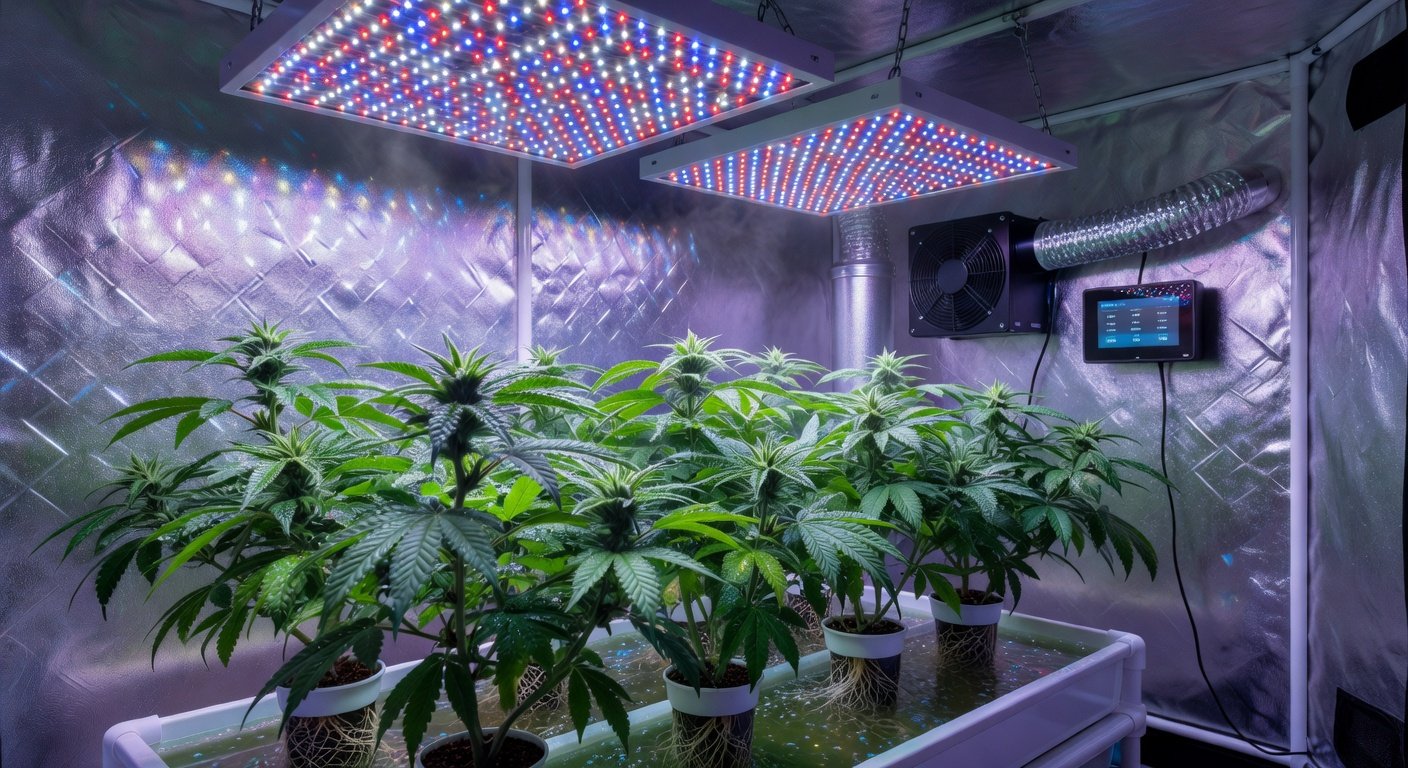
LED grow lights use semiconductors to emit light in specific wavelengths, offering customizable spectra tailored to plant growth stages. In 2026, full-spectrum LEDs mimic natural sunlight, providing blue light for vegetative growth and red for flowering, with emerging UV and IR additions for enhanced terpene production.
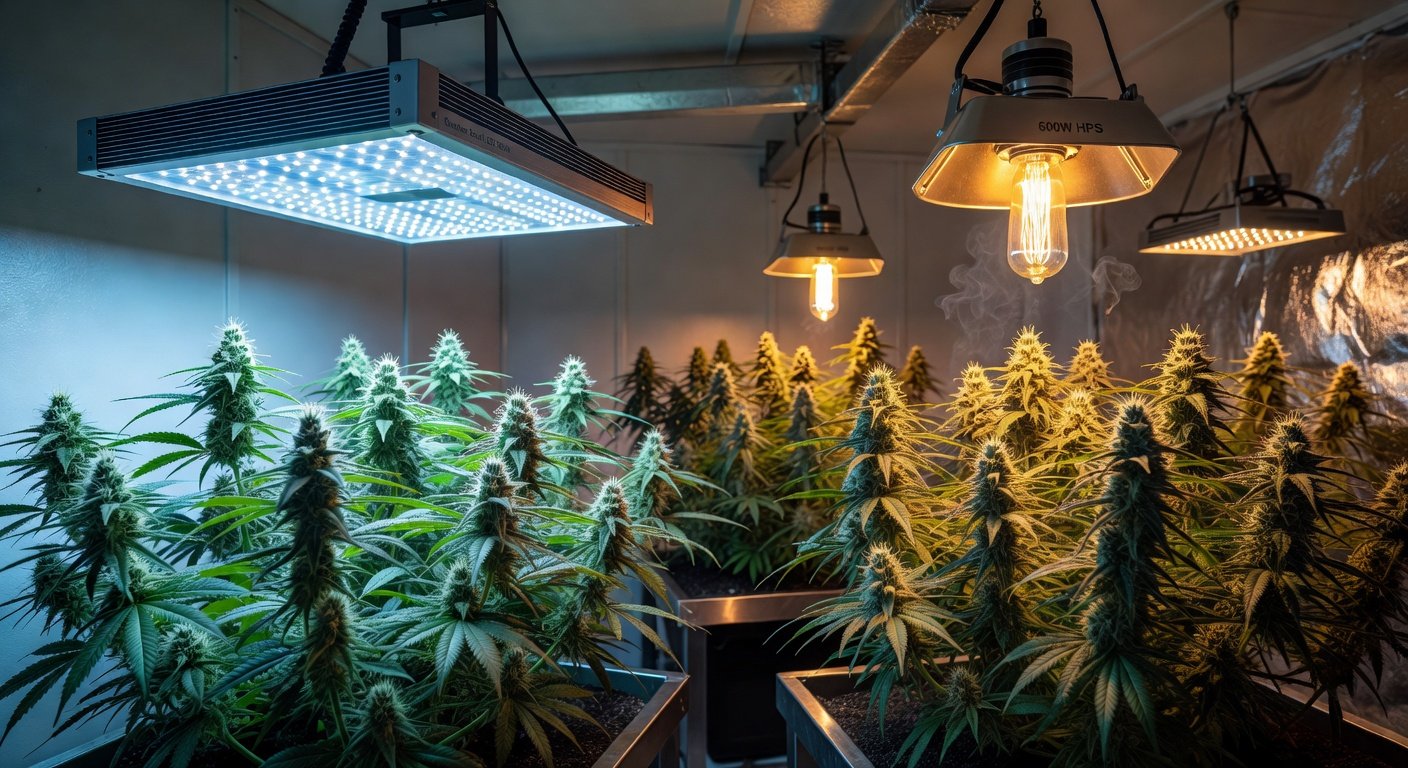
HPS lights, on the other hand, are traditional high-intensity discharge lamps that produce a broad spectrum dominated by orange-red light, ideal for the flowering phase. They’ve been a staple in cannabis grows for decades but are being challenged by more efficient alternatives.
Both types are popular for indoor cannabis cultivation, but their differences in performance make one potentially superior depending on your priorities.
Efficiency Comparison: Power Usage and Output
Efficiency is a top concern for home growers in 2026, with rising energy costs and sustainability goals. LEDs shine here, converting up to 60-70% of electricity into usable light, compared to HPS’s 30-40%. This means LEDs produce more photosynthetically active radiation (PAR) per watt, allowing you to cover the same grow space with less power.
For a typical 4×4-foot tent, a modern 400W full-spectrum LED can match or exceed the output of a 600W HPS while using 33% less electricity. According to the U.S. Department of Energy, LED technology has improved dramatically, reducing energy consumption in horticulture by up to 50% over traditional lights. This efficiency translates to lower utility bills—potentially saving $200-300 annually for a small home grow.
- LED Pros: High efficiency, dimmable options for precise control.
- HPS Pros: Proven high lumen output for dense canopies.
- Cons: HPS wastes more energy as heat; LEDs require quality brands to avoid low-efficiency fakes.
Heat Management: Keeping Your Grow Cool
Heat is the enemy of indoor cannabis grows, stressing plants and increasing ventilation needs. HPS lights run hot, reaching surface temperatures over 500°F, which demands robust cooling systems like inline fans and air conditioners. In a confined space, this can raise room temps to 90°F+, risking bud rot or slowed growth.
LEDs generate far less heat—often under 200°F—allowing closer placement to plants (12-24 inches) without burn risk. This reduces the need for extensive HVAC setups, making LEDs ideal for stealthy home grows in apartments or closets. In 2026, advanced LED designs with passive cooling further minimize noise and energy use for fans.
For heat-sensitive modern strains like those high in CBD, LEDs provide a stable environment, preventing terpene degradation from excessive warmth.
Yields and Quality: Impact on Cannabis Harvests
Yields are where the rubber meets the road for cannabis enthusiasts. HPS lights excel in the flowering stage, promoting larger buds due to their intense red spectrum. Growers report 1-1.5 grams per watt with HPS in optimized setups, but this comes at the cost of higher electricity and heat management.
LEDs, especially full-spectrum models in 2026, offer comparable or better yields—up to 1.5-2 grams per watt—while improving quality. The balanced spectrum enhances photosynthesis across all stages, leading to denser colas and richer cannabinoid profiles. Studies from the National Institutes of Health show that spectrum-tuned LEDs boost terpene production by 20-30%, resulting in more flavorful, aromatic buds.
- Vegetative Stage: LEDs’ blue light encourages compact, bushy growth.
- Flowering Stage: Full-spectrum LEDs rival HPS for bud size while preserving terpenes.
- Overall: LEDs support higher plant counts in the same space due to lower heat.
For modern hybrid strains like Gorilla Glue or Blue Dream, LEDs unlock potential for premium yields without the HPS drawbacks.
Costs: Initial Investment vs. Long-Term Savings
Upfront costs for HPS setups are lower—a 600W kit might run $150-300, including ballast and reflector. LEDs, however, start at $300-800 for equivalent power, reflecting their advanced tech.
Over time, LEDs win on total cost of ownership. With lifespans of 50,000+ hours (vs. HPS’s 10,000-20,000), they require fewer replacements. Energy savings alone can recoup the initial premium in 1-2 years. In 2026, dropping LED prices due to manufacturing scales make them more accessible—expect mid-range full-spectrum panels under $400.
Maintenance costs are minimal for LEDs (no bulb changes), while HPS needs frequent replacements and professional disposal due to mercury content.
Setup Guide for Indoor LED Grows
Setting up an LED grow is straightforward for 2026 home cultivators. Start with a 4×4 tent, reflective mylar walls, and a carbon filter for odor control.
- Choose Your Light: Select a 300-600W full-spectrum LED from reputable brands like Mars Hydro or Spider Farmer.
- Mounting: Hang 18-24 inches above seedlings, adjustable via ratchet hangers.
- Electrical: Use a timer for 18/6 light cycle in veg and 12/12 in flower. Ensure a dedicated 15-20 amp circuit.
- Ventilation: Pair with oscillating fans and a 4-inch inline fan for fresh air exchange.
- Monitoring: Use a PAR meter to optimize light intensity—aim for 400-800 µmol/m²/s.
Water and nutrient schedules remain standard, but LEDs allow tighter spacing for SCROG or SOG methods.
Setup Guide for Indoor HPS Grows
HPS setups require more planning due to heat. Use a larger space or enhanced cooling.
- Choose Your Light: A 400-1000W HPS kit with digital ballast for efficiency.
- Mounting: Position 24-36 inches above canopy to avoid burns; use air-cooled reflectors.
- Electrical: Same cycles as LEDs, but monitor for voltage drops with high wattage.
- Ventilation: Essential—install a 6-inch fan, AC unit if needed, to keep temps under 85°F.
- Monitoring: Check bulb color shift; replace every 1-2 grows.
Hybrid setups (LED for veg, HPS for flower) are popular for balancing costs and yields.
Tips for Maximizing Results with Modern Strains
2026’s cannabis strains, bred for potency and resilience, thrive under optimized lighting. For high-THC autos like FastBuds’ varieties, use dimmable LEDs to ramp up intensity gradually, preventing light stress. Supplement with CO2 enrichment under LEDs for 20% yield boosts.
Avoid common pitfalls: Overlighting with HPS can bleach buds, while cheap LEDs lack penetration—invest in quantum board designs. Prune for light penetration and maintain 40-60% humidity. Track results with journals to refine your setup.
Emerging Tech: Full-Spectrum LEDs and Terpene Profiles
The big news in 2026 is full-spectrum LEDs with UV-B supplementation, proven to enhance terpene profiles for medicinal and recreational appeal. Brands like Fluence are leading with smart LEDs that adjust spectra via apps, optimizing for strains like terpene-rich Lavender.
Research from the National Center for Biotechnology Information indicates these lights increase myrcene and limonene by 25%, improving aroma and effects without chemicals. Transitioning to this tech future-proofs your grow against regulations favoring sustainable practices.
In summary, while HPS remains viable for budget flower-focused grows, LEDs dominate for efficiency, quality, and ease in 2026. Assess your space, budget, and goals—many enthusiasts swear by LEDs for the best all-around results.