
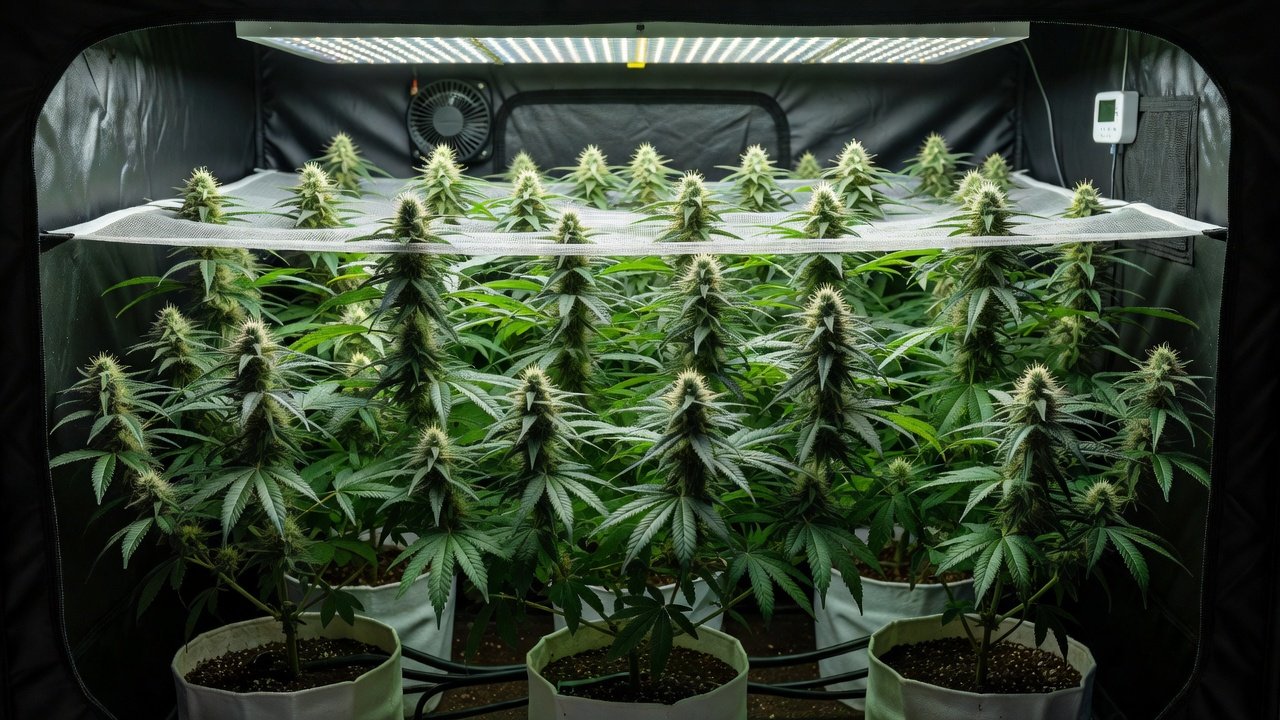
Autoflowering cannabis strains have transformed home growing by offering fast cycles and compact sizes ideal for limited spaces. When combined with the Screen of Green (SCROG) method, growers can dramatically increase light penetration, create even canopies, and multiply bud sites without needing large tents or outdoor plots. This guide explores practical SCROG applications tailored to autoflowers, including precise timing, gentle training, and 2026 strain recommendations for enthusiasts purchasing autoflower seeds. Urban cultivators with balcony closets or spare-room corners particularly benefit because the technique turns modest LED panels into high-efficiency production zones.
Understanding SCROG with Autoflowers
The SCROG technique involves suspending a horizontal screen above plants to guide branches horizontally, forming a flat, uniform canopy. Unlike photoperiod strains, autoflowers transition to flowering based on age rather than light cycles, typically within 2-4 weeks. This compressed timeline demands careful planning to avoid interrupting their natural progression. Applying SCROG to autoflowers optimizes photon capture in small indoor setups, often boosting yields by 30-50% compared to untrained plants. In practice, a 60 cm square tent with one 200 W LED can support four well-trained autos instead of two untrained ones because every square centimeter of screen receives direct light.
Home growers appreciate how SCROG counters the naturally bushy yet short stature of many autos. By weaving branches through the net, each cola receives equal illumination from LED or HID lights positioned overhead. The result is denser buds and reduced larf at the lower canopy levels. A common example involves a Northern Lights auto that would normally produce one main cola and several small side buds; after SCROG training the same plant fills a 40 cm by 40 cm section of screen with eight to ten even colas, each reaching similar density at harvest.
Optimal Timing for SCROG Setup
Timing is critical because autoflowers do not recover from stress as readily as photoperiod varieties. Begin installing the screen when plants reach 15-20 cm in height, usually around day 14-18 from germination. At this stage, vegetative growth remains active but the pre-flower stretch has not fully begun. For a typical 75-day life cycle strain, this window leaves roughly 10-14 days of active training before pistils appear.
Position the screen 25-30 cm above the pots. Gently tuck new shoots under the netting every other day during the next 7-10 days. Delaying setup past week three risks flowering onset before the canopy fills, limiting the technique’s effectiveness. Early intervention allows 4-6 weeks of training before buds swell. Growers often mark day 15 on a calendar and prepare soft ties and scissors in advance so the first weaving session happens immediately after measuring plant height.
Screen Management and Plant Training
Effective screen management requires patience and light touch. Use soft plant ties or simply weave stems through the 5-7 cm grid squares. Focus on spreading outer branches first to fill empty spaces, then address inner growth. Rotate plants weekly for even exposure if using a single light source. In a multi-plant setup, label each pot so rotation follows the same direction each week, preventing tangled stems later.
Monitor humidity and airflow beneath the screen to prevent mold in the dense canopy. Defoliate only lower fan leaves that receive no light, removing no more than 20% of foliage at once.
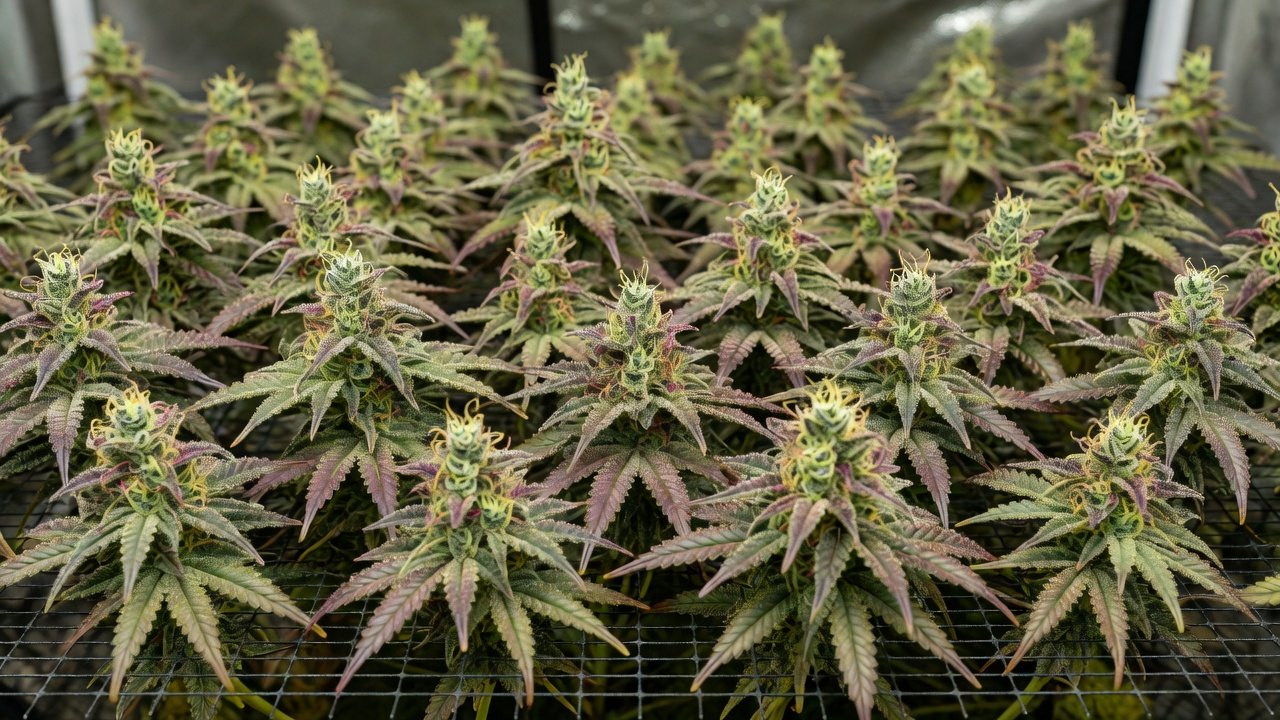
This balanced approach maintains photosynthesis while directing energy to top colas. Practical growers install a small clip-on fan angled upward through the screen edges to keep air moving without directly blasting young buds.
Daily and Weekly Routines
- Check ties daily during rapid growth phases and loosen any that begin to constrict stems.
- Raise the screen gradually if plants outpace it, lifting no more than 5 cm per adjustment.
- Avoid bending main stems sharply to prevent breakage; instead, train secondary shoots first.
- Record weekly photos from above the screen to track canopy fill progress and spot gaps early.
Strain Selection Tips for 2026
Choosing suitable autoflower genetics remains essential for SCROG success. In 2026, breeders offer improved hybrids with stronger branching and higher resistance to training stress. Look for indica-dominant autos such as Northern Lights or Blueberry crosses that stay under 80 cm while producing multiple lateral shoots. These varieties typically finish in 65-80 days and tolerate the repeated low-stress adjustments required by SCROG.
Sativa-leaning options like Amnesia Haze autoflowers can work if topped early, but require more vertical space. Purchase fresh seeds from reputable banks that provide detailed grow reports. Hybrid vigor in newer crosses often translates to better canopy fill rates under SCROG nets. One 2026 release, a Blueberry x Skunk auto, demonstrates 35% more lateral branches than older Blueberry lines, allowing faster screen coverage in the short vegetative window.
Minimizing Stress While Maximizing Bud Sites
Autoflowers dislike root disturbance or drastic environmental shifts. Maintain stable temperatures between 20-26°C and relative humidity at 50-60% during training. Provide consistent nutrients at half strength initially to support recovery from any minor LST adjustments. Many growers mix their own soil with 20% perlite to improve drainage and reduce the chance of overwatering during the training period.
Supplement with low-stress methods such as leaf tucking rather than aggressive topping. This preserves the plant’s limited vegetative window. Growers report that consistent 18/6 lighting combined with SCROG yields up to 150 g per plant in 60×60 cm tents when strains are selected wisely. A documented example from a 2025 indoor diary showed four Blueberry autos averaging 138 g each after following the 15-day screen installation schedule and weekly 20% defoliation limit.
Conclusion
Implementing SCROG with autoflowering cannabis delivers impressive results in constrained environments when timing and strain choices align. By following gentle training protocols and monitoring plant response closely, home cultivators can achieve professional-level yields from compact setups. As seed options evolve in 2026, experimenting with these methods opens new possibilities for efficient, high-output indoor gardens. Consistent record-keeping and small incremental adjustments remain the keys to repeatable success across multiple harvests.