
Why Hydroponics for Autoflowering Cannabis in 2026?
In 2026, home growers are turning to hydroponics for autoflowering cannabis strains to achieve faster, more efficient harvests. Autoflowers, derived from Cannabis ruderalis genetics, don’t rely on light cycles to flower, completing their lifecycle in just 8-10 weeks. Pairing this with hydroponics—a soilless method using nutrient-rich water—supercharges growth by delivering precise nutrients directly to roots. This setup is ideal for space-limited enthusiasts seeking high yields without the wait. Expect up to 20-30% faster cycles compared to soil, making it perfect for multiple harvests per year.
Hydroponics minimizes soil-borne issues like pests and diseases, while allowing fine-tuned control over environmental factors. For 2026 growers, with advancing LED tech and automated systems, this method aligns with sustainability goals, using less water and space. Whether you’re a novice or seasoned cultivator, this guide walks you through optimizing hydro for autos.
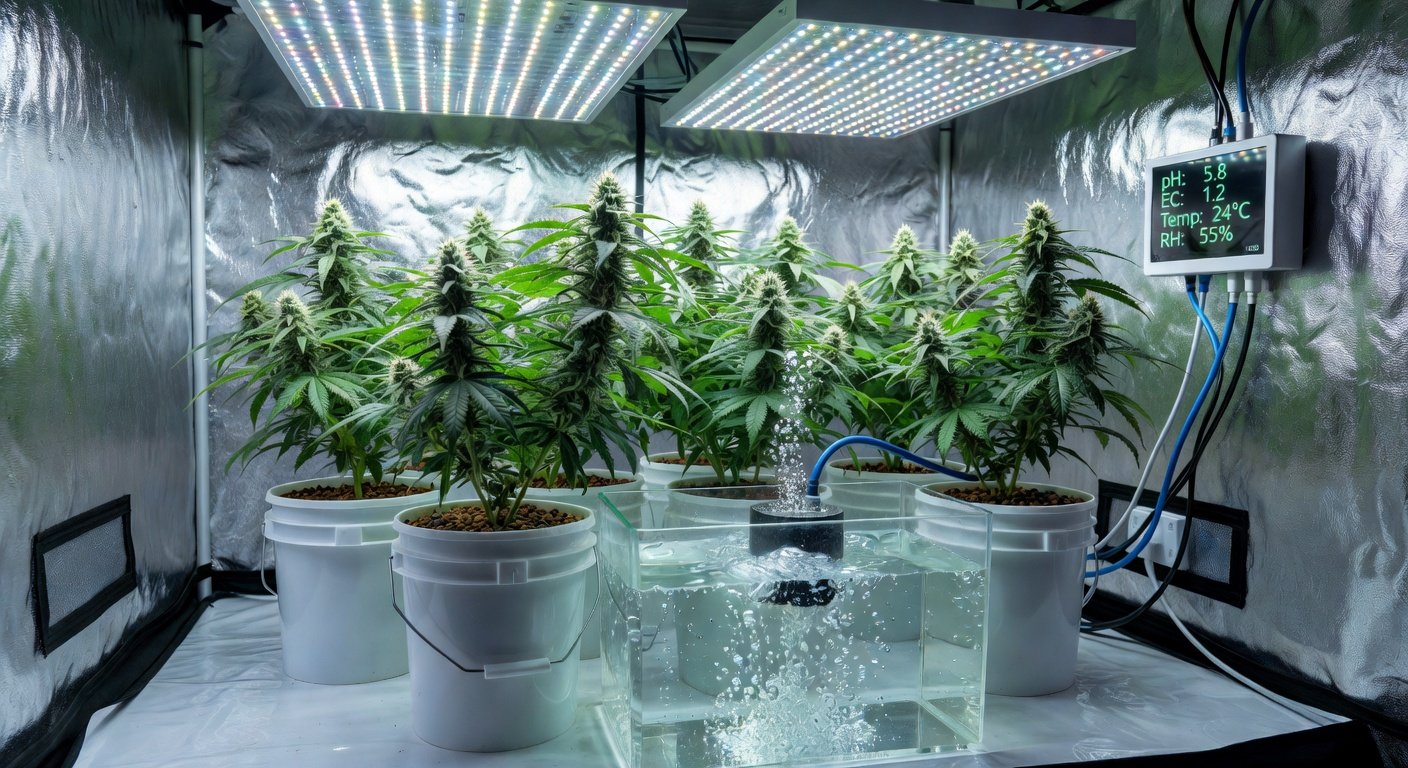
Essential Equipment for Your Hydroponic Autoflower Setup
Starting with the right gear ensures success. For a basic deep water culture (DWC) system—popular for beginners—focus on reliability and scalability. Here’s what you’ll need:
- Reservoir and Pump: A 5-10 gallon food-grade bucket or tote serves as the reservoir. Pair it with a submersible air pump (like a Hailea ACO-9601) for oxygenation and a small water pump for circulation if upgrading to an active system.
- Grow Medium: Autoflowers thrive in inert mediums like clay pebbles (hydroton) or rockwool cubes. These provide support without competing nutrients.
- Lighting: Full-spectrum LEDs (e.g., 200-400W for a 2×2 tent) mimic sunlight. In 2026, quantum board LEDs from brands like Mars Hydro offer energy efficiency.
- Monitoring Tools: pH meter (digital, like Bluelab pH Pen), EC/TDS meter, and thermometer/hygrometer combo. Temperature should stay 68-77°F (20-25°C).
- Nutrient Line: Autoflower-specific formulas from General Hydroponics or Advanced Nutrients, designed for short cycles.
- Grow Tent and Ventilation: A 2×2 or 4×4 tent with inline fan and carbon filter for odor control.
Budget around $200-500 for a starter setup. Source equipment from reputable suppliers to avoid cheap knockoffs that fail mid-grow.
Selecting the Best Autoflower Seeds
Choose feminized autoflower seeds from trusted breeders like FastBuds or ILGM for genetics optimized for hydro. Strains such as Gorilla Glue Auto or Blueberry Auto yield 400-600g/m² in hydro systems. Look for high-THC, mold-resistant varieties suited to your climate—indoors, humidity control is key. In 2026, lab-tested seeds ensure purity and vigor, reducing failure rates.
Germinate seeds using the paper towel method: Place between damp towels in a dark, warm spot (75°F/24°C) for 24-72 hours until taproots emerge. Transfer to rockwool cubes soaked in pH-balanced water.
Step-by-Step Hydroponic Setup for Autoflowers
Setting up your system takes about 2-4 hours. Follow these steps for a DWC hydroponic rig:
- Prepare the Reservoir: Clean your bucket with a 10% bleach solution, rinse thoroughly. Fill with reverse osmosis (RO) water to avoid chlorine buildup. Aim for 65-70°F (18-21°C) water temp.
- Install Aeration: Connect air stones to the pump and submerge in the reservoir. Bubbles should vigorously oxygenate the water—crucial for root health in autos’ short veg phase.
- Net Pots and Medium: Place 2-3 inch net pots filled with hydroton into the lid. Insert rockwool cubes with sprouted seeds into the medium.
- Nutrient Mixing: Start with ¼ strength vegetative nutrients (EC 0.8-1.2 mS/cm). Adjust pH to 5.5-6.2 for hydro.
- Position Under Lights: Hang LEDs 18-24 inches above. Use an 18/6 light schedule for veg, switching to 20/4 for flower as autos transition naturally.
- Secure and Monitor: Place the lid on, ensuring roots dangle into the oxygenated water. Check pH/EC daily.
Transplant to larger pots if scaling up after week 2. For ebb-and-flow systems, add timers for automated flooding every 4-6 hours.
Tailored Nutrient Solutions for Autoflowering Cannabis
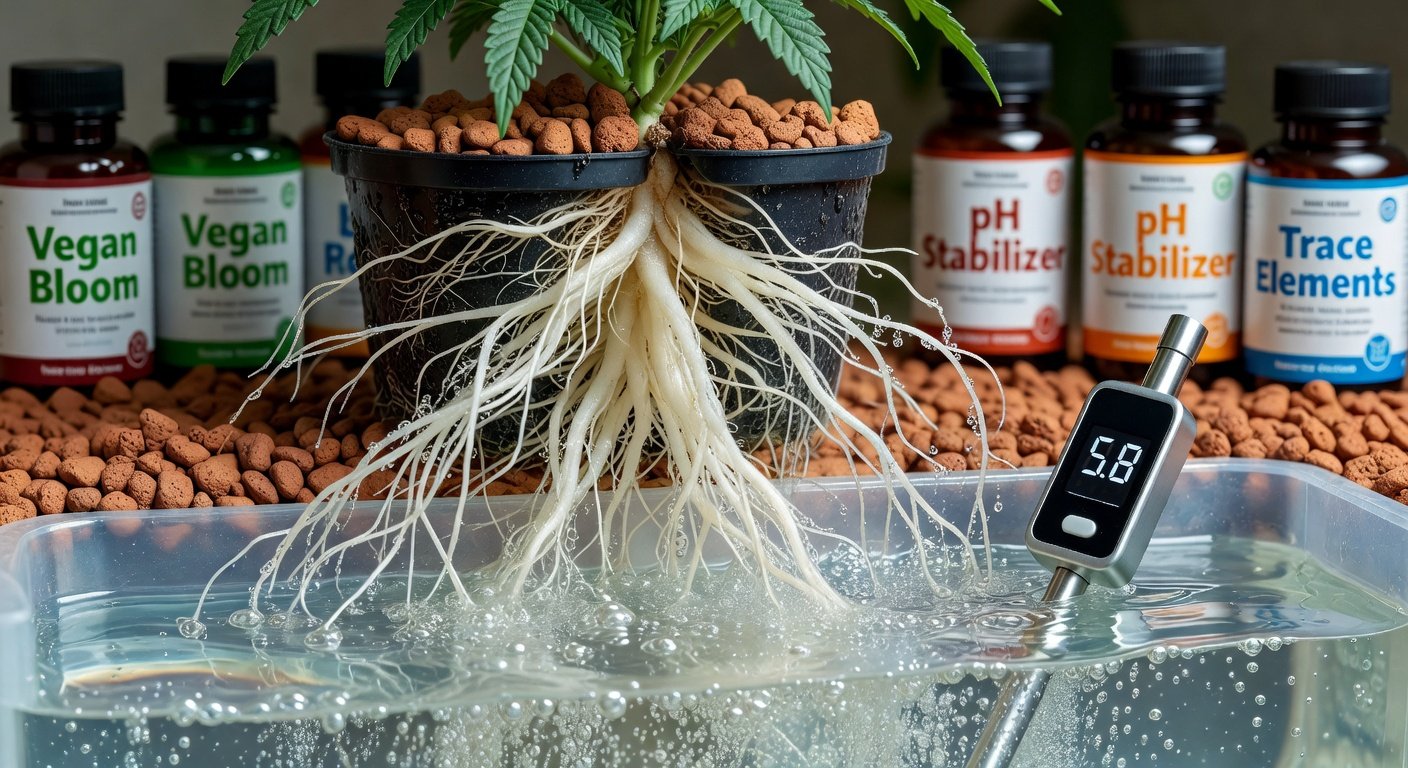
Autoflowers demand a balanced, low-stress nutrient regimen due to their compact lifecycle. Use a three-part hydroponic formula: base nutrients plus bloom boosters. Vegetative stage (weeks 1-3): High nitrogen (N-P-K 3-1-2) at EC 1.0-1.4. Flowering (weeks 4-8): Shift to phosphorus-rich (1-3-4) at EC 1.4-1.8, adding cal-mag supplements to prevent deficiencies in RO water.
Organic options like Fox Farm Hydro series work, but synthetic lines offer precision. Change reservoir every 7-10 days to prevent salt buildup. For 2026 efficiency, integrate automated dosers that maintain levels via app control. Always follow manufacturer dilution rates—overfeeding stunts autos quickly.
Pro tip: Incorporate beneficial microbes (e.g., Hydroguard) to enhance root uptake and fend off pathogens.
pH and EC Management in Hydroponic Autoflowers
Maintaining optimal pH and EC is non-negotiable in hydroponics. Roots absorb nutrients best at pH 5.5-6.5; below 5.0, micronutrients lock out; above 7.0, macros become unavailable. Test twice daily—pH drifts with CO2 absorption.
EC measures nutrient strength: Start low (0.5 mS/cm) for seedlings, peak at 2.0 for mature plants, then taper for flush. Use pH up/down solutions (phosphoric/nitric acid-based) sparingly. In 2026, smart meters like those from Bluelab sync to phones for alerts.
For accurate info on nutrient interactions, refer to the NCBI study on cannabis hydroponics.
Common Challenges: Root Oxygenation and Solutions
Root oxygenation tops the list of hydro pitfalls for autoflowers. Poor aeration leads to root rot, stunting growth in their brief cycle. Symptoms: Wilting, yellowing leaves, or slimy roots.
Solutions:
- Boost Aeration: Use multiple air stones and a powerful pump (0.05 L/min per gallon). Keep water below 72°F to hold more dissolved oxygen (DO)—aim for 6-8 ppm DO.
- Monitor Temps: Chillers or frozen water bottles prevent overheating in summer grows.
- Prevent Pathogens: UV sterilizers or hydrogen peroxide (3ml/gallon weekly) keep water clean. Avoid overpopulating reservoirs.
- Root Zone Health: Trim dead roots weekly and ensure good circulation in active systems.
Another issue: pH swings from inconsistent mixing. Calibrate meters monthly. If roots brown, flush with pH’d water and restart nutrients.
Tips for Maximizing Growth Cycles with Autoflower Seeds
To squeeze every gram from your 2026 hydro setup:
- Light Optimization: Use UV-supplemented LEDs in late flower for resin boost. Maintain 40-50% RH in veg, dropping to 30-40% in bloom.
- Training Techniques: Low-stress training (LST) like tying branches encourages bushy growth without delaying autos’ timer.
- Harvest Timing: Check trichomes at weeks 8-10—milky/cloudy for peak potency. Dry and cure in glass jars for 2-4 weeks.
- Succession Planting: Stagger starts every 2 weeks for continuous harvests, leveraging hydro’s quick turnaround.
- Sustainability: Recycle water with proper filtration; integrate solar-powered pumps for eco-friendly grows.
For ventilation standards, check the EPA’s IAQ guidelines.
With these strategies, expect 1-2 oz per plant in small setups, scaling to pounds in optimized tents. Hydroponic autoflowers aren’t just faster—they’re smarter for the modern grower.
Embrace this method to stay ahead in 2026’s evolving cannabis scene, yielding potent buds with minimal effort.
Strains like our Banana Punch Autoflower perform exceptionally in hydroponic systems.