
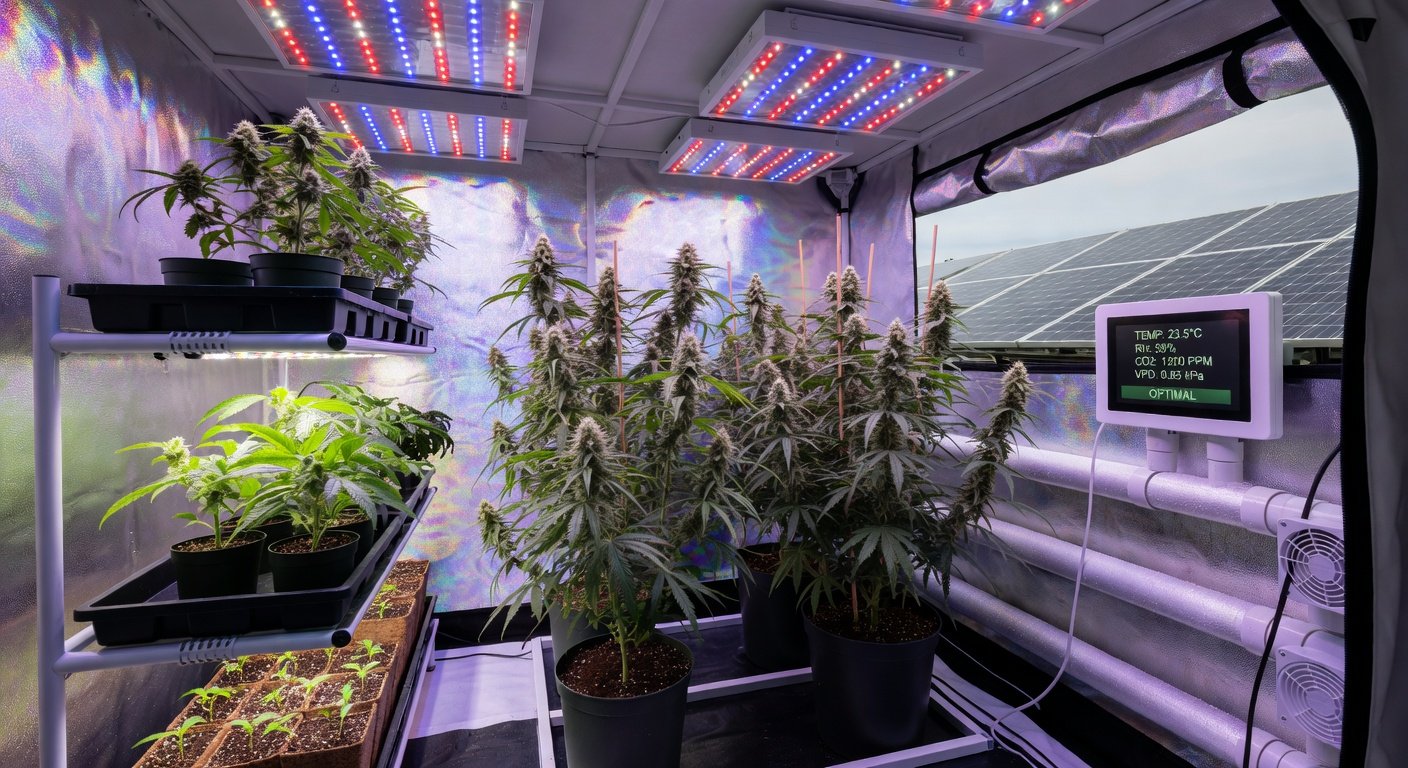
Introduction to Temperature and Humidity in Cannabis Cultivation
In 2026, as indoor cannabis growing becomes more accessible for home enthusiasts, mastering environmental controls is key to thriving plants and bumper harvests. Temperature and humidity directly influence photosynthesis, nutrient uptake, and pest resistance. Too hot, and your plants stress; too humid, and mold threatens your crop. This guide breaks down optimal ranges for each growth stage—seedling, vegetative, and flowering—while offering practical, energy-efficient solutions for modern growers.
Whether you’re a newbie with a small tent or scaling up sustainably, understanding these factors can prevent common pitfalls like stunted growth or bud rot. We’ll cover monitoring essentials, budget-friendly tools, and troubleshooting to keep your setup dialed in.
Seedling Stage: Gentle Starts for Strong Roots
The seedling phase, lasting 1-3 weeks, is when your cannabis plants are most vulnerable. They need a warm, humid environment to encourage root development and prevent damping-off disease. Ideal conditions mimic a tropical startup, promoting gentle sprouting without overwhelming the tiny plants.
Optimal Ranges
For seedlings, aim for:
- Temperature: 68-77°F (20-25°C) during lights-on; slightly cooler at 64-68°F (18-20°C) lights-off.
- Humidity: 70-80% to keep the soil moist and reduce transpiration stress.
These ranges support rapid cell division and enzyme activity. Deviations can lead to leggy growth or wilting. For quick reference:
| Stage | Temp (Lights On) | Temp (Lights Off) | Humidity |
|---|---|---|---|
| Seedling | 68-77°F | 64-68°F | 70-80% |
Source: Adapted from horticultural guidelines by the USDA National Institute of Food and Agriculture, emphasizing controlled environments for young plants.
Vegetative Stage: Building Robust Structure
During the vegetative phase (3-8 weeks, depending on strain), cannabis focuses on leaf and stem growth. This is your chance to train plants for maximum light exposure. Slightly lower humidity than seedlings prevents fungal issues as foliage thickens, while consistent warmth fuels photosynthesis.
Optimal Ranges
Target these for vegging plants:
- Temperature: 70-85°F (21-29°C) day; 58-70°F (14-21°C) night. Avoid exceeding 85°F to prevent stretching.
- Humidity: 40-70%, starting higher and tapering as plants mature.
Maintaining these levels enhances chlorophyll production and prepares plants for flowering. High humidity here can invite powdery mildew, so ventilation is crucial.
Quick-Reference Chart for Vegetative Stage
| Parameter | Ideal Range | Why It Matters |
|---|---|---|
| Day Temp | 70-85°F | Boosts growth without heat stress |
| Night Temp | 58-70°F | Promotes hormone balance |
| Humidity | 40-70% | Prevents excess moisture on leaves |
Flowering Stage: Maximizing Bud Quality
The flowering stage (8-11 weeks) is where yields shine—or falter. Bud sites swell, and resin production ramps up, but sensitivity to environment peaks. Lower humidity is vital to avoid bud rot (botrytis), while temps should stay moderate to preserve terpenes and cannabinoids.
Optimal Ranges
For flowering cannabis:
- Temperature: 65-80°F (18-26°C) day; 59-67°F (15-19°C) night. Keep below 80°F to avoid foxtailing.
- Humidity: 40-50% early flower, dropping to 30-40% late to deter mold.
These conditions optimize resin glands and prevent heat-induced hermaphroditism. As 2026 growers adopt LED lights for efficiency, cooler temps become easier to maintain.
Full Growth Stage Chart
| Stage | Day Temp | Night Temp | Humidity |
|---|---|---|---|
| Seedling | 68-77°F | 64-68°F | 70-80% |
| Vegetative | 70-85°F | 58-70°F | 40-70% |
| Flowering | 65-80°F | 59-67°F | 30-50% |
Monitor VPD (Vapor Pressure Deficit) for precise control—aim for 0.8-1.2 kPa across stages to balance transpiration and CO2 uptake.
Monitoring Tools for Precise Control
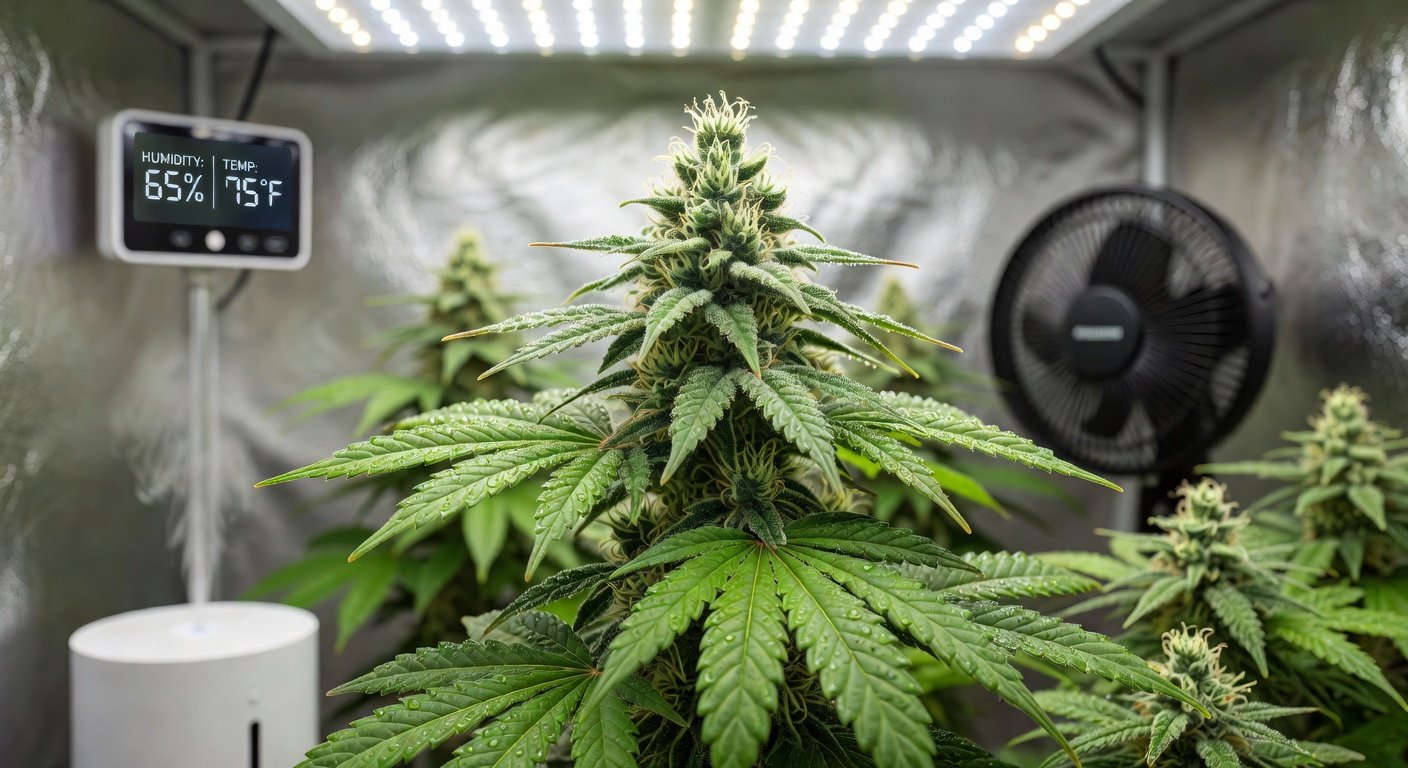
Accurate tracking is non-negotiable in 2026’s smart grows. Invest in digital hygrometers/thermometers like the Inkbird or Govee models, which offer app integration for real-time alerts. For under $20, these beat analog gauges.
- Basic Setup: Place sensors at canopy level, away from vents.
- Advanced: Use data loggers to track trends over days, helping spot subtle shifts before issues arise.
For energy efficiency, pair with smart plugs to automate lights and fans based on readings.
Affordable Control Methods for Home Growers
You don’t need a fortune to regulate your grow space. Focus on passive and low-energy solutions tailored for indoor setups.
Temperature Management
- Fans and Ventilation: Oscillating fans ($15-30) circulate air, preventing hot spots. Exhaust fans with carbon filters maintain negative pressure.
- Heating/Cooling: Space heaters or small AC units for extremes, but opt for ceramic heaters to save 20-30% energy over coils.
- Insulation: Reflectix foil on tents boosts efficiency, reducing heater runtime.
Humidity Control
- Humidifiers: Ultrasonic models like the TaoTronics ($25) add moisture affordably; use distilled water to avoid buildup.
- Dehumidifiers: Compact Peltier units ($40) for small spaces, drawing less power than compressor types.
- DIY Tricks: Hang wet towels for humidity boosts or silica gel packs for drying—zero energy cost.
For 2026 sustainability, integrate solar-powered fans or low-wattage LEDs. Check EPA energy efficiency guidelines for tips on reducing your grow’s carbon footprint by up to 50%.
Troubleshooting Common Pitfalls
Even dialed-in grows hit snags. Here’s how to fix them:
High Humidity Issues
- Mold/Bud Rot: Increase airflow, lower humidity below 50% in flower. Remove affected parts immediately.
- Yellowing Leaves: Often excess moisture—let soil dry between waterings.
Low Humidity Problems
- Crisp Edges: Boost to 60% with a humidifier; mist leaves sparingly.
- Slow Growth: In veg, low RH stresses plants—aim for 50-60%.
Temperature Fluctuations
- Heat Stress (Wilting): Cool with fans; ensure lights are 18-24″ above canopy.
- Cold Shock (Purple Stems): Warm gradually; use mats under pots.
Pro Tip: Log daily readings in a journal or app to predict and prevent recurring issues. Strains like indicas tolerate wider ranges than sativas, so adjust per genetics.
Energy-Efficient Setups for 2026 Growers
With rising energy costs, 2026 calls for green innovation. LED grow lights (e.g., Spider Farmer series) run cooler, slashing AC needs by 40%. Pair with timers and occupancy sensors for automated efficiency.
Consider a microclimate tent with mylar walls to retain conditions, minimizing equipment runtime. For larger ops, CO2 enrichment at optimal temps can yield 20% more, but start small.
By fine-tuning temp and humidity, you’ll not only maximize yields—up to 1.5g/watt—but also enjoy healthier, potent buds. Experiment safely, and watch your indoor garden flourish.
Perfect for newbies, autoflower cannabis seeds make managing the vegetative stage easier with their fixed timelines.
For strains with wider tolerance like indicas, check out feminized cannabis seeds optimized for indoor environments.