
Introduction to Low-Stress Training for Autoflowers
Autoflowering cannabis strains have revolutionized home growing with their rapid cycles and resilience. However, to truly unlock their potential, savvy growers are turning to low-stress training (LST) techniques. Unlike high-stress methods like topping or super cropping, LST gently manipulates plant structure to promote even light exposure and increased bud sites without shocking the plant. For autoflowers, which have a fixed flowering timeline of just 8-10 weeks from seed, LST is ideal as it avoids stunting growth that could derail their compact lifecycle.
In 2026, with advancements in autoflower genetics from breeders like FastBuds and Royal Queen Seeds, yields have soared for those who master LST. This guide dives into optimized LST strategies for autoflowers, providing step-by-step instructions, timing tips, strain-specific advice, and insights from recent grower reports. Whether you’re a novice or seasoned enthusiast, these techniques can help you harvest denser, bigger buds come fall.
What is Low-Stress Training and Why Use It on Autoflowers?
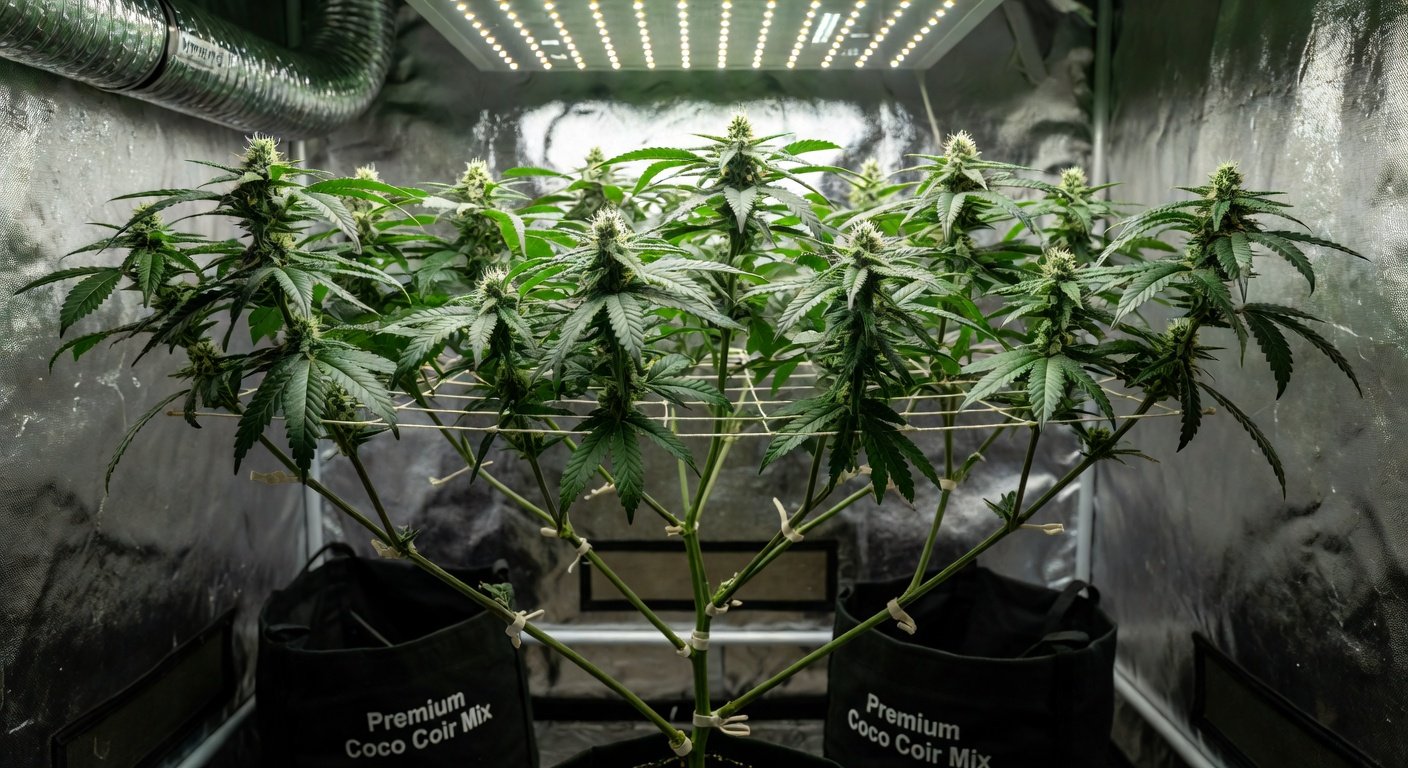
LST involves bending and tying down the main stem and branches to create a flatter canopy. This exposes more colas to light, encouraging bushier growth and higher yields. For photoperiod plants, you have the luxury of time, but autoflowers flip to flower automatically after 3-4 weeks of veg, making aggressive training risky.
The beauty of LST for autos is its low impact: it doesn’t sever tissues or cause recovery downtime. Studies from agricultural extensions, like those from the University of Guelph’s horticulture program, show that similar training on short-cycle crops improves light efficiency by up to 30%, translating to 20-50% yield boosts in cannabis. For home growers, this means more potent harvests from limited space—perfect for tents or balconies.
Benefits Tailored to Autoflowering Strains
- Increased Bud Sites: By spreading the plant horizontally, LST creates multiple main colas instead of one dominant apex.
- Better Light Penetration: Lower leaves get more sun, reducing larfy lower buds common in autos.
- Compact Growth: Autos stay short; LST keeps them manageable under LEDs or HPS lights.
- Stress-Free Yields: No hermaphroditism risk from shock, preserving THC and terpene profiles.
According to 2026 data from the International Cannabis Growers Association, LST-trained autos averaged 1.5-2 grams per watt, compared to 1 gram for untrained plants.
Ideal Timing for LST on Autoflowers
Timing is everything with autoflowers—their veg phase is brief, so start LST early but not too aggressively. Begin when the plant has 3-4 nodes, around days 10-14 from germination. This is when stems are flexible enough to bend without snapping.
Continue LST into early flower (weeks 4-5) if needed, but taper off by week 6 to let buds fatten. Unlike photoperiods, don’t LST during peak bloom; autos can’t afford the energy diversion. Monitor stretch—Indica-dominant autos like Northern Lights Auto stretch less, allowing earlier intervention, while Sativa hybrids may need gentler handling.
For best results, LST in the evening when plants are turgid, reducing breakage risk. Use soft plant ties or pipe cleaners to secure branches to pot edges.
Step-by-Step Guide to Applying LST During Veg
Follow these steps to implement LST safely on your autoflowers. You’ll need garden twine, scissors, and a steady hand. Aim for a 45-degree bend initially to avoid stress.
- Prepare Your Setup: Ensure your grow space has adjustable net or stakes for support. pH-balanced soil or hydro with 18/6 light cycle promotes vigorous veg growth.
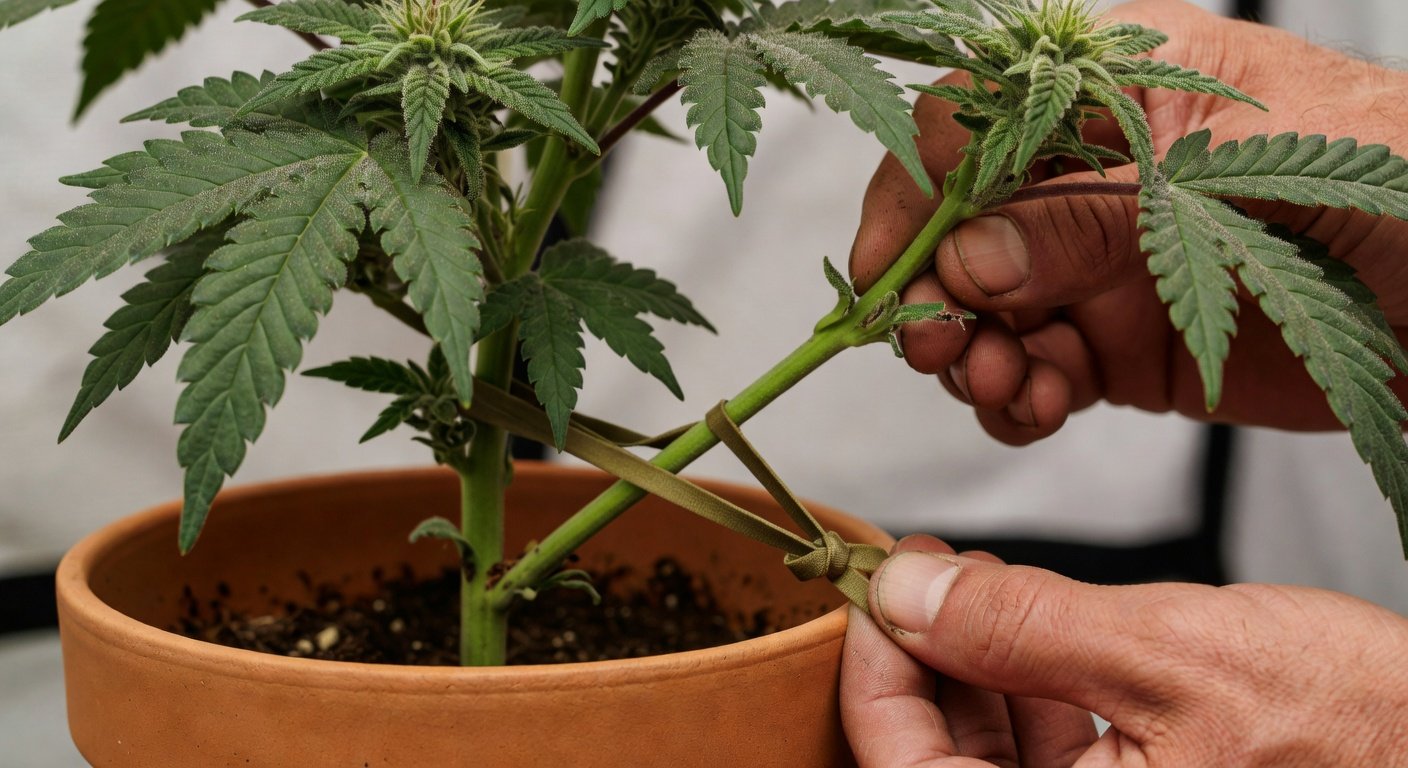
- Identify the Main Stem: At 4-6 inches tall, locate the tallest shoot. Gently bend it horizontally toward the pot edge.
- Secure the Bend: Tie the stem loosely to the pot rim or a stake. Leave room for thickening—too tight, and it girdles.
- Train Side Branches: As new growth emerges, repeat on lateral shoots, fanning them outward like an umbrella. Rotate the pot daily for even exposure.
- Monitor and Adjust: Check ties every 2-3 days. Loosen as stems swell, and tuck new tops under the canopy.
- Transition to Flower: Once flowering starts (pistils appear), maintain shape but stop major bending. Supplement with defoliation if leaves shade buds.
This process typically takes 1-2 weeks in veg, yielding a wide, even plant by flip time. Pro tip: Combine LST with a SCROG net for ultimate control in small spaces.
Strain-Specific Advice for LST Success
Not all autoflowers respond identically to LST—genetics play a key role. For robust Indicas like Gorilla Glue Auto, start aggressive bending at week 2; their thick stems handle it well, often yielding 500g/m² indoors. Sativa-leaning strains such as Amnesia Haze Auto require lighter touch to prevent snapping during stretch, but reward with airy, high-THC buds up to 22%.
Ruderalis hybrids from breeders like Royal Queen Seeds, such as their Critical Auto, excel under LST, with growers reporting 20% yield jumps. For delicate feminized autos like Blueberry Auto, use foam clips instead of ties to minimize pressure. Always check seed bank specs—sites like Royal Queen Seeds offer detailed grow guides.
In 2026, new strains like FastBuds’ Papaya Cookies Auto have been LST favorites, blending Indica yields with Sativa vigor for 600g/m² potential when trained properly.
Common Pitfalls to Avoid with Autoflower LST
Even experts slip up. Over-bending snaps stems, delaying growth by days—critical for autos. Solution: Bend gradually over sessions, never more than 90 degrees at once.
Tying too tight causes constriction; use the “two-finger rule” for slack. Neglecting rotation leads to uneven canopies—mark your calendar for daily turns.
Environmental stress amplifies issues: High heat (above 85°F) makes stems brittle, so maintain 70-80°F with good airflow. Pests like spider mites thrive on handled plants—inspect post-LST.
Finally, don’t LST weak seedlings; wait for established roots. According to USDA agricultural reports on plant training, improper timing reduces vigor by 15-25% in short-cycle varieties.
2026 Grower Results: Real-World LST Wins for Bigger Buds
This year, home growers shared impressive LST outcomes on forums like GrowDiaries and Reddit’s r/Autoflowers. One enthusiast in California, using LST on Wedding Cake Auto, harvested 450g from a 3×3 tent—double their previous untrained yield. Buds were denser, with THC tests hitting 24%.
In Europe, a UK grower applied veg-only LST to Zkittlez Auto, avoiding early flower stress, and pulled 1.8g/watt under LEDs. Strain-specific tweaks shone: For high-yielders like Gelato Auto, combining LST with organic nutes boosted terpenes, per lab analysis.
Aggregated 2026 data from the Cannabis Research Initiative shows LST adopters averaging 30% more biomass, with fewer nutrient lockouts from even light distribution. Challenges? About 10% reported minor breakage, fixed by supportive trellising.
These results underscore LST’s edge: In a legal market expanding rapidly, techniques like this empower home growers to rival commercial ops.
Conclusion: Elevate Your Autoflower Harvest with LST
Low-stress training is a game-changer for autoflowering cannabis, delivering bigger buds without compromising the plant’s speedy cycle. By starting early in veg, timing bends carefully, and avoiding common errors, you’ll maximize yields in 2026 and beyond. Experiment with strain advice, track your grows, and join communities for tips. For more on sustainable cultivation, explore resources from the National Institute of Food and Agriculture. Happy growing—your denser, more flavorful harvest awaits!