
Indoor vs Outdoor Cannabis Growing: Best for Beginners in 2026
For first-time cannabis growers, deciding between indoor and outdoor cultivation can feel overwhelming. Both methods have unique advantages and challenges, especially when you’re just starting out. In this guide, we’ll break down the pros and cons of each approach, focusing on key factors like environmental control, yield potential, and overall ease for beginners. Whether you’re a home grower in a small apartment or someone with access to a sunny backyard, understanding these differences will help you choose the right path. We’ll also cover how to get started with easy-to-grow cannabis seeds in each setup, making your first harvest a success in 2026.
What is Indoor Cannabis Growing?
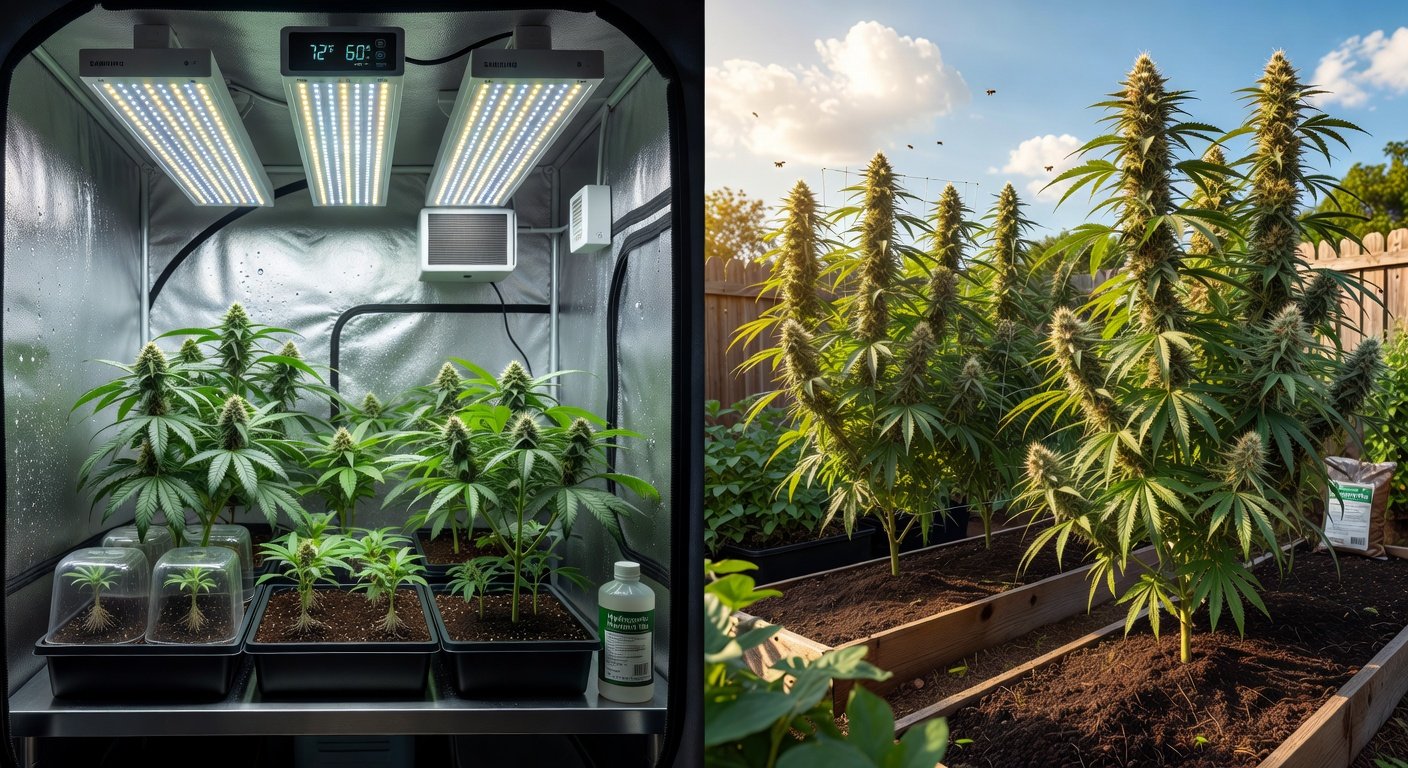
Indoor growing involves cultivating cannabis plants inside a controlled environment, such as a grow tent, closet, or dedicated room. This method uses artificial lighting, ventilation systems, and climate control tools to mimic ideal outdoor conditions year-round.
Pros of Indoor Growing for Beginners
- Full Environmental Control: You can regulate temperature, humidity, light cycles, and nutrients precisely, reducing the impact of external factors like weather or pests.
- Year-Round Harvests: No dependence on seasons means multiple grows per year, ideal for learning without long waits.
- Discretion and Security: Growing indoors keeps your operation private, which is crucial in areas where cannabis laws are still evolving in 2026.
- Higher Quality Control: Easier to prevent mold, pests, and diseases with proper setup, leading to potent, consistent buds.
Cons of Indoor Growing
- Higher Startup Costs: Lights (like LED or HID), fans, timers, and tents can cost $200–$1,000 initially.
- Space and Energy Demands: Requires a dedicated area and increases electricity bills—up to $50–$100 monthly for a small setup.
- Learning Curve for Equipment: Beginners must master pH balances, watering schedules, and light distances to avoid issues like nutrient burn.
Overall, indoor growing suits urban beginners who prioritize control over cost. For more on equipment basics, check out Leafly’s growing guide.
What is Outdoor Cannabis Growing?
Outdoor growing takes advantage of natural sunlight and space, planting cannabis in gardens, pots, or greenhouses. This method aligns with the plant’s natural lifecycle, typically from spring to fall harvest.
Pros of Outdoor Growing for Beginners
- Lower Costs: Minimal equipment needed—just quality seeds, soil, and basic tools. Sunlight is free, keeping expenses under $100 for a first grow.
- Larger Yields: Plants can grow bigger in open air, potentially yielding 1–2 pounds per plant versus 1–4 ounces indoors.
- Natural and Organic: Easier to use organic methods, resulting in robust plants with terpene-rich flavors.
- Simpler Maintenance: Less daily intervention; nature handles much of the work once established.
Cons of Outdoor Growing
- Weather Dependency: Rain, frost, or extreme heat can ruin crops—especially risky in unpredictable 2026 climates.
- Pest and Disease Risks: Exposure to insects, mold, and animals without barriers means more vigilance.
- Seasonal Limitations: Only one or two harvests per year, delaying your learning process.
- Legal and Privacy Issues: Visible plants may attract unwanted attention in non-legal areas.
Outdoor growing is perfect for rural or suburban beginners with yard space and mild weather. For climate considerations, refer to resources from USDA Natural Resources Conservation Service on regional growing zones.
Key Factors to Compare: Control, Yield, and Ease for Beginners
When evaluating indoor versus outdoor for first-timers, three main factors stand out: environmental control, yield potential, and overall ease.
Environmental Control
Indoor setups offer unparalleled control. You can maintain 70–85°F temperatures, 40–60% humidity, and 18/6 light cycles during veg stage—essential for preventing stress. Outdoors, you’re at mercy of nature; a sudden heatwave in summer 2026 could stunt growth, while indoor AC or heaters mitigate this. For beginners, this control means fewer surprises and faster troubleshooting.
Yield Potential
Outdoor plants often produce higher yields due to unlimited vertical growth and natural sunlight intensity (up to 12 hours daily in summer). A single outdoor autoflower can yield 200–500 grams, compared to 50–150 grams indoors from the same seed. However, indoor growing allows for denser, more potent buds through optimized CO2 and nutrients. Beginners might see better results indoors initially, as outdoor variables can halve expected yields.
Ease for Beginners
Outdoor is generally easier for absolute novices—no need to learn complex systems. Plant seeds in spring, water regularly, and prune as needed. Indoor requires more upfront knowledge of hydroponics or soil mediums, but apps and timers simplify it in 2026. If you’re tech-savvy, indoor feels intuitive; otherwise, outdoor’s hands-off approach wins.
Which Method is Easier for Beginners?
For most first-time growers, outdoor growing edges out as easier due to its simplicity and low barrier to entry. You don’t need to invest in gear or monitor daily metrics; the sun and soil do the heavy lifting. However, if you live in a cold or urban area, indoor is more forgiving long-term, offering consistent results despite the initial setup hassle. In 2026, with climate change bringing erratic weather, indoor’s control might tip the scales for reliability. Ultimately, assess your space, budget, and local laws—outdoor for budget-conscious gardeners, indoor for precision seekers.
Starting with Easy Cannabis Seeds Indoors: A Beginner’s Guide
Choosing beginner-friendly seeds is key to success. Opt for autoflowering or feminized strains like Northern Lights Auto or Blue Dream—resilient, fast-growing (8–10 weeks), and forgiving of errors.
- Gather Supplies: Get a 2×2 ft grow tent ($50), LED light (100W, $80), fan, soil or coco coir, and pH-balanced water.
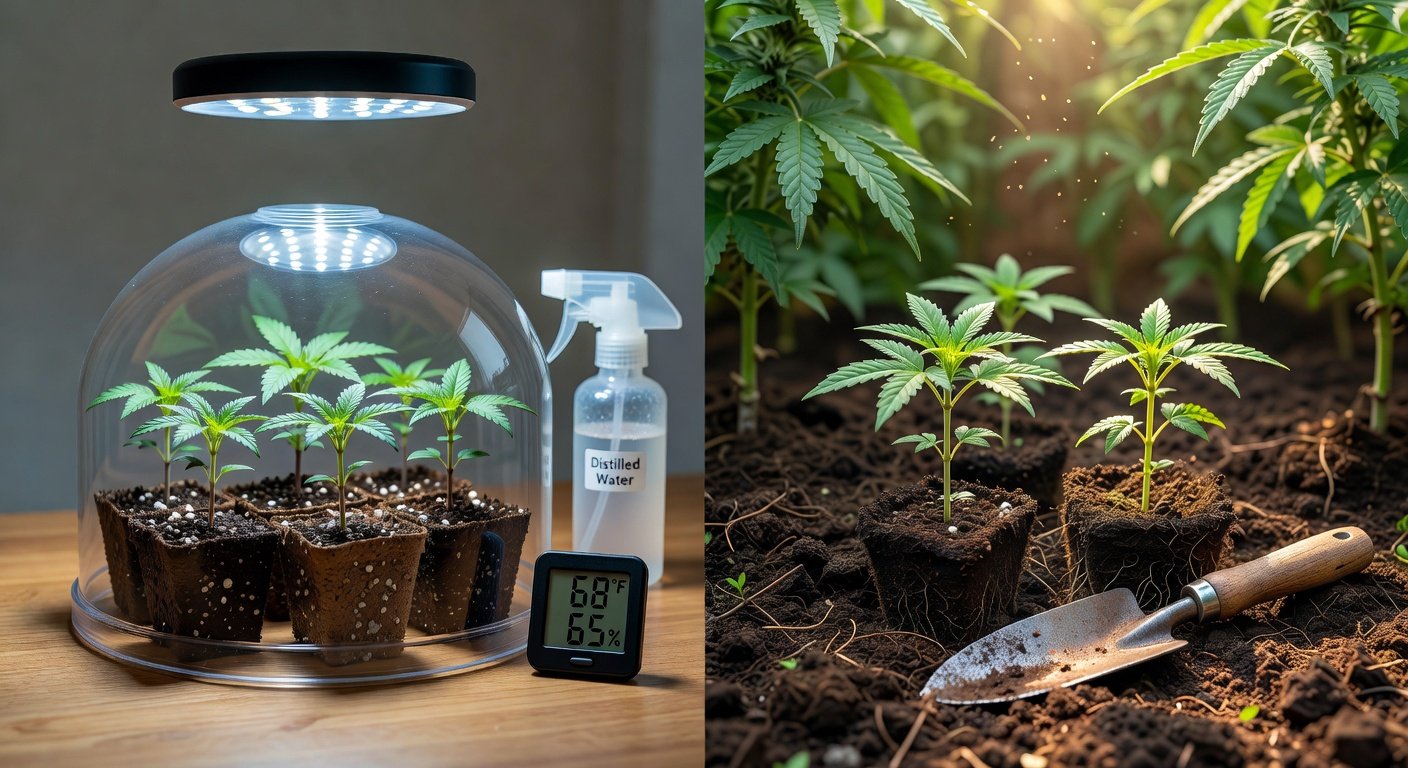
- Germinate Seeds: Soak seeds in water for 24 hours until they sink, then plant in damp starter plugs. Keep at 75°F under a humidity dome.
- Vegetative Stage (3–4 Weeks): Provide 18 hours light/6 dark. Water when top soil dries; use half-strength nutrients to avoid burn.
- Flowering Stage (5–7 Weeks): Switch to 12/12 light cycle. Monitor for pests with neem oil sprays.
- Harvest and Cure: When 70% trichomes are cloudy, trim and dry buds for 5–7 days, then cure in jars.
Start small with 2–4 plants to learn without overwhelm. Expect 1–2 ounces per plant your first time.
Starting with Easy Cannabis Seeds Outdoors: A Beginner’s Guide
For outdoor, select photoperiod or auto strains suited to your climate, like Durban Poison (thrives in sun) or Lowryder (quick autos for short seasons). These are pest-resistant and yield well naturally.
- Prepare Site: Choose a sunny spot (6–8 hours direct light) with well-draining soil (pH 6.0–7.0). Amend with compost for nutrients.
- Germinate and Plant: Germinate indoors in early spring, transplant seedlings after last frost (around April in most zones). Space plants 3–5 ft apart.
- Vegetative Care (Spring–Summer): Water deeply 2–3 times weekly; mulch to retain moisture. Prune lower leaves for airflow.
- Flowering (Late Summer–Fall): Natural light triggers bloom. Use organic fertilizers like worm castings; scout for aphids daily.
- Harvest and Dry: Cut when pistils brown (September–October). Hang dry in a shaded, ventilated area.
Protect from animals with fencing. Yields can reach 300 grams per plant in ideal conditions.
Choosing the Right Approach for Your First Grow
Consider your goals: If maximizing yield on a budget, go outdoor. For stealthy, controlled experiments, choose indoor. Hybrid options like greenhouses blend benefits, offering shelter outdoors. In 2026, with advanced seeds available, both methods are more accessible than ever. Research local regulations—many U.S. states allow home grows up to 6 plants. Start with reputable seed sources for genetics that match your setup.
Whichever you pick, patience is your best tool. Track progress in a journal, join online communities, and scale up gradually. Your first grow might have hiccups, but it’ll teach you volumes for future seasons.
Ready to plant? Both indoor and outdoor paths lead to rewarding harvests—pick what fits your lifestyle and watch your cannabis thrive.