
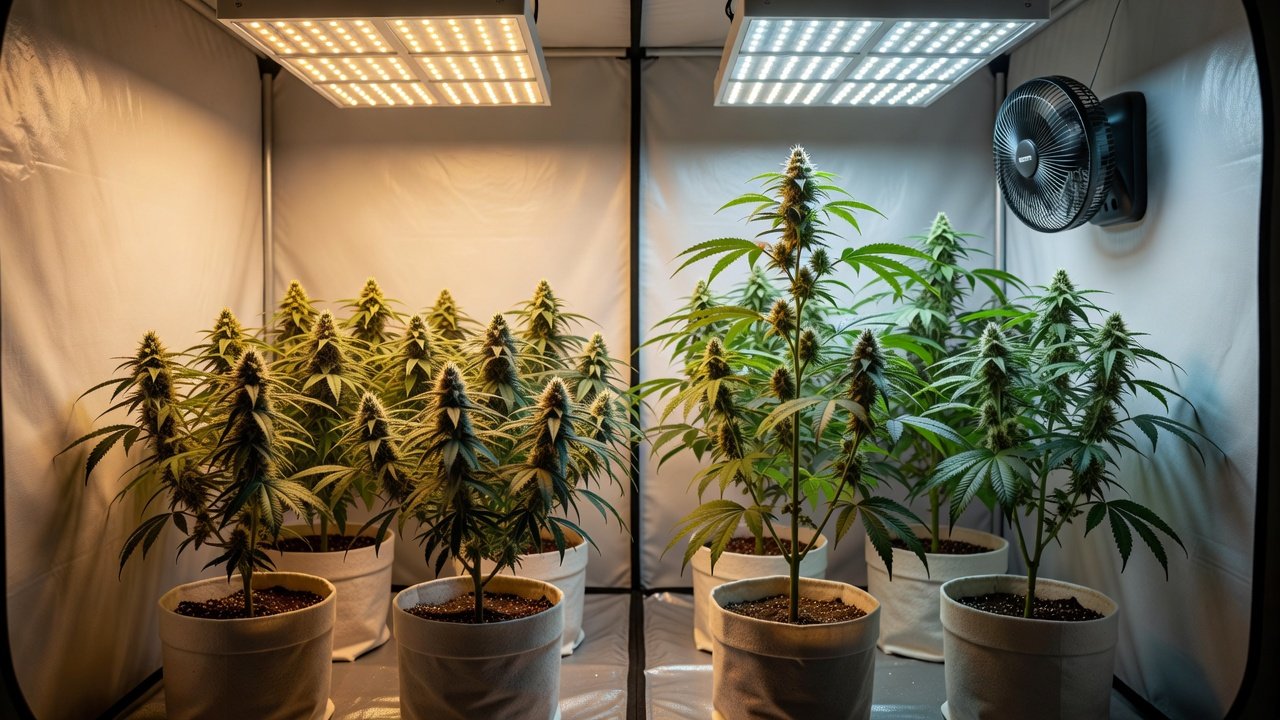
Choosing between autoflower seeds and photoperiod cannabis is one of the first decisions a 2026 home grower makes, and it shapes nearly every week that follows. Autos flower on an internal clock inherited from Cannabis ruderalis. Photoperiod plants wait for a change in day length before they bloom. That single biological difference changes speed, ceiling yield, lighting cost, and how much room you have to correct mistakes.
Modern autoflowers are not the small, hasty plants of a decade ago. Breeders have paired ruderalis ancestry with resinous photoperiod lines, so many 2026 autos finish dense, aromatic flowers in roughly 8 to 12 weeks from sprout. Traditional photoperiod strains still lead when a grower wants maximum size, a long training window, and the ability to hold a plant in vegetative growth until the canopy is ready. Neither type is universally better. The right seed depends on your tent, your schedule, and what you want in the jar.
Before comparing techniques, confirm that home cultivation is legal where you live and follow local plant-count rules. Public health agencies such as the National Institute on Drug Abuse publish clear background on cannabis so growers can separate horticulture from health claims. In Canada, Health Canada sets the federal framework that personal cultivation must respect. This comparison stays on the growing questions that actually change a harvest: speed, yield potential, and light.
How Autoflower and Photoperiod Timelines Differ
An autoflower timeline is mostly fixed. After germination, most cultivars spend about three to five weeks in vegetative growth, then move into flower without a light-schedule change. Seed-to-harvest windows commonly land between 70 and 90 days. Some fast lines finish nearer 65 days, and some larger hybrids stretch past 100. You cannot pause an auto to fix a problem the way you can pause a photoperiod plant. Stress in week three shows up in the final flowers because the plant will not wait for you.
Photoperiod cannabis stays vegetative under long days, typically 18 hours of light and 6 of darkness, for as long as the grower chooses. After the switch to 12 hours of light and 12 of darkness, flowering usually takes 8 to 11 weeks, plus the vegetative weeks already invested. A careful first grow might run four weeks of veg and nine weeks of flower, landing around 13 to 16 weeks from sprout, not counting dry and cure. An experienced grower filling a large room may veg for eight weeks or more. The calendar is a choice, not a countdown.
That flexibility is the photoperiod advantage when something goes wrong. A nutrient swing, a pH mistake, or a rough training day can be grown out before the flip. With autos, recovery time is part of the harvest clock. Plan pots, medium, and environment before the seed cracks, not after the stretch starts. Perpetual harvests diverge as well. Autos can be sown every two to three weeks so jars refill on a rolling schedule. Photoperiod perpetual rooms usually need two zones: one for veg and one for flower. One tent can still run photoperiod plants, but you harvest in batches unless you add a second light schedule.
Yield Potential: What 2026 Growers Can Expect
Yield is where marketing language gets loudest, so separate genetics from grower control. Photoperiod plants can become very large because vegetative time is unlimited. A healthy photoperiod female in a generously sized pot under a strong light can outweigh a typical auto in the same footprint, and a long-veg canopy can fill every square foot of a 4×4 tent. Ceiling height, root volume, and watts set the upper bound more reliably than the packet slogan.
Autoflower yield potential in 2026 is much higher than early ruderalis hybrids suggested. Well-bred autos in 3- to 5-gallon containers, under adequate intensity, commonly produce a solid personal harvest from a compact plant. They rarely match a fully vegged photoperiod plant in raw dry weight per plant. They often compete on grams per day and grams per watt in small tents, because the calendar is short and the plant does not demand months of electricity before flowers appear.
Think in rates, not trophies. If an auto finishes in about 80 days and a photoperiod run takes about 140 days, two auto cycles can occupy the same season as one long photoperiod crop. Total output from a small space across a year can favor autos even when each plant yields less. Outdoor growers in short summers see the same pattern. An auto started after the last frost can finish before autumn rain, while a late photoperiod may never fully ripen.
Training changes the math, but the window is narrower for autos. Gentle low-stress training is usually safer than aggressive high-stress work. A net can still spread colas in a tight tent; a focused look at SCROG for autoflowers in small spaces is more useful than copying a photoperiod scrog calendar. Topping can work on vigorous autos when timed early, yet it is easy to steal days the plant cannot replace. Photoperiod plants tolerate topping, mainlining, and extended netting more forgivingly because you choose the flip date. Environment still decides more than seed type. Root-bound autos stall, and both types suffer if the medium stays soggy. A steady watering schedule that prevents root rot protects yield once flowering starts and drinking patterns change.
Light Requirements and Daily Schedules
Light is the clearest practical split. Photoperiod plants use day length as a signal. Long days keep them vegetative. A reliable 12 hours of uninterrupted darkness triggers and maintains flowering. Light leaks during that dark period can cause reveg, foxtailing, or stress responses in sensitive cultivars. A sealed tent, a timer you trust, and a dark period you do not interrupt are non-negotiable for this type.
Autoflowers do not require a dark-period trigger. Many growers run 18 hours on and 6 off from seed to harvest. Some run 20/4. A minority run lights continuously. More hours can raise the daily light integral, but plants still benefit from a rhythm, and running fixtures around the clock raises heat and electricity without a guaranteed quality gain. For most home tents in 2026, 18/6 or 20/4 is the practical band: enough photons for dense flowers, with a rest window that also lets temperatures ease.
Intensity matters more than schedule marketing. Both types want strong, even light in flower. A dim auto will not make up for a weak fixture by flowering early; it will flower on schedule and yield poorly. A photoperiod plant under a weak light can be vegged longer, yet it will still finish airy if flower intensity is low. Match fixture output to canopy area, keep the lamp at a sensible height, and watch leaf posture rather than chasing a single number from a forum post.
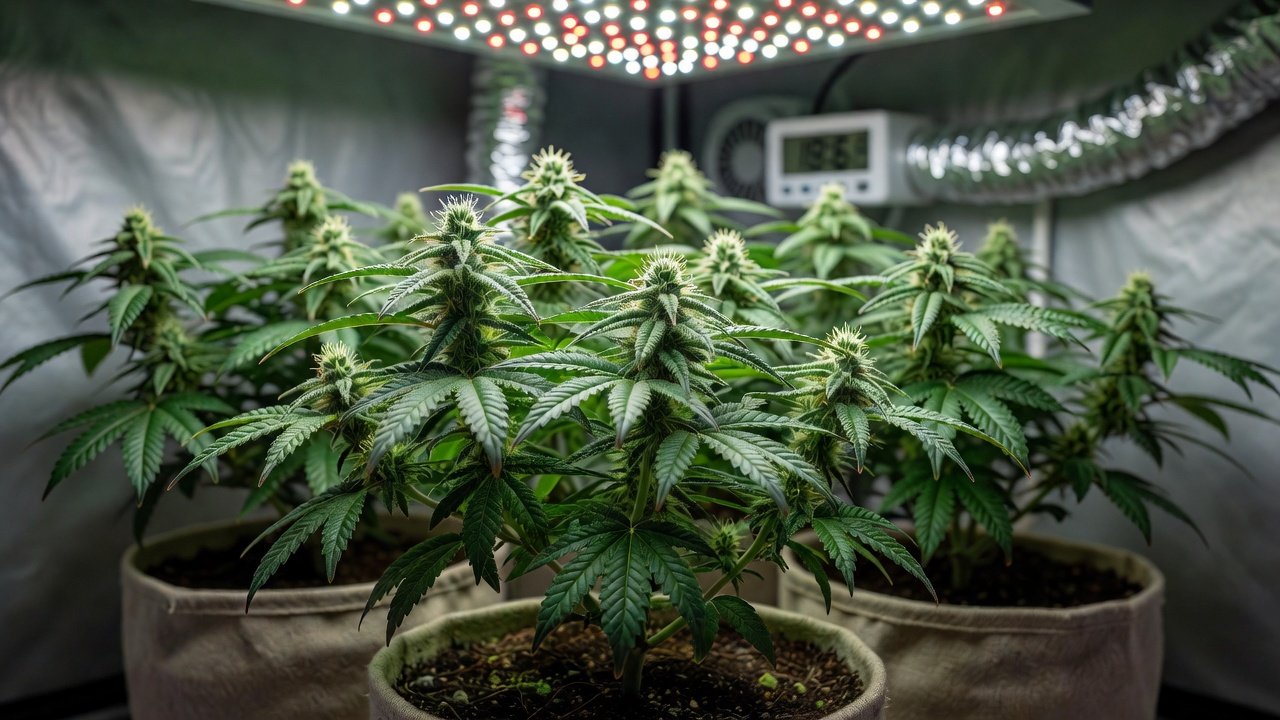
Outdoor and greenhouse growers should read the season, not the tent chart. Photoperiod plants flower as nights lengthen, so planting date controls finish date. Autos flower when they are mature, which makes them useful for a spring greenhouse run or a short northern summer. Supplemental lighting can help both, but a photoperiod plant under mixed natural and artificial light is vulnerable to interrupted darkness. Autos tolerate porch lights and uneven day length more calmly. Cool rooms and short seasons reward cultivar choice as much as schedule; growers in chilly spaces should pair seed type with climate technique rather than forcing a long-season photoperiod through a cold flower room.
Choosing by Space, Experience, and Harvest Goals
Space is the fastest filter. A 2×2 tent with limited height favors autos. They stay shorter, finish before the room feels permanently occupied, and do not require a second chamber for a mother plant. A 4×4 or a spare room with height to spare can justify photoperiod plants if your goal is fewer, larger harvests and you enjoy shaping canopies. Headroom matters during stretch. Even compact autos can rise quickly in early flower, and many photoperiod hybrids can nearly double height after the flip.
Experience cuts both ways. Autos are simple in one sense: no flip, no dark-period anxiety, and no mother plant to maintain. They are unforgiving in another: you cannot add a month of veg after a rough seedling stage. New growers who learn slowly may prefer a photoperiod cultivar they can hold in veg while they practice watering and pH. New growers who want a complete cycle before motivation fades often do better with autos, provided they start in a correctly sized pot and avoid transplant shock.
Write harvest goals down before you browse catalogs. If you want several flavors across a year, successive auto runs let you try more cultivars without committing half a year to one plant. If you want one flagship harvest for long-term storage, a photoperiod plant gives you more biomass per successful run and a longer window to select a keeper if you are not starting from feminized seed. Legal plant counts belong in the same note. Where mature-plant limits are tight, a few larger photoperiod plants may use the allowance more efficiently than many small autos. Where the cap is generous and floor space is the limit, autos keep the pipeline moving.
- Choose autos for short tents, short summers, and more harvests per year.
- Choose photoperiod plants for height, training time, and heavier plants.
- Choose by HVAC reality: lights-on heat and dark-period cooling both matter.
- Choose feminized seed when you cannot spare days sorting males.
Practical Selection Tips Before You Buy
Start with the breeder’s realistic window, not the slogan on the packet. Look for a stated seed-to-harvest range, expected height, and whether the line is feminized. Feminized autoflower seeds remove the male-sorting step, which matters when every day counts. Photoperiod growers who hunt phenotypes may still want regular seeds, then keep a mother. That path is slower and needs space most apartment growers do not have.
Read structure, not just potency percentages. A squat, indica-leaning auto fits low tents. A stretchy hybrid needs headroom during the flower transition even if it is an auto. For photoperiod plants, plan the flip when the canopy is about half the final desired height, and leave room for the light to rise. Buy for the environment you actually have. If nights run cool, choose cultivars described as sturdy in lower temperatures rather than forcing a long-flowering tropical photoperiod through a cold room.
Seed quality is its own decision. Germination rate, breeder reputation, and fresh stock matter more than a limited-edition name. A practical checklist for selecting premium autoflower seeds will save money before you mix nutrients. Pot size is part of selection too. Most autos prefer their final container from the start, commonly 3 to 5 gallons in soil or a well-aerated coco mix, so the taproot is never stalled. Photoperiod plants can be up-potted several times during a long veg. If you dislike transplanting, autos in final pots are simpler. If you like building root mass gradually, photoperiod plants reward that habit.
Finish the crop you started
Fast flowers still need a patient dry. Rushing jars undoes the advantage of an 80-day auto. Leave time and space so terpenes survive the speed you worked for, and ignore social-media yield photos that assume commercial rooms. Your watts, your medium, and your consistency will decide the jar. If topping is part of the plan, learn the timing limits first; autos have less margin than photoperiod plants, and a late cut costs more than it returns.
Which Type Fits a 2026 Home Grow
For home growers this year, autoflower seeds win on speed, simpler lighting, and harvests per year in small spaces. Photoperiod cannabis wins on vegetative control, training freedom, and raw yield per plant when you can give it time and height. Light requirements follow the same split. Autos want intensity on a long day. Photoperiod plants want intensity plus a strict, uninterrupted dark period.
Choose autos if your tent is short, your summer is brief, or you want a new cultivar in the jar before the season changes. Choose photoperiod plants if you enjoy canopy design, can protect 12 hours of darkness, and would rather harvest fewer, heavier plants. Many experienced growers run both: autos for a rolling personal supply, and photoperiod plants when a favorite cut deserves a full season. Start with one clear goal, match the seed type to that goal, and keep the first run simple enough to finish. Speed only helps if the flowers are worth curing.