
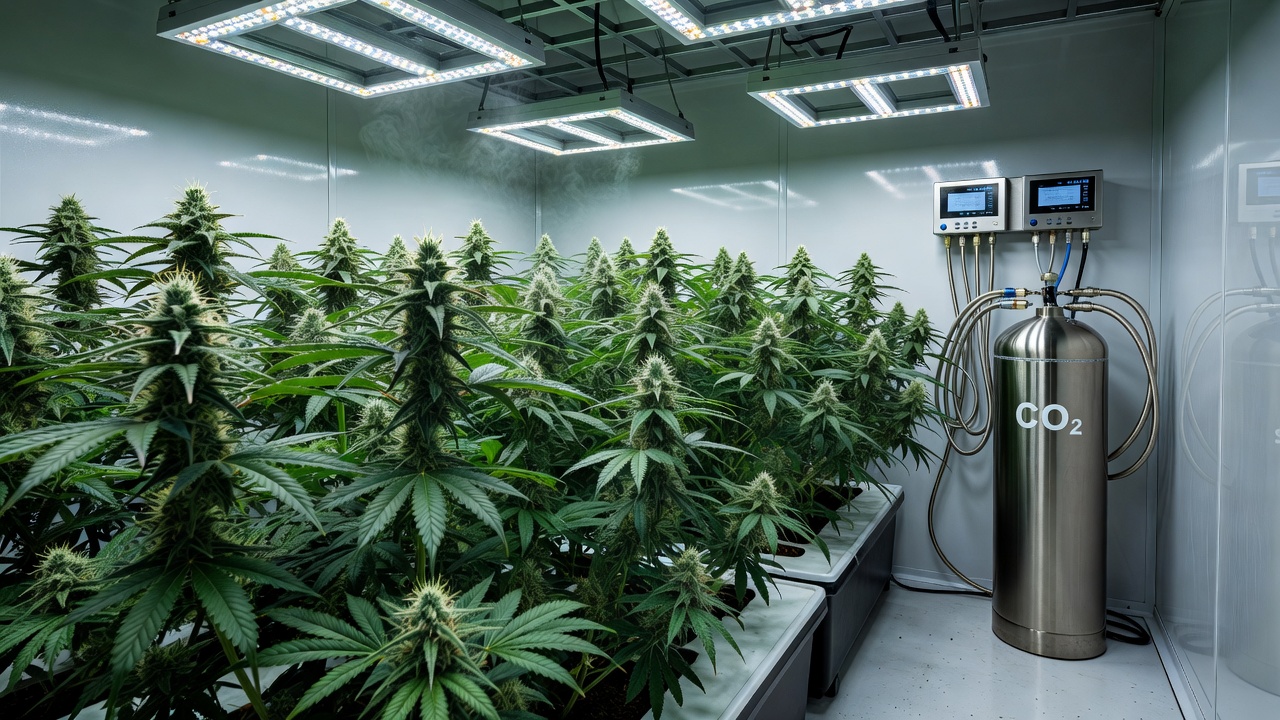
CO2 supplementation has become a cornerstone technique for serious cannabis cultivators aiming to push photosynthesis rates and harvest heavier yields. By elevating carbon dioxide levels in the grow environment, plants can process more light energy, leading to faster growth, denser buds, and improved resin production. This guide examines practical methods suitable for home growers working from seed through harvest, with a focus on safe, efficient integration in contemporary 2026 setups that incorporate smart sensors and energy-efficient equipment. Growers new to the practice often start with basic monitoring tools before scaling to automated systems, ensuring they understand how CO2 interacts with their specific tent or room setup.
Understanding CO2 and Photosynthesis in Cannabis
Cannabis plants rely on CO2 as a primary input for photosynthesis, converting light, water, and carbon dioxide into sugars that fuel growth. Ambient indoor levels often hover around 400 ppm, but research shows that elevating concentrations to 1000-1500 ppm can increase photosynthetic efficiency by 20-30 percent when paired with adequate lighting and nutrients. From the seedling stage onward, consistent CO2 availability supports stronger root development and vegetative vigor that carries through flowering. For instance, a grower using a 4×4 tent with 600-watt LEDs might notice stems thickening within days of raising levels to 800 ppm, allowing the plant to support larger fan leaves that capture more light.
However, supplementation must be managed carefully. Excessive levels above 2000 ppm can cause plant stress or pose safety risks to growers. Understanding the balance between CO2, temperature, humidity, and light intensity is essential for avoiding diminished returns or wasted resources in a sealed grow space. Practical examples include monitoring leaf edges for signs of burn when CO2 climbs too high alongside intense light, prompting immediate adjustments via controller settings.
Choosing CO2 Supplementation Systems
Home cultivators typically select between compressed CO2 tanks and CO2 generators. Tanks offer precise control through regulators and timers, releasing pure gas without adding heat or moisture. They suit smaller tents or rooms where temperature stability matters most. A 20-pound tank in a 5×5 space, for example, can maintain 1200 ppm for several weeks when paired with a solenoid valve and digital timer set to activate only during lights-on hours. Generators, which burn propane or natural gas, produce larger volumes of CO2 at lower ongoing cost but require proper ventilation to manage the heat and water vapor they emit.
Many 2026 setups combine both approaches: a primary tank system for precision during flowering and a generator for vegetative stages when plants tolerate warmer conditions. Always verify local regulations regarding gas storage and combustion appliances before installation. Concrete guidance includes calculating room volume first—multiply length by width by height—to determine the right tank size or generator output needed for stable enrichment without rapid depletion.
Safe Integration into Grow Spaces
Integrating CO2 equipment safely begins with sealing the grow area to prevent gas leakage while maintaining fresh air exchange capabilities. Install CO2 monitors at canopy height and connect them to automatic shutoff valves or smart controllers. Position tank regulators or generator outlets above the plants so the heavier CO2 settles evenly across the canopy. In practice, a grower might mount the sensor on a stand at the same height as the top colas and run tubing along the ceiling to distribute gas evenly, avoiding pockets of high concentration near the floor.
Never operate generators in unventilated spaces without carbon monoxide detectors. Schedule supplementation during lights-on periods only, as plants do not uptake CO2 in darkness. Regular leak checks on hoses and fittings protect both crops and household safety. For added security, many 2026 users integrate smart plugs that cut power to the system if sensors detect anomalies, providing an extra layer of protection during extended absences.
Monitoring Strategies for Consistent Results
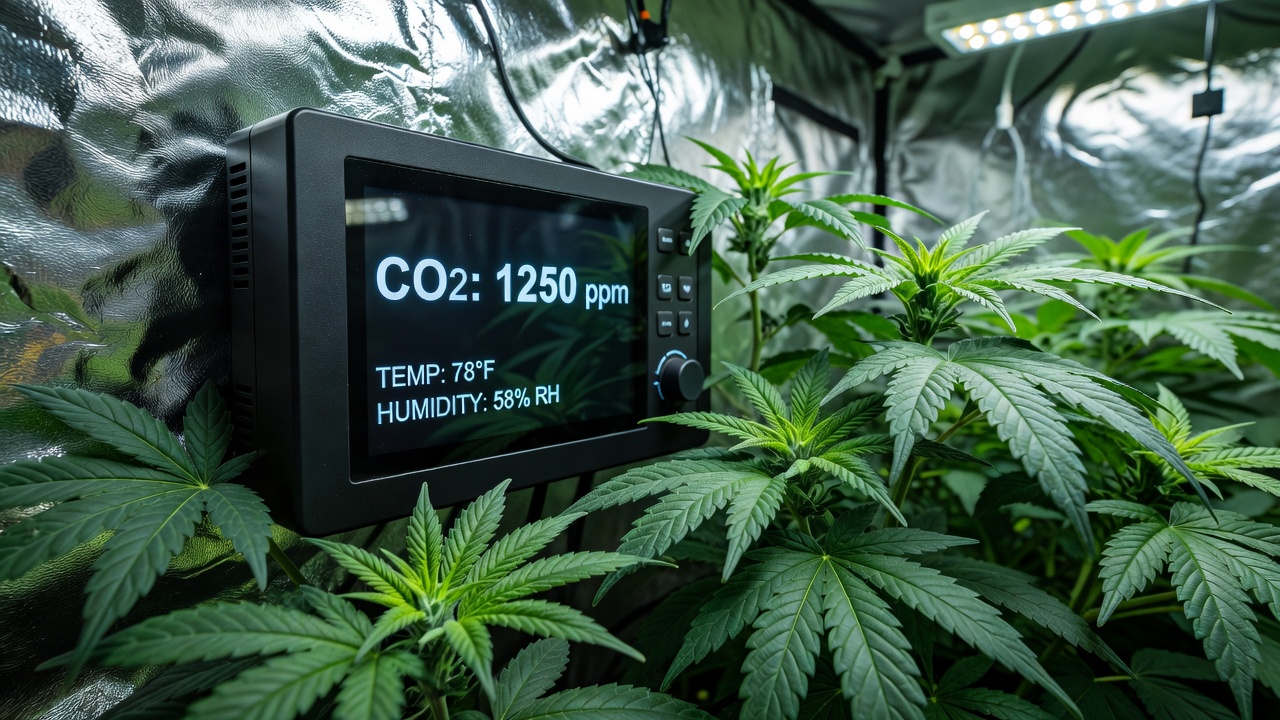
Accurate monitoring forms the backbone of successful CO2 supplementation. Digital controllers with NDIR sensors provide real-time readings and can automate dosing based on preset thresholds. Pair these with data-logging apps that track daily averages, helping growers fine-tune levels across growth phases. A typical workflow involves checking morning readings, adjusting setpoints if levels drift below target, and reviewing weekly logs to spot patterns like spikes during peak heat.
Cross-reference CO2 readings with temperature and humidity data. High CO2 works best when temperatures sit between 24-28°C and VPD remains optimal. In 2026, many growers employ integrated environmental control systems that adjust CO2, lighting, and HVAC simultaneously for maximum efficiency. Practical examples show that maintaining 26°C with 1200 ppm CO2 and 50% humidity often yields the best results, with plants displaying deeper green coloration and faster internode spacing.
Stage-Specific Application from Seed to Harvest
Begin supplementation at the early vegetative stage once seedlings develop their first true leaves, targeting 800-1000 ppm. Increase to 1200-1500 ppm during peak vegetative growth and maintain similar levels through mid-flowering when bud sites form. Reduce concentrations gradually in the final two weeks before harvest to encourage natural ripening and avoid harsh flavors. One grower reported denser colas after holding 1400 ppm through week six of flower, then tapering smoothly.
- Seedling stage: 600-800 ppm to support tender growth without stress.
- Vegetative stage: 1000-1400 ppm with strong lighting.
- Flowering weeks 3-7: 1200-1500 ppm for maximum bud density.
- Final flush: taper to ambient levels.
Adjust based on plant response and environmental readings rather than rigid schedules. Observing new growth tips daily helps confirm whether levels need fine-tuning for the specific strain being cultivated.
Advanced Tips for 2026 Home Setups
Modern growers benefit from variable-rate CO2 systems that respond to real-time plant demand detected through leaf temperature sensors. Combine supplementation with LED fixtures offering high PAR output to fully utilize elevated CO2. Energy-efficient propane generators with catalytic converters reduce emissions while maintaining output. Regular calibration of sensors and annual servicing of regulators ensure long-term reliability. Documenting yields before and after implementing CO2 strategies helps quantify improvements and refine future cycles. For authoritative guidance on indoor air quality considerations, consult resources such as the EPA carbon dioxide basics page. Testing different flow rates in small batches before full implementation prevents costly mistakes in larger operations.
Conclusion
CO2 supplementation, when executed safely and strategically, delivers measurable gains in cannabis growth speed and final yields. By selecting appropriate systems, integrating them thoughtfully, monitoring diligently, and tailoring application to each growth stage, home cultivators can achieve professional-level results in 2026 environments. Start conservatively, observe plant feedback, and scale up as experience grows for consistently impressive harvests. Tracking multiple cycles builds confidence and reveals the optimal settings unique to each grow space.