
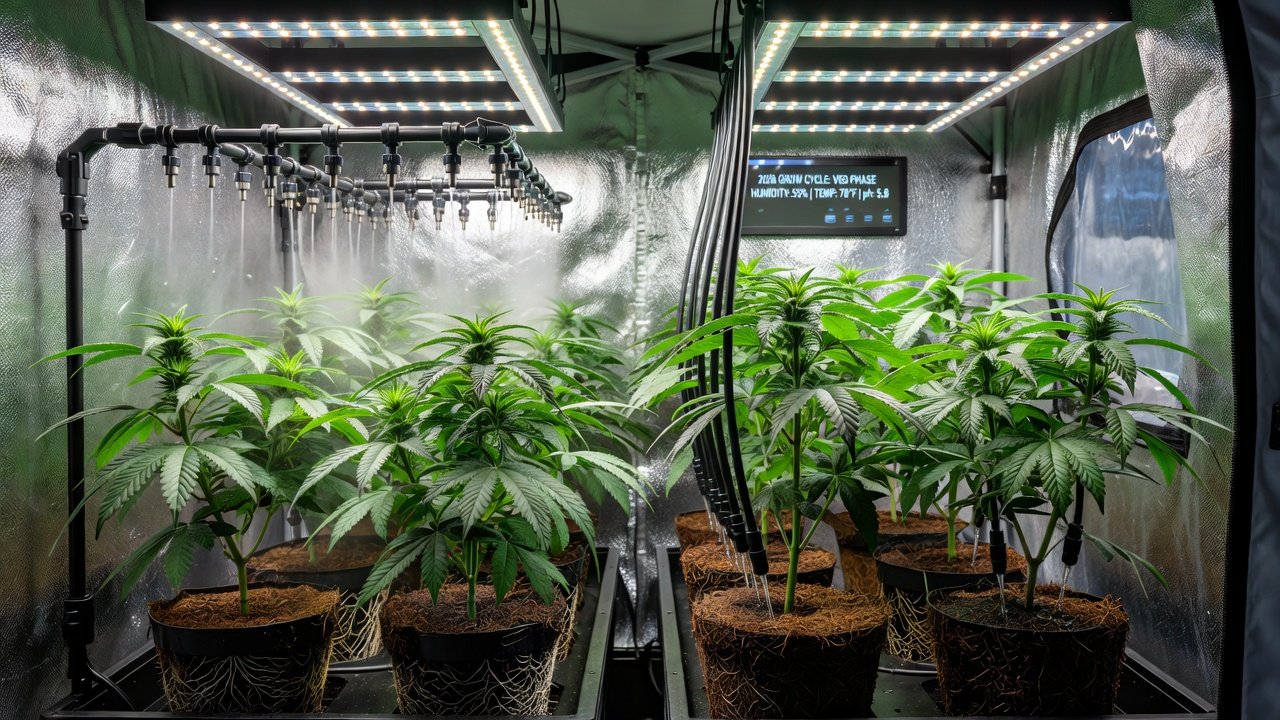
Introduction to Aeroponics and Drip Irrigation for Indoor Cannabis
Indoor cannabis cultivation in grow tents has evolved significantly by 2026, with growers seeking efficient methods that maximize limited space. Aeroponics and drip irrigation stand out as two leading hydroponic techniques tailored for compact environments. Aeroponics suspends roots in air and mists them with nutrient solutions, while drip irrigation delivers precise amounts of water and nutrients directly to the root zone via emitters. Both systems integrate well with modern grow lights and hydroponics cannabis setups, offering advantages over traditional soil methods in terms of speed and control.
Home growers appreciate these systems for their ability to optimize space, reduce water waste, and boost yields in tents as small as 2×2 feet. For example, a 2×2 tent grower can fit four plants using either method without crowding, whereas soil setups often limit them to two due to pot size. This guide explores equipment requirements, compatibility factors, yield impacts, and seed selection to help enthusiasts choose the best approach for their setup. Practical experience shows that switching from soil to these hydroponic options can cut grow cycles by one to two weeks while using up to 95 percent less water.
Core Equipment Needs for Each System
Setting up aeroponics requires a misting chamber, high-pressure pumps rated at 80-100 PSI, fine nozzles, and reservoirs with timers for 5-10 second bursts every few minutes. Growers also need pH and EC monitors, air stones for oxygenation, and sturdy net pots to hold plants. In practice, a 20-gallon reservoir paired with a 100 PSI pump and four 0.5 mm nozzles works well for a 2×4 tent holding six plants. In contrast, drip irrigation setups use reservoirs, submersible pumps, drip lines with emitters (0.5-2 GPH flow rates), and growing media like coco coir or rockwool in pots. Both demand quality timers and filtration systems to prevent clogs in enclosed tent spaces. A simple inline filter rated at 150 microns stops most debris from reaching emitters.
Compatibility with hydroponics cannabis systems is high for both, as they eliminate soil-borne pests. Aeroponics often pairs with vertical racks to further save space, while drip systems excel with automated controllers for consistent feeding schedules. Beginners should start by testing the pump and timer together for 48 hours before adding plants to catch any leaks early.
Integrating Grow Lights and Hydroponics Setups
Modern LED grow lights, such as full-spectrum models with 300-600W output, work seamlessly with both methods by providing the intense light needed without excessive heat in tents. Aeroponics benefits from lights positioned 12-18 inches above plants to support rapid root development, while drip irrigation allows slightly closer placements due to media buffering temperature swings. A grower using a 600W LED in a 4×4 tent might hang the light at 16 inches during veg for aeroponics to avoid light burn on fast-growing tops. Hydroponics integration involves matching light cycles (18/6 vegetative, 12/12 flowering) with system timers for optimal photosynthesis. For instance, set the misting timer to run during the light-on period only to conserve energy and maintain stable tent humidity.
Space efficiency shines here: aeroponics uses 30% less water overall, making it ideal for small tents where humidity control is critical.
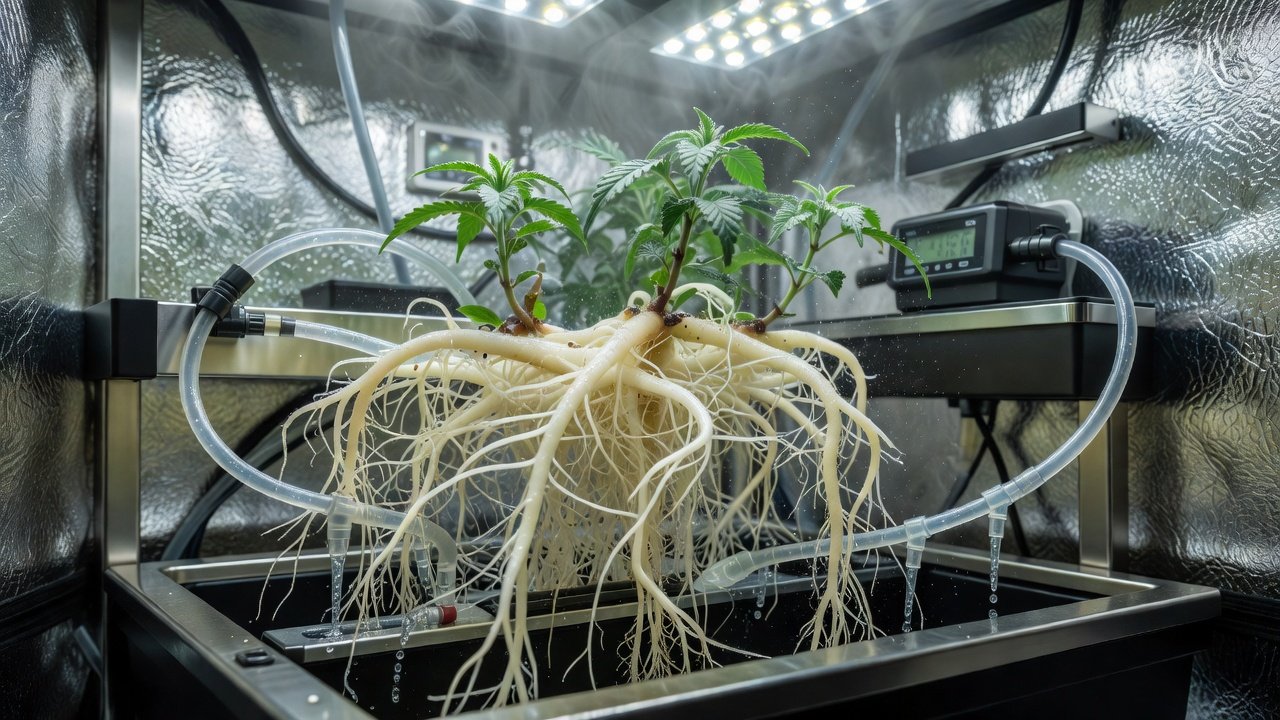
Drip systems offer flexibility for mixing with supplemental CO2 enrichment under lights. Monitoring VPD between 0.8 and 1.2 kPa during veg helps both systems perform at peak while preventing mold in the enclosed space.
Yield Impacts and Efficiency in Compact Spaces
Yields can reach 1-2 pounds per 4×4 tent with optimized setups. Aeroponics often delivers 20-40% higher yields due to superior oxygen exposure promoting explosive root growth and faster nutrient uptake, leading to denser buds in 8-10 week cycles. Drip irrigation provides reliable 0.8-1.5 pound results with less risk of system failure, excelling in even moisture distribution for consistent quality. One documented 4×4 aeroponic run with Blue Dream produced 1.8 pounds of dried flower after 9 weeks of flower, while a matched drip setup yielded 1.3 pounds with fewer adjustments needed.
Efficiency metrics favor aeroponics for water savings (up to 95% less than soil) but require more monitoring. Drip uses slightly more resources yet simplifies maintenance in humid grow tents. University extension resources like https://extension.umn.edu/ highlight these hydroponic efficiencies for indoor crops. Daily checks of EC levels between 1.2 and 1.8 mS/cm keep both systems stable and prevent nutrient lockout.
Space Optimization Strategies
- Use modular aeroponic towers for vertical growing in 2×4 tents to double plant count without expanding floor space.
- Implement drip manifolds for multi-plant drip arrays without crowding, spacing emitters 8 inches apart on 1/2-inch tubing.
- Monitor VPD levels to balance light intensity and system performance, adjusting fans when readings exceed 1.5 kPa.
Selecting the Best Indoor Cannabis Seeds
Choose feminized or autoflowering seeds bred for hydroponics, such as compact indicas like Northern Lights or high-yielding hybrids like Blue Dream. These varieties thrive in aeroponics due to fast root adaptation or in drip systems for steady feeding. Look for strains with 8-9 week flowering times to fit tent cycles, and consider THC/CBD profiles matching your goals. Reputable breeders offer seeds optimized for indoor hydro, ensuring resistance to common issues like root rot in misting environments. For example, Northern Lights autoflowers reach harvest in 10 weeks total and stay under 30 inches tall, fitting perfectly in a 2×2 tent.
Start with 4-6 plants per tent to avoid overcrowding, and germinate using rockwool plugs compatible with both systems. Soak plugs in pH 5.8 water for 24 hours before placing seeds, then transfer clones or seedlings once roots emerge. https://www.nasa.gov/ provides historical context on aeroponics origins that informs modern seed choices for efficiency. Always label plants and track growth weekly to spot any strain-specific issues early.
Recommendations for Home Growers in 2026
For beginners prioritizing ease, drip irrigation offers forgiving operation with lower startup costs around $300-500. A basic kit includes a 15-gallon reservoir, 400 GPH pump, and six 1 GPH emitters. Advanced growers seeking maximum yields should opt for aeroponics despite the $600+ investment and steeper learning curve. Always test systems with pH-balanced solutions (5.5-6.5 range) and maintain tent temps at 70-80°F. Running a small test crop of two plants for one cycle lets growers refine timers and nutrient mixes before scaling up.
Hybrid approaches combining elements of both can further enhance results in limited spaces. Ultimately, success depends on consistent monitoring and quality genetics tailored to your environment. Keep a logbook of daily readings to spot trends and adjust before problems affect yield.
Conclusion: Choosing Your Optimal Indoor Setup
Aeroponics edges out for yield and efficiency in compact grow tents, while drip irrigation provides reliability for most home enthusiasts. Evaluate your experience level, budget, and space constraints to select the method that aligns with your cannabis cultivation goals. With proper integration of grow lights and suitable seeds, either system can produce exceptional results indoors. Many growers find that starting with drip and upgrading to aeroponics after one successful harvest builds the skills needed for higher output.