

Why Clone Cannabis Plants in 2026?
Cloning allows home growers to replicate elite strains indefinitely without purchasing new seeds each cycle. This preserves genetics, reduces costs, and speeds up production for consistent harvests. In 2026, with advancing home cultivation tech, cloning remains essential for scaling operations sustainably.
Selecting the Ideal Mother Plant
Choose a healthy, vigorous female plant at least 8-12 weeks old with strong branching and pest-free foliage. Look for traits like high resin production and desired effects. Keep mothers under 18/6 light to maintain vegetative state.
Essential Tools and Preparation
Gather sharp sterilized scissors, rooting hormone, rockwool cubes, aero-cloner if using, pH-balanced water, and humidity domes. Sanitize all equipment to prevent contamination.
Cutting Techniques for Success
Take 4-6 inch cuttings from lower branches at a 45-degree angle below a node. Remove lower leaves, leaving 2-3 at the top. Work quickly to minimize stress.
Using Rooting Hormones Effectively
Apply gel or powder hormone to the stem base immediately after cutting. This promotes rapid root development and increases success rates to over 90% with proper conditions.
Propagation Methods: Rockwool and Aero-Cloning
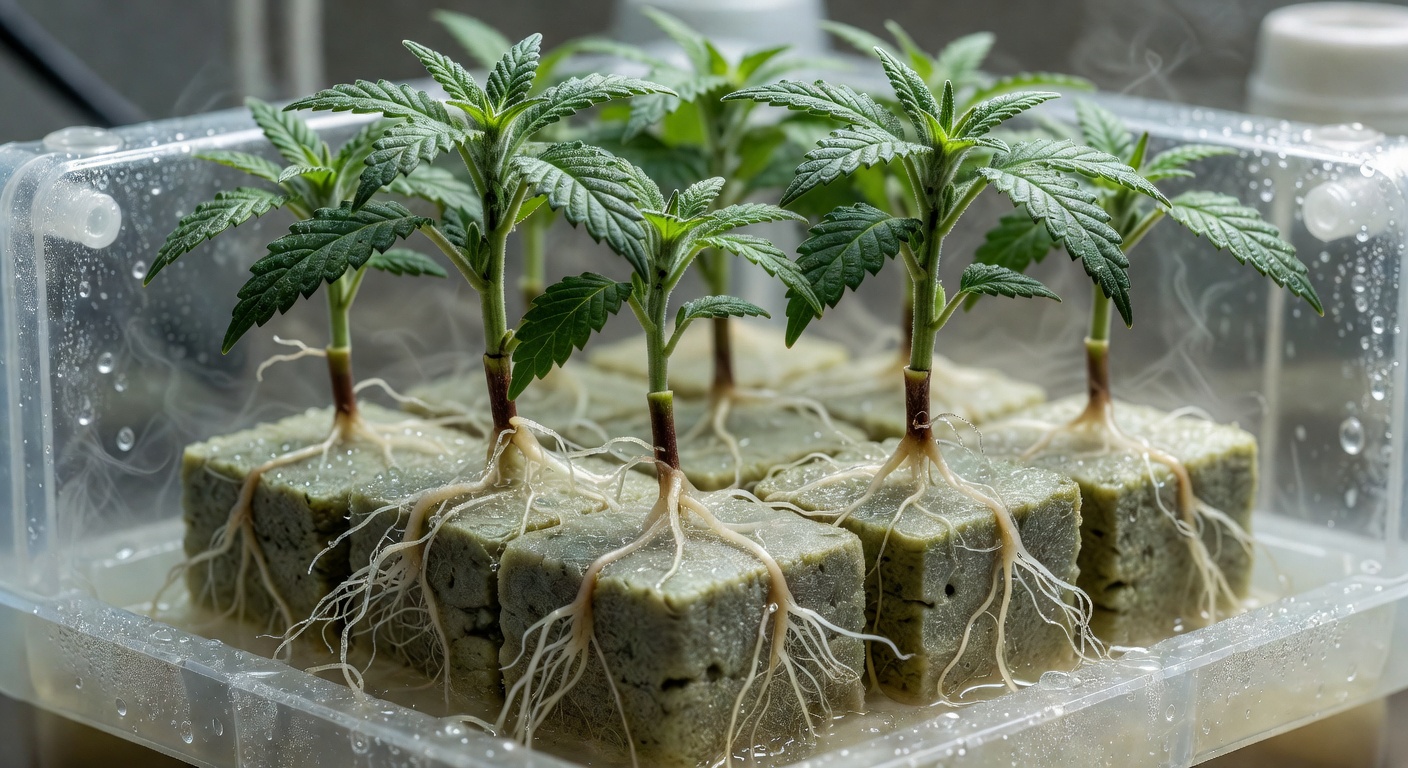
For rockwool: Soak cubes in pH 5.5 water, insert cuttings, and maintain 70-80% humidity. For aero-cloning: Use a system with misting roots in air for faster growth, ideal for larger batches.
Troubleshooting Low Rooting Rates
Common issues include poor oxygenation or incorrect pH. Ensure temps stay 72-78°F, provide gentle airflow, and check for rot. Adjust lighting to avoid stress.
Maintaining Clones Post-Rooting
Once roots appear (7-14 days), transplant to soil or hydro. Gradually reduce humidity over a week. Monitor for transplant shock and provide balanced nutrients.
Link to authoritative resources: Visit usda.gov for plant propagation guidelines and ncbi.nlm.nih.gov for cannabis research studies.
Scaling Your Garden with Clones
Cloning empowers 2026 growers to expand favorite strains efficiently. With these methods, achieve higher yields and genetic consistency year-round.