
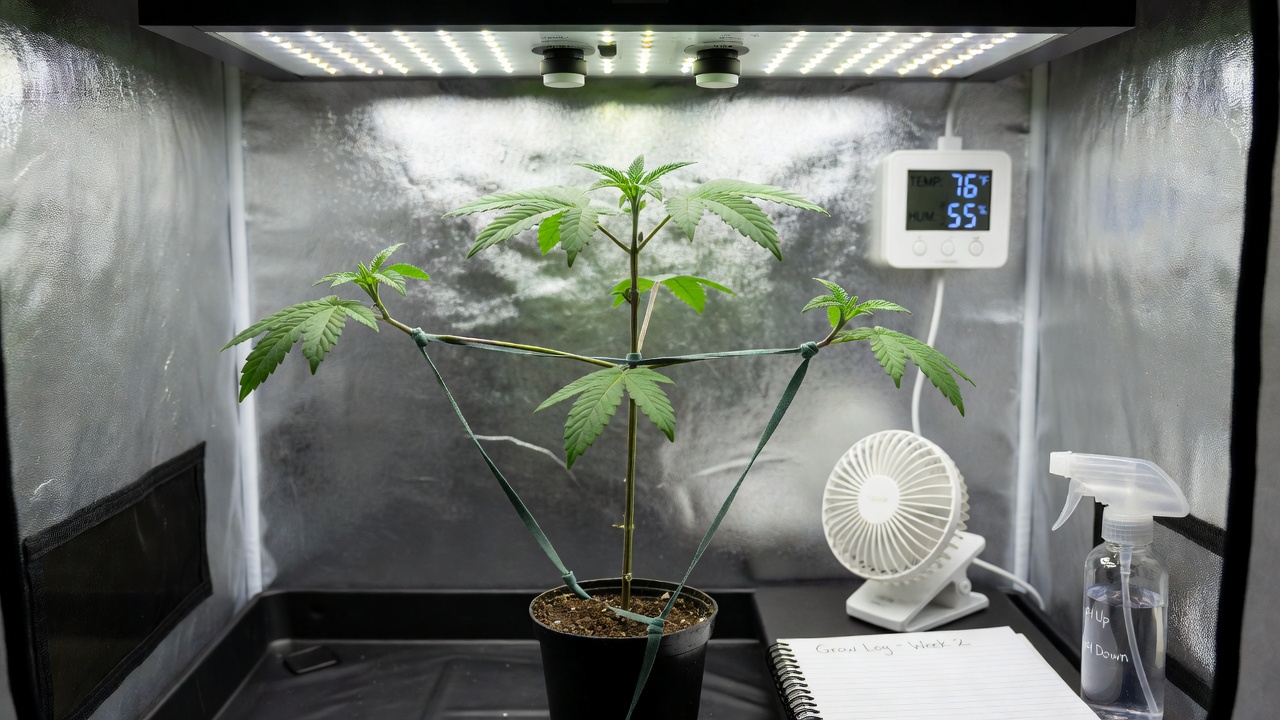
Low Stress Training, commonly known as LST, offers first-time cannabis growers a gentle yet powerful way to shape plants and increase harvests without the risks associated with high-stress methods. In 2026, with improved easy cannabis seed varieties now widely available, LST has become even more accessible for home growers working in basic setups like small tents or balcony gardens. This guide walks through practical application while focusing on timing, essential tools, and common pitfalls to ensure successful results from the start. By mastering these fundamentals early, novices can turn modest spaces into productive growing areas that deliver consistent, high-quality yields season after season.
Understanding LST Basics for New Growers
LST involves gently bending and tying down branches to create an even canopy, allowing more light to reach lower bud sites. Unlike topping or pruning that can shock young plants, LST keeps stress minimal so growth continues uninterrupted. Beginners benefit greatly because the technique works well with autoflowering and photoperiod easy cannabis seeds that tolerate handling during early vegetative stages. The core principle rests on redirecting apical dominance, where the main stem no longer hogs all resources, instead distributing energy across multiple productive sites.
By spreading the plant horizontally, LST promotes multiple colas instead of one dominant top. This directly translates to higher overall yields in limited spaces. Many 2026 seed lines are bred specifically for resilience, making them ideal partners for LST in simple soil or hydro setups. For example, a single plant trained this way might produce eight to twelve uniform colas instead of one large central bud, boosting total output by 30 to 50 percent in the same footprint.
Why LST Outperforms High-Stress Alternatives
New growers often worry about plant recovery times. LST eliminates recovery periods entirely because no tissue is removed. Stems remain intact while light penetration improves dramatically, leading to denser lower buds that would otherwise remain small and airy. This method also reduces the chance of hermaphroditism in sensitive genetics, a common concern with aggressive training.
Selecting Easy Cannabis Seeds Suited to LST
Choosing the right genetics sets the foundation for success. Look for strains labeled as beginner-friendly, fast-flowering, or high-yielding that respond well to training. Autoflowers from reputable breeders often finish in 8-10 weeks and require less precise timing, reducing the learning curve for novices. Strains like Northern Lights or Blue Dream autoflower versions from 2026 catalogs show excellent branch flexibility and strong node development under LST.
Photoperiod varieties give more flexibility with vegetative time, allowing growers to practice LST longer before flipping to flower. Always start with feminized seeds to avoid male plants that waste space and time. Pairing these seeds with basic LED lighting and quality soil creates an optimal environment where LST can shine. Consider starting with three to five plants in a 2×2 foot tent to experiment without overwhelming maintenance demands.
Essential Tools for 2026 LST Application
Successful LST requires only a few inexpensive items that most home growers already own or can source easily. Soft plant ties, garden wire, or pipe cleaners work well for securing branches without cutting into stems. Small stakes or a scrog net provide additional support as the canopy develops. Gardeners on balconies often repurpose bamboo skewers and reusable Velcro straps for eco-friendly results.
A pair of clean scissors, pH meter, and notebook for tracking progress round out the kit. In 2026, many growers also use adjustable grow tents with built-in tie points that simplify the process. Avoid sharp objects or heavy weights that could damage delicate tissue during early training sessions. Keep a spray bottle of diluted hydrogen peroxide nearby for quick sterilization of any accidental nicks.
Step-by-Step LST Technique Application
Begin LST once the plant has developed 4-6 nodes, typically around week 3-4 of vegetative growth. Gently bend the main stem toward the edge of the pot and secure it with a soft tie. Continue bending new branches outward as they appear, aiming for a flat, table-like structure. Always work during the plant’s active growth hours, usually mid-morning, when stems are most pliable.
- Identify the main stem and select a tie point on the pot rim.
- Bend gradually in small increments over 10-15 minutes rather than forcing a sharp angle.
- Secure loosely at first, then tighten after 24 hours once the stem adapts.
- Repeat every 2-3 days, rotating ties to prevent girdling.
Repeat the process every few days, always checking for signs of stress such as wilting. Over several weeks the plant will fill the space evenly.
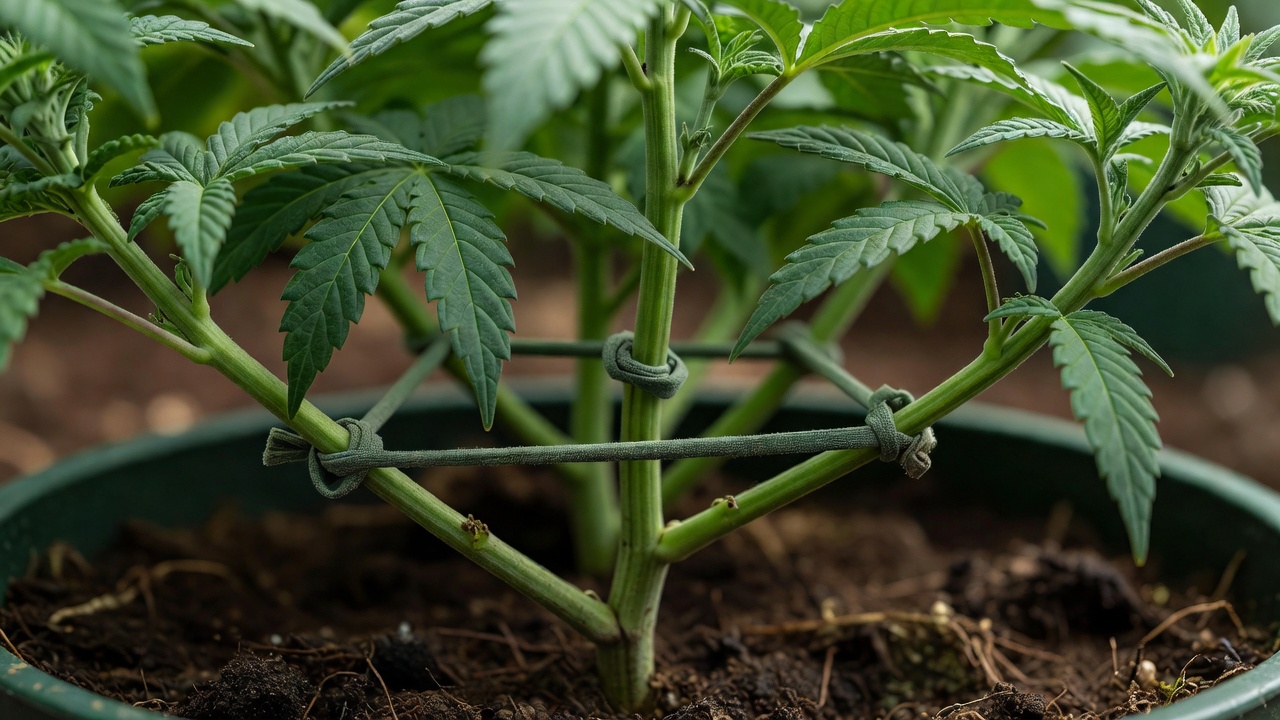
Water and feed normally while monitoring pH to support steady recovery between training sessions. A practical example involves a Blue Cheese autoflower that, after four training sessions, filled a 5-gallon pot completely and produced 180 grams of dried flower under a 200-watt LED.
Optimal Timing for First-Time Growers
Timing LST correctly prevents setbacks. Start early in the vegetative phase when stems remain flexible. For autoflowers, limit training to the first three weeks to avoid interfering with the automatic flowering trigger. Photoperiod plants allow more leeway, with training possible up to the fourth or fifth week before switching lights. In practice, mark calendar reminders every third day to check and adjust ties.
Observe daily growth and adjust ties as branches thicken. In cooler 2026 indoor environments, slower growth may require extending the vegetative period slightly to achieve full canopy coverage. Patience during this phase pays off with denser, more uniform buds at harvest. Growers who log weekly photos notice patterns and refine timing for subsequent runs, often achieving harvest weights 20 percent higher than their first attempt.
Avoiding Common LST Errors in Beginner Setups
One frequent mistake is bending stems too aggressively, causing breaks that invite disease. Always bend gradually over multiple sessions and support weak points. Another error involves neglecting light positioning; keep lamps at the correct distance to prevent uneven growth after training. Raising lights 4-6 inches above the new canopy height immediately after LST prevents light burn on newly exposed leaves.
Overwatering stressed plants or using dirty tools can also lead to problems. Maintain clean hands and equipment, and ensure good airflow around the newly shaped canopy. Tracking each step in a grow journal helps beginners identify patterns and refine technique for future cycles. A simple checklist of daily temperature, humidity, and tie adjustments keeps novices on track and reduces guesswork.
Conclusion: Building Strong Yields from the Start
LST remains one of the most beginner-accessible methods for maximizing output with easy cannabis seeds in 2026 home grows. By following structured timing, using minimal tools, and steering clear of common mistakes, new growers can achieve professional-level results in basic setups. Consistent practice with each cycle builds confidence and steadily improves harvest quality and quantity. Over time, these foundational skills translate into reliable, repeatable success whether growing in a closet, tent, or small balcony garden.