
Why Companion Planting Matters for Outdoor Cannabis
Companion planting enhances outdoor cannabis cultivation by creating symbiotic relationships that deter pests, improve soil fertility, and support healthier plants. In 2026, home growers report up to 30% yield increases when pairing cannabis with strategic allies.
Top Companion Plants and Their Benefits
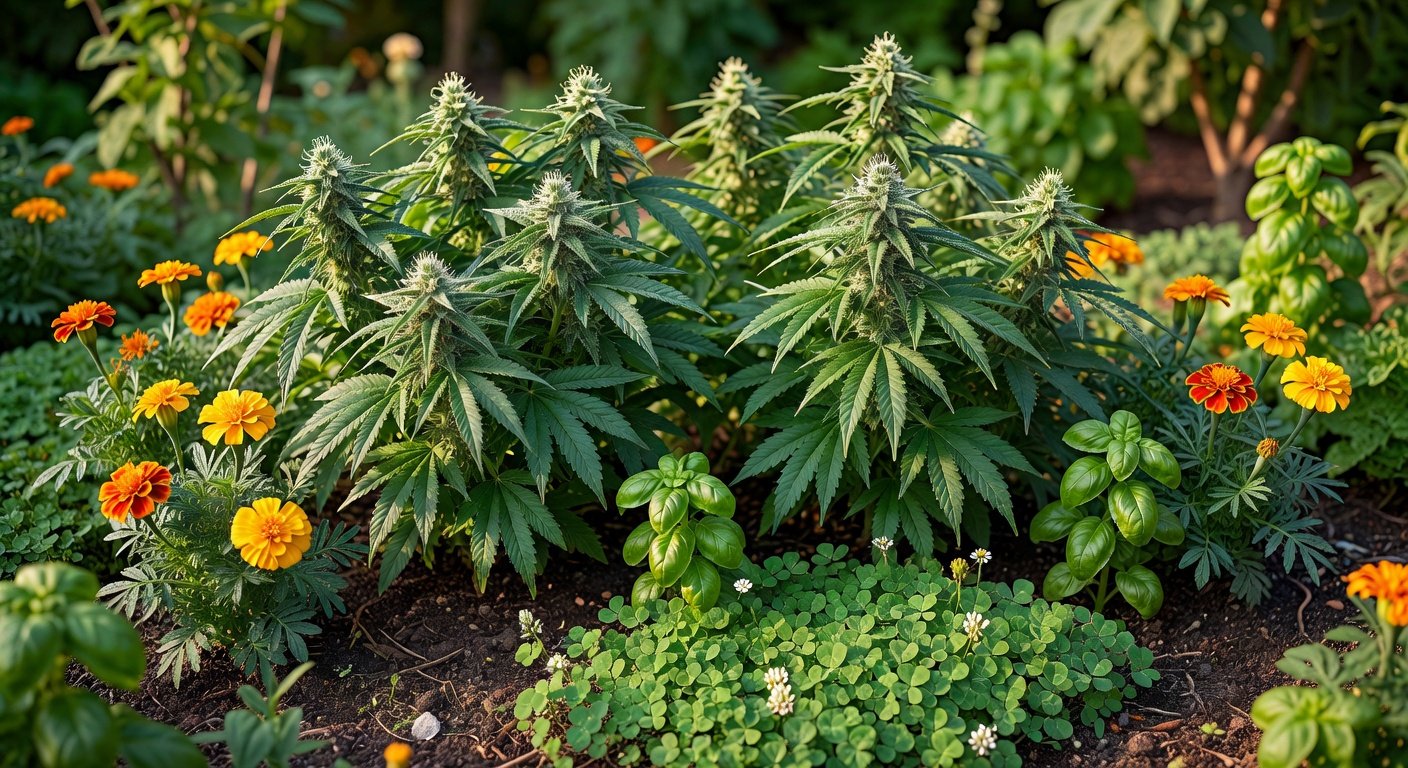
Marigolds repel nematodes and aphids while attracting beneficial pollinators. Basil deters mosquitoes and spider mites with its strong aroma. Clover fixes nitrogen in the soil, reducing fertilizer needs. Garlic and chives ward off fungal diseases and insects.
- Marigolds: Pest barrier and pollinator magnet
- Basil: Aromatic repellent for flying insects
- White clover: Natural nitrogen booster
- Yarrow: Improves soil structure and attracts ladybugs
Step-by-Step Planting Instructions
1. Prepare soil with compost and test pH levels between 6.0-7.0.
2. Sow companion seeds 2-3 weeks before cannabis seedlings.
3. Space marigolds 12 inches from cannabis bases.
4. Interplant basil and garlic in alternating rows.
5. Mulch around companions to retain moisture.
Seasonal Timing for Optimal Results
Start in early spring after last frost. Plant nitrogen-fixers like clover in March for summer growth. Introduce flowering companions like marigolds in May to align with cannabis vegetative stage.
Guerrilla Growing Adaptations for Stealth
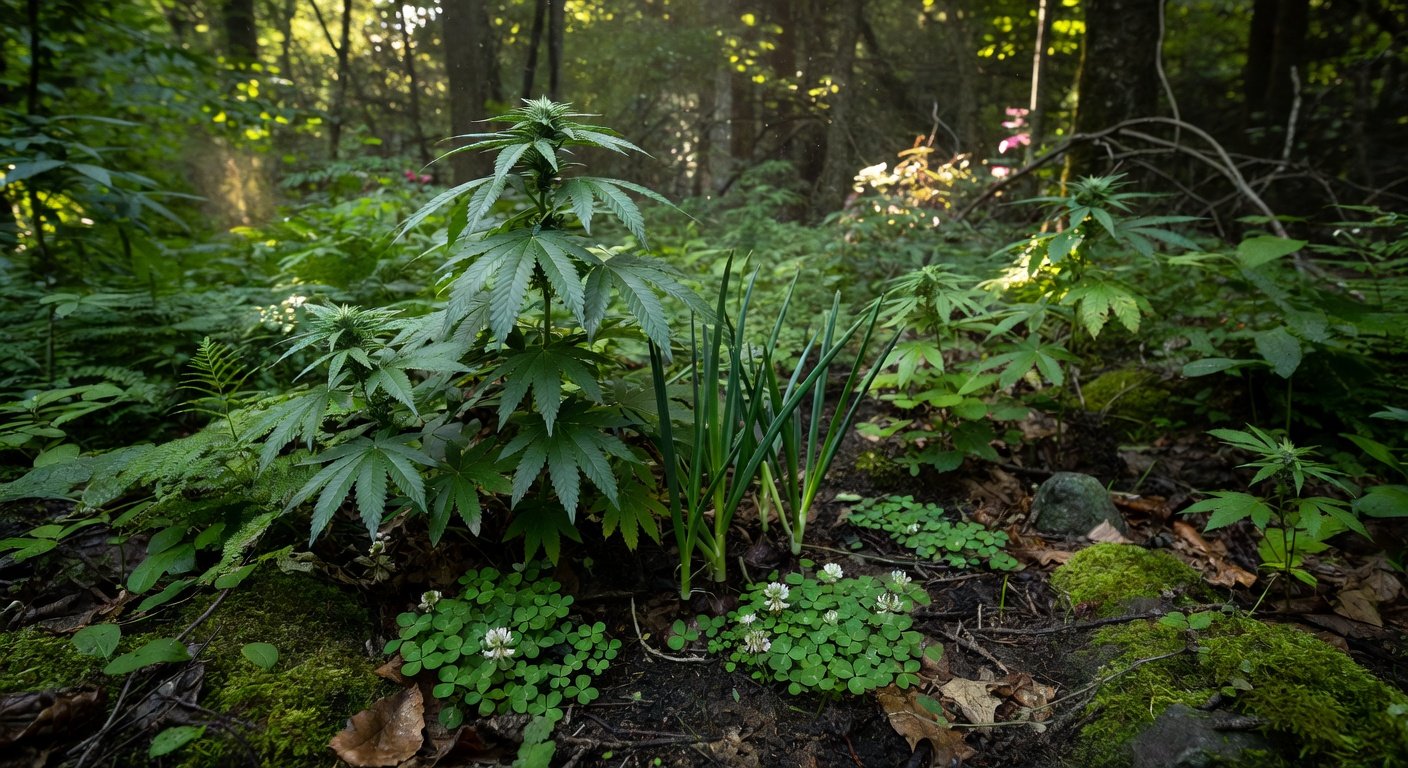
Use low-profile plants like clover and yarrow that blend into wild meadows. Avoid tall companions in visible areas. Water companions at dawn to minimize detection. Choose native species to mimic natural surroundings.
Strain-Specific Pairings
Sativa-dominant strains pair well with tall marigolds for vertical support and pest control. Indica varieties thrive alongside compact basil and garlic to match bushy growth habits. Hybrid growers in 2026 favor clover for balanced nutrient uptake across phenotypes.
Real-World Success Stories from 2026 Growers
California outdoor enthusiast Alex Rivera documented a 25% yield boost using marigold and clover pairings with Blue Dream strains. In Colorado, guerrilla grower Lena Torres reported zero pest issues after interplanting garlic with OG Kush in remote forest plots. These methods are backed by university research from University of Minnesota Extension and sustainable agriculture guidelines at USDA Organic Agriculture.