
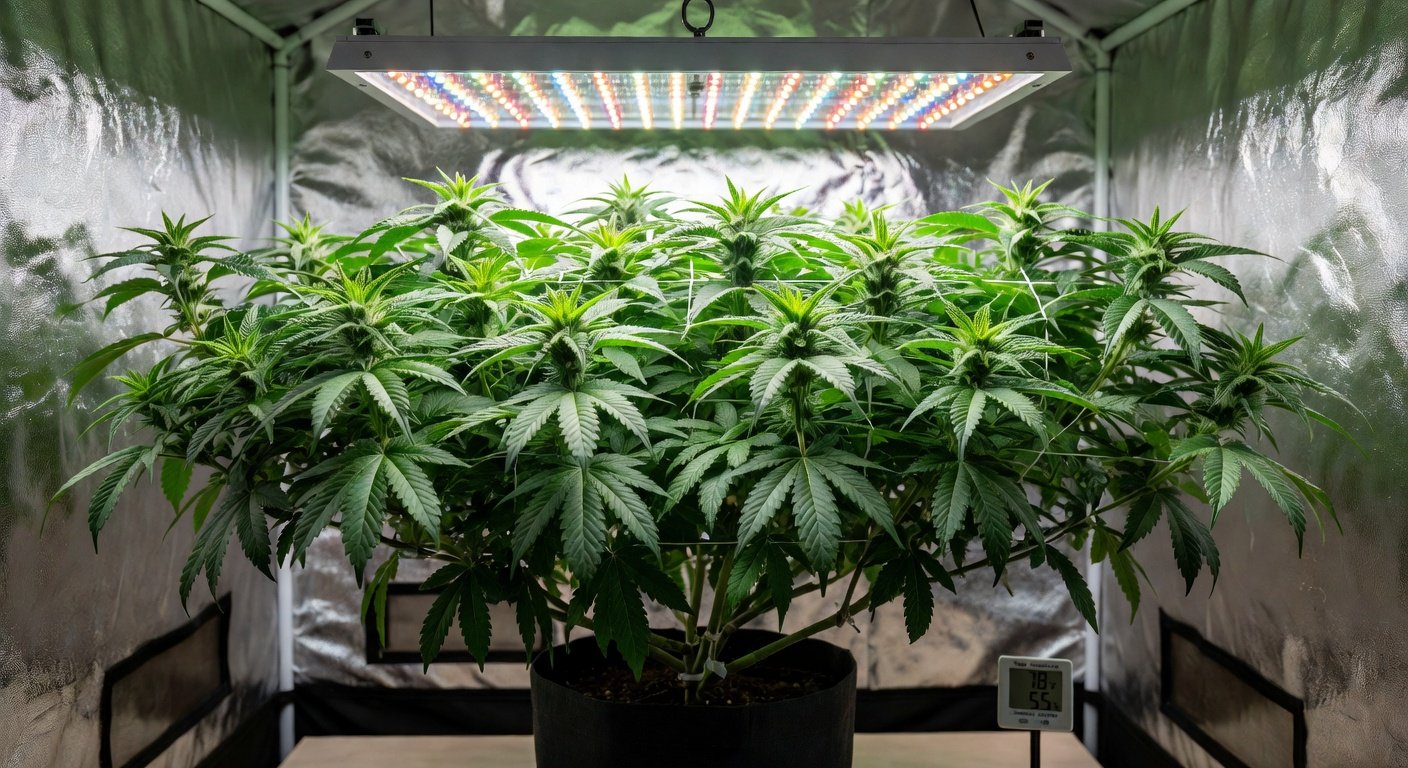
Master LST, Topping & SCROG: Boost Cannabis Yields in 2026
In the evolving world of cannabis cultivation, 2026 brings exciting opportunities for home growers to maximize their harvests. With legalization expanding across many regions, enthusiasts are turning to proven techniques like low-stress training (LST), topping, and the Screen of Green (SCROG) method to optimize space and boost yields. These methods manipulate plant structure during the vegetative stage, encouraging bushier growth and more bud sites without overwhelming stress. Whether you’re growing indoors under LEDs or outdoors in a sunny garden, mastering these techniques can double your production while keeping plants healthy.
This guide dives deep into each method, providing step-by-step instructions, ideal timing in the vegetative phase, strain recommendations, and troubleshooting for common pitfalls like uneven growth. By the end, you’ll be equipped to integrate these into your setup for bountiful results.
Understanding Low-Stress Training (LST) for Cannabis
Low-stress training (LST) is a gentle technique that involves bending and tying down branches to create an even canopy. Unlike high-stress methods, LST promotes horizontal growth, exposing more bud sites to light and improving airflow. It’s perfect for small spaces and helps prevent tall, lanky plants that stretch toward lights.
LST is best applied early in the vegetative stage, around 2-3 weeks after germination when the plant has 4-6 nodes. This timing allows the plant to recover quickly without stunting growth. For indoor grows, use soft plant ties or yo-yos; outdoors, natural elements like wind can assist, but manual intervention ensures control.
Step-by-Step Guide to LST
- Prepare your tools: Gather garden wire, soft ties, and scissors. Ensure your grow space has adjustable lights to maintain 18-24 inches above the canopy.
- Identify the main stem: Gently bend the tallest stem downward toward the pot’s edge. Avoid snapping it—cannabis stems are flexible in veg.
- Secure the bend: Tie the stem loosely to the pot edge or a stake. Aim for a 90-degree angle to flatten the growth.
- Train side branches: As new growth emerges, repeat on lateral branches, creating a star-shaped canopy. Check daily and adjust ties to prevent constriction.
- Maintain during veg: Continue for 4-6 weeks until the plant fills the space. Transition to flower when ready, removing ties gradually.
Expect a 20-50% yield increase with LST, as it distributes light evenly. For best results, pair with autoflowering strains that have short veg periods.
Topping: A High-Impact Technique for Bushier Plants
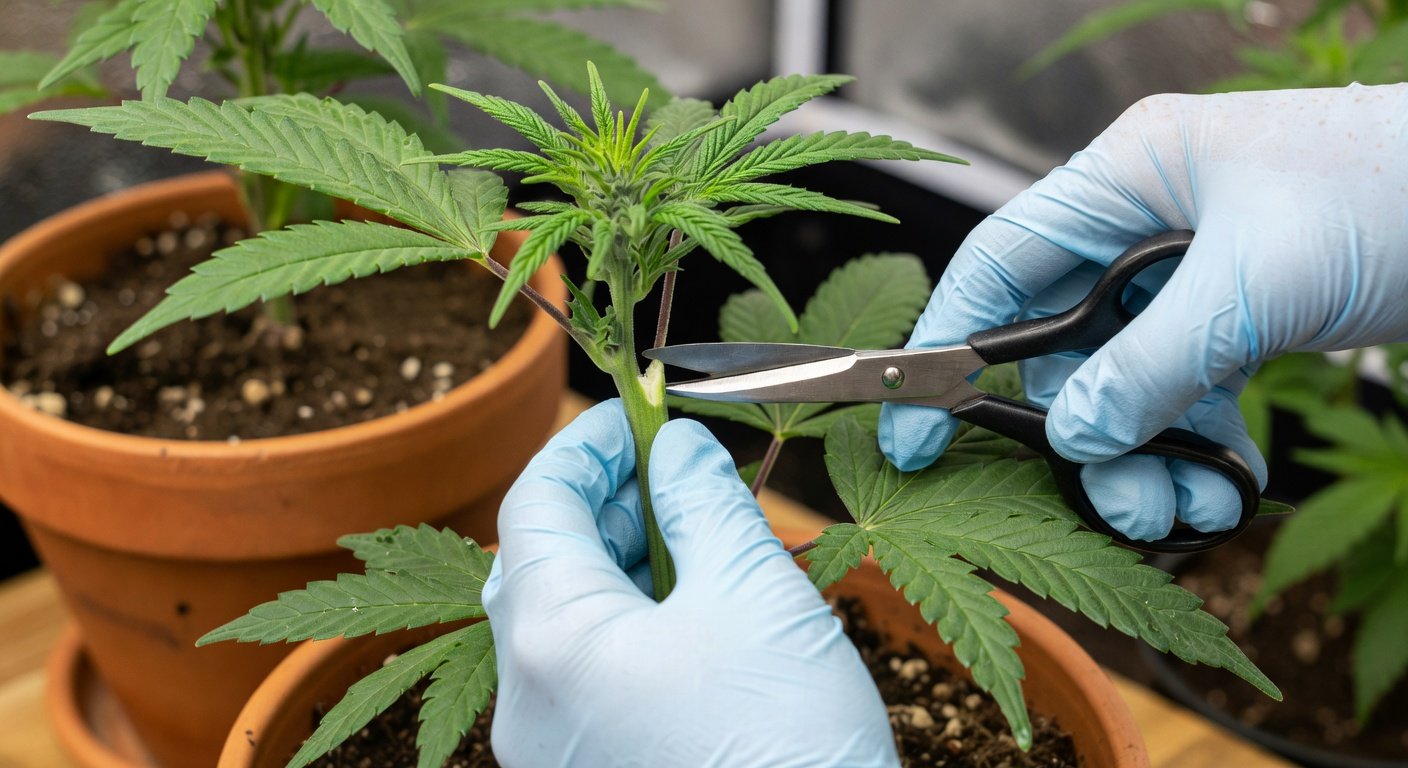
Topping involves cutting the main stem’s tip to force the plant into a bushy structure with multiple colas. This high-stress method (though less so than defoliation) redirects energy from vertical height to lateral branches, ideal for maximizing yields in limited vertical space like tents or closets.
Apply topping during the vegetative stage, specifically after the plant develops 4-6 nodes (around 3-4 weeks from seed). Wait until nodes are strong to minimize shock. It’s versatile for both indoor hydroponics and outdoor soil beds, but indoor growers benefit most from the controlled environment.
Step-by-Step Guide to Topping
- Select the plant: Choose healthy seedlings past the seedling stage. Use sterilized scissors to avoid infection.
- Locate the top: Find the newest growth tip above the 3rd or 4th node pair. This is where you’ll cut.
- Make the cut: Snip just above the nodes at a 45-degree angle. Remove about 1/4 inch of the stem tip.
- Recovery period: The plant may pause growth for 3-7 days. Provide optimal conditions: 18/6 light cycle, 70-80°F temps, and high humidity.
- Encourage branching: Once recovery starts, new tops will emerge from the cut nodes. You can top again after 2 weeks for even more colas, up to 4-8 tops total.
Topping can increase yields by 30-100%, but it shortens the main cola. Combine with LST for hybrid results. According to experts at Leafly, topping works wonders on photoperiod strains with vigorous veg growth.
SCROG: The Screen of Green Method Explained
The Screen of Green (SCROG) uses a horizontal net to train branches, creating a flat, light-maximizing canopy. This technique is a game-changer for indoor setups with low ceilings, turning one plant into a sea of buds. Outdoors, it adapts well to trellises in gardens, protecting from wind while optimizing sun exposure.
Introduce SCROG in mid-vegetative stage, about 3-4 weeks in, once the plant reaches 8-12 inches. The net should be installed 6-12 inches above the pots, with 2-4 inch squares for weaving.
Step-by-Step Guide to SCROG
- Install the screen: Use a SCROG net or chicken wire frame. Secure it firmly to your grow tent or frame.
- Start training: As shoots grow, gently weave them horizontally through the net holes. Bend resistant branches slowly.
- Fill the canopy: Aim to cover 70-80% of the screen before flipping to flower. This may take 4-6 weeks in veg.
- Vegetative maintenance: Tuck new growth daily. Prune lower leaves for airflow, but avoid over-defoliating.
- Flowering transition: Once full, switch to 12/12 light. Buds will develop evenly across the screen, harvesting in 8-10 weeks.
SCROG can boost yields up to 2x by ensuring every bud site gets light. It’s labor-intensive but rewarding for sea-of-green style grows.
Best Strains for LST, Topping, and SCROG Success
Not all strains respond equally. Indica-dominant hybrids like Northern Lights or Blue Dream excel in LST due to their compact structure and quick recovery. For topping, vigorous sativas like Jack Herer thrive, producing multiple strong colas. SCROG shines with balanced strains such as Girl Scout Cookies, which bush out naturally.
Autoflowers like Auto AK-47 are forgiving for beginners, as their fixed veg cycle (3-4 weeks) aligns perfectly with these methods. Always source seeds from reputable banks; photoperiods offer more control for advanced growers. In 2026, look for strains bred for resilience against pests, enhancing technique efficacy.
When to Apply These Techniques in the Vegetative Stage
The vegetative stage is crucial, lasting 4-8 weeks under 18/6 lighting. LST starts earliest (week 2) for subtle shaping. Topping follows in weeks 3-4 to build structure. SCROG integrates both, beginning in week 3 to weave growth.
Monitor plant health: Apply when stems are pliable and nodes are defined. For outdoors, align with spring growth spurts, using natural light cycles. Indoors, consistent LEDs (300-600 PPFD) support recovery. Avoid techniques during early seedling or late veg to prevent stress before flower.
Troubleshooting Common Issues: Uneven Growth and More
Uneven growth is a frequent headache. For LST, if one side lags, adjust light distance or add supplemental LEDs. In topping, slow recovery signals overwatering—dial back to let soil dry between feeds. SCROG imbalances occur from poor weaving; rotate the net periodically for even exposure.
- Stem breakage: Use softer ties and bend gradually. If snapped, apply honey as a natural seal.
- Pest interference: Inspect ties for hiding spots; neem oil helps without stressing plants.
- Light burn in dense canopies: Raise lights or prune selectively. For outdoors, shade cloth prevents sun scorch.
- Nutrient lockout post-training: Flush with pH-balanced water (6.0-6.5 soil, 5.5-6.0 hydro) and resume feeding at half strength.
Integrate with setups: Indoors, these methods pair with hydro or coco for faster veg; outdoors, they enhance trellis systems per USDA guidelines on sustainable gardening at USDA.gov. Track pH, EC, and humidity (40-60% veg) to avoid compounded issues.
Indoor vs. Outdoor Integration for Optimal Yields
Indoors, LST, topping, and SCROG control height in 4×4 tents, yielding 1-2 grams per watt. Use reflective walls and oscillating fans for airflow. Outdoors, these techniques mimic natural bushiness, protecting from elements in 2026’s variable climates. Space plants 2-3 feet apart; LST secures against storms.
Hybrid approaches work too: Start indoors for precision training, then transplant outdoors for natural boosting. Always comply with local laws—resources like NORML.org offer state-specific advice.
In conclusion, incorporating LST, topping, and SCROG into your 2026 grow routine empowers you to harvest denser, healthier buds. Start small, observe your plants, and scale up. With practice, these techniques will transform your home cultivation into a high-yield success story.