
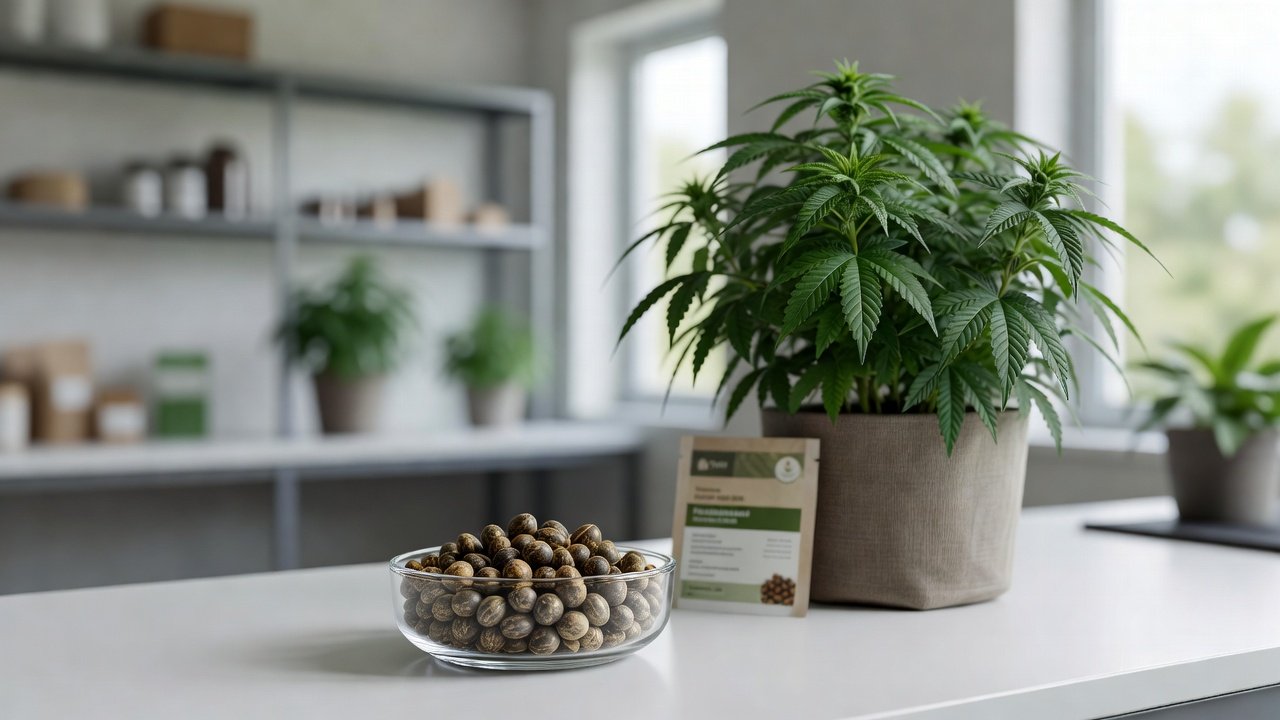
A pack labelled feminized promises mostly female plants, but the label does not explain how that result was produced. Buyers who want reliable gardens need a plain-language view of the process before they trust a seed bank. Feminized cannabis seed is not a separate species and it is not created by editing DNA in a lab. Breeders start with a female plant, induce that plant to make pollen, and use the pollen on another female. The resulting seed is expected to grow female plants because both parents contributed female genetics.
This guide is a shopper’s overview, not a home chemistry project and not a breeding manual. It explains three methods you will hear about in 2026 catalogues: rodelization, colloidal silver, and silver thiosulfate, often shortened to STS. It also covers what each method does and does not imply for stability, and which questions separate a transparent seller from a vague one. If you already know you want female plants and you are comparing regular seed with feminized seed, that is a different decision. Here the question is narrower: how was this feminized lot made, and what should that tell you before you pay?
What “feminized” means on a seed pack
Cannabis is usually dioecious, meaning male and female flowers grow on separate plants. Seed from a normal male-female cross produces a mix of sexes. Growers who want flowers rather than pollen often prefer to avoid males in the room. Feminized production solves that commercial problem by using two female parents. One female is the pollen donor after a temporary sex reversal. The other female is the seed parent and is left to flower normally.
The reversal is a change in how the donor plant expresses sex during that grow, not a permanent rewrite of the variety. Published plant science describes ethylene, a natural plant hormone, as part of the signalling that influences whether a cannabis plant develops female or male flowers. Blocking or disrupting that signal on a genetically female plant can lead it to form male flowers and viable pollen. Researchers have documented these approaches in the scientific literature indexed by the National Center for Biotechnology Information. You do not need the papers to shop well, but it helps to know the idea is horticultural, not magical.
A high female rate is not the same thing as a stable variety. Two seed lots can both be feminized and still differ in vigour, aroma, flowering time, and tendency to throw mixed flowers under stress. Method tells you how the pollen was created. Selection, testing, and how the bank handles parent plants tell you whether the offspring are worth growing. After you understand production, use a practical checklist such as this feminized seed inspection guide for viability and reliability to judge the pack in your hand.
Rodelization: stress, not a silver treatment
Rodelization is the oldest approach still discussed by small breeders. Instead of applying a silver product, the grower keeps a female plant in flower past the normal harvest window, or otherwise stresses it, until it produces a few male flowers. Those flowers can release pollen that is collected and used on other females. Because no silver solution is involved, some sellers describe the method as natural. That word is marketing shorthand. The plant is being pushed into an emergency response that cannabis already uses when a female is left unpollinated late in flower.
For a buyer, the useful question is what kind of parent that process favours. Plants that readily make male flowers under late-flower stress are, by definition, plants willing to change sex when conditions slip. If a breeder keeps choosing those easy reversers without also rejecting offspring that hermaphrodite in normal gardens, the line can drift toward stress sensitivity. That does not mean every rodelized pack will throw bananas or mixed flowers. It means the method itself does not select against that trait unless the breeder does extra work afterward.
Rodelization also tends to yield less pollen and less predictable timing than a managed silver treatment. Commercial banks that need thousands of seeds per run rarely rely on it alone. When a seller highlights rodelization, ask whether it is the main production method or only an occasional tool, and ask how they screen progeny in more than one environment. A calm answer about discard rules is more reassuring than a slogan about chemical-free seed.
Colloidal silver: a common small-batch method
Colloidal silver is a suspension of tiny silver particles in water. In feminized seed work it is used on a female plant so that plant forms male flowers. The silver interferes with ethylene signalling, which is why the same female genetics can produce pollen for a seed crop. Many hobby breeders and some smaller seed banks use this method because the materials are widely sold for other purposes and the concept is simple to describe. Simplicity for the producer is not the same as a guarantee for you.
Quality still depends on the plant, not the bottle. A vigorous, well-selected female that rarely shows mixed flowers is a better pollen donor than a plant already prone to hermaphroditism. Colloidal silver does not repair a weak parent. It only coaxes male flowers from whatever female the breeder chose. If that female was picked only because it reversed easily, the offspring can inherit a jumpy response to light leaks, heat swings, or hard defoliation later.
There is also a consumer-safety point that reputable banks already follow. The reversed plant is a pollen factory, not a smokeable crop. Silver treatments are not meant for flower that people inhale or ingest. A serious seller keeps treated donors out of retail flower and out of any trim sold as product. You should not need a chemistry lesson to confirm that policy. A straight answer is enough. If a bank cannot say whether treated tissue is destroyed or isolated, treat that silence as a quality signal, not a minor detail.
Silver thiosulfate: the commercial workhorse
Silver thiosulfate, or STS, is the method most often associated with professional seed production. It is a silver compound used in horticulture to interrupt ethylene action. Applied by trained staff to a female donor, it is generally more consistent than late-flower stress at producing usable pollen on a schedule. Large banks like consistency because a seed run involves labour, space, and a narrow window in which pollen must meet receptive female flowers.
Consistency of pollen is not the same as genetic stability of the variety. STS can reverse a carefully tested mother or a rushed cut from an unstable line. The chemical does not know the difference. What it does imply, when a bank is open about using it, is that production is intentional and repeatable rather than dependent on a plant collapsing into male flowers at the end of flower. Many experienced breeders prefer that control because they can choose donors for resin, structure, and low hermaphrodite rates, then reverse only those donors.
STS does not make seed “synthetic,” and it does not mean the seedlings contain silver. The treatment is aimed at the pollen parent during one production cycle. The seed forms on a separate female that was not the treatment target in a well-run program. Still, shoppers should not romanticise the acronym. A bank that says “we use STS” has described a tool. It has not yet described parent selection, how many generations were observed, or what happens to batches that fail a female-rate check.
A simple comparison for buyers
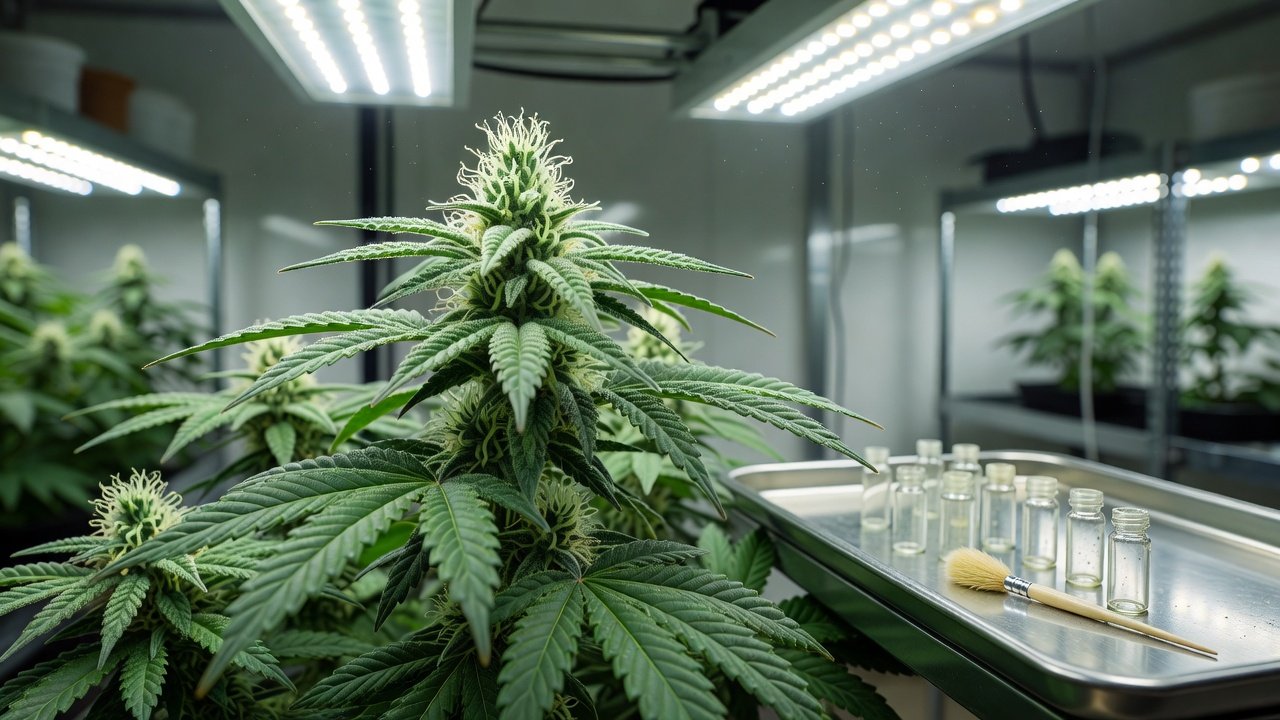
All three methods aim at the same biological result: pollen from a genetically female plant, used on another female, so the seed crop is expected to be female. They differ in how the pollen is forced, how predictable the run is, and what a careless breeder might accidentally select for. None of them is a substitute for multi-environment testing.
- Rodelization: stress or an extended flower period triggers sparse male flowers. No silver product is required. Pollen volume is often low. The risk for buyers is indirect: easy reversers may also be plants that sex-mix when the garden is stressed, unless the breeder selects hard against that habit.
- Colloidal silver: a silver suspension is used to induce male flowers on a chosen female. Common among smaller producers. Results vary with plant health and breeder skill. Treated plants should never be sold as consumable flower. Stability still depends on which female was reversed.
- Silver thiosulfate (STS): a standard commercial horticultural treatment used to block ethylene signalling and produce pollen on a schedule. Often more repeatable for large runs. It implies process control, not automatic genetic quality. Ask what testing sits behind the method.
A useful way to remember the difference is this: rodelization waits for the plant to panic; silver methods tell a selected female to make pollen while the breeder is still in charge of the calendar. Silver methods can still amplify a bad parent if the breeder is impatient. Rodelization can still produce excellent seed if the breeder discards stress-prone lines and only releases progeny that stay female under ordinary grow conditions.
Ignore claims that one method “always” causes hermaphrodites and the other “never” does. Environment matters after you sow. Light leaks, root stress, extreme heat, and interrupted dark periods can provoke mixed flowers even in seed from careful programs. Method is one clue. The seller’s testing story is the larger clue.
What method does not tell you
Feminized production does not decide whether a variety is photoperiod or autoflower, how it smells, or whether it prefers a tent or a garden. Those are separate breeding choices. Once you trust the female rate enough to buy, growing questions belong in a different guide. A clear starting point is this overview of feminized photoperiod cannabis indoors and outdoors, which covers light schedules and season length rather than how the seed was made.
Method also does not erase phenotype spread. Feminized siblings can still vary in height, flowering speed, and terpene balance. If aroma is your main buying criterion, read a dedicated terpene discussion instead of expecting the feminization tool to lock in a scent. Likewise, a clean production method will not protect plants from fungus gnats or mites. Pest vigilance starts after germination.
Legal status is outside the seed-bank process but not outside your responsibility. Rules on seeds, home cultivation, and possession differ by country and region and can change. In Canada, for example, federal cannabis rules are published by Health Canada. Check the current law where you live before you order, germinate, or transport seed. A polished production story is not a licence.
Questions that reveal how a bank actually works
You will not get a laboratory report from every customer-service chat, and you do not need one. You do need answers that show the seller understands the difference between a reversal tool and a finished variety. Ask these before you treat a discount pack as equivalent to a documented line.
- Which method produced this lot? Accept rodelization, colloidal silver, or STS as legitimate answers. Be wary of “secret” or “proprietary” with no further detail. Proprietary can describe a selection process. It should not be used to hide whether silver chemistry or stress was involved.
- Were pollen donors already selected against mixed flowers? Listen for specific practices: parent plants grown more than once, rejects after a stress test, or lines dropped when offspring showed male flowers under ordinary conditions. “We only use females” is incomplete, because every feminized program uses females.
- Do you test progeny, or only the parents? A parent that looks stable can still throw unstable seed if the cross is new. Better answers mention germination tests, female-rate checks on sample plants, and more than one garden style.
- What happens to plants that received a silver treatment? The right policy is isolation from any product people might consume, and no retail flower from those donors. Hesitation here matters more than the brand of silver product.
- How old is this batch, and how was it stored? Production method cannot rescue seed that sat in heat or humidity. Cool, dry, dark storage and a clear pack date support viability. Pair that answer with a visual inspection when the mail arrives.
- What female rate do you claim, and on what evidence? Figures such as 99 percent are common marketing language. A seller who can describe sample size and what they do with failed lots is more credible than a seller who repeats the number and changes the subject.
Write the answers down, especially if you buy the same cut or line again next season. Patterns over time tell you more than a single product photo. If support staff contradict the product page, trust the contradiction as a reason to slow down, not as a puzzle you must solve in their favour.
How to use this when you are ready to buy
Start with transparency, then look at the plants the bank actually releases. A breeder who names the method, explains donor selection, and keeps treated tissue out of consumable channels has already done more than a brand that only prints “feminized” in large type. Between rodelization, colloidal silver, and STS, none is automatically the premium choice. STS often signals a controlled commercial process. Colloidal silver can be perfectly sound in a small program with strict parent standards. Rodelization can be acceptable when the breeder is obsessive about discarding stress-prone offspring. The failure mode in every case is the same: reversing convenient plants and shipping the seed without watching the next generation.
After the pack arrives, judge it as seed, not as a story. Look for intact shells, even size within reason, and storage confidence, then germinate with a method you can repeat. Expect female plants, not identical plants. Give photoperiod varieties a real dark period, avoid needless stress in early flower, and do not treat a single odd flower as proof that the method was wrong. Do treat repeated mixed flowers, across healthy plants and stable conditions, as a reason to contact the seller and to reconsider that line.
Feminized seed is a production choice that saves space for people who do not want males. It earns trust when the bank can explain how pollen was made and how unstable parents were kept out of the catalogue. Ask the questions, keep the method in proportion, and spend your money on sellers who answer in plain language.