
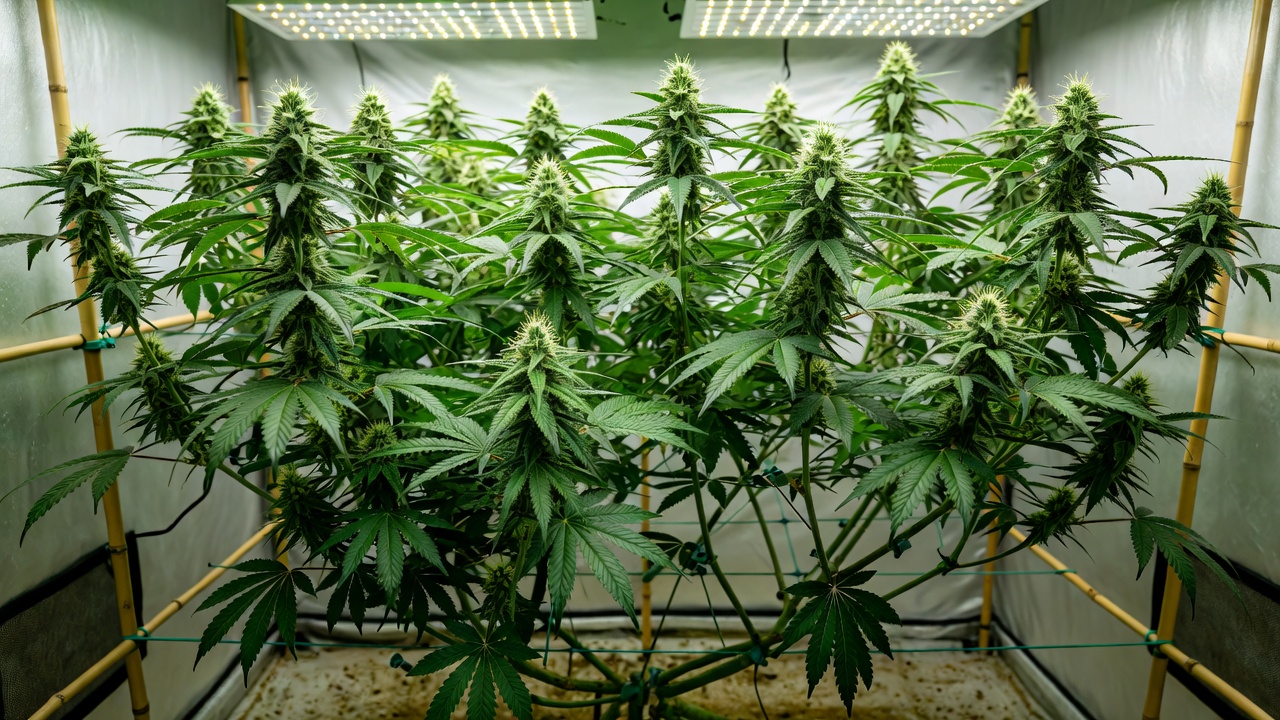
Low-stress training (LST) offers home growers an effective way to maximize the potential of feminized photoperiod cannabis seeds. By gently bending and securing branches during the vegetative stage, cultivators encourage horizontal growth that creates multiple colas instead of a single dominant top. This method is especially valuable for photoperiod plants because it works with their natural light-cycle response without the shock of high-stress techniques like topping. In 2026, with improved LED lighting and climate-control technology, LST remains one of the safest and most reliable methods for boosting yields while protecting female genetics from stress-induced hermaphroditism. For example, a grower managing four plants in a 4×4-foot tent can use LST to develop a uniform canopy that captures light more efficiently than an untrained specimen, often translating into noticeably heavier harvests at the end of the cycle.
Understanding LST for Feminized Photoperiod Plants
Feminized seeds produce nearly all female plants, making them the preferred choice for consistent harvests. Photoperiod strains require a change from 18/6 to 12/12 lighting to trigger flowering, giving growers a long vegetative window to apply training. LST capitalizes on this period by manipulating plant structure at the cellular level, promoting even light distribution across a wider canopy. The result is bushier plants with improved airflow and reduced risk of mold or pests. Auxin hormones naturally concentrate at the top of the plant; by bending stems horizontally, growers redistribute these hormones so side branches grow at similar rates, creating multiple main colas instead of one dominant apex.
Unlike autoflowers, photoperiod feminized plants tolerate LST extremely well because their growth phase can be extended as needed. The key is maintaining a gentle approach that never breaks stems or causes visible damage. When performed correctly, LST can increase final yields by 30-50% compared with untrained plants, according to grower reports shared on major cultivation platforms. In practice, a cultivator who starts with a single tall stem in a 5-gallon fabric pot can redirect growth so that eight to twelve tops receive direct light, each developing into dense, resinous flowers rather than a few oversized buds that shade everything below them.
Optimal Timing and Essential Tools
Begin LST once seedlings have developed 4–6 nodes, typically around week 3–4 after germination. Continue training throughout the vegetative stage until the canopy is full and branches reach the desired horizontal spread. Stop all manipulation one to two weeks before switching to the flowering light cycle to allow the plant to recover. During weeks 5 and 6, for instance, daily checks help ensure new growth is guided outward before it becomes woody and resistant to bending.
Essential tools include soft plant ties, garden wire, low-tension clips, and a gentle spray bottle for hydration. Avoid metal wire that can cut into stems; instead choose coated ties or Velcro plant tape. A small pair of sterilized scissors helps remove any lower growth that receives insufficient light after training. Many growers also keep a magnifying loupe handy to inspect stem health and a notebook to record which branches were secured on which day, allowing consistent adjustments as the plant expands.
Step-by-Step Application of Low-Stress Training
Start by selecting the main stem and gently bending it downward at a 45-degree angle. Secure it to the edge of the pot or a support stake using a soft tie. Repeat the process with side branches, spreading them outward to create an even canopy. Work slowly over several days rather than forcing multiple bends at once. In a concrete example, a grower with a Sour Diesel photoperiod plant might bend the main stem on Monday, then spread two lateral branches on Wednesday once the plant has had time to adjust and strengthen at the bend points.
Monitor each plant daily for signs of stress such as drooping or discoloration. If a stem feels too rigid, wait 24 hours and try again. The goal is a flat, table-like structure with many tops receiving direct light.
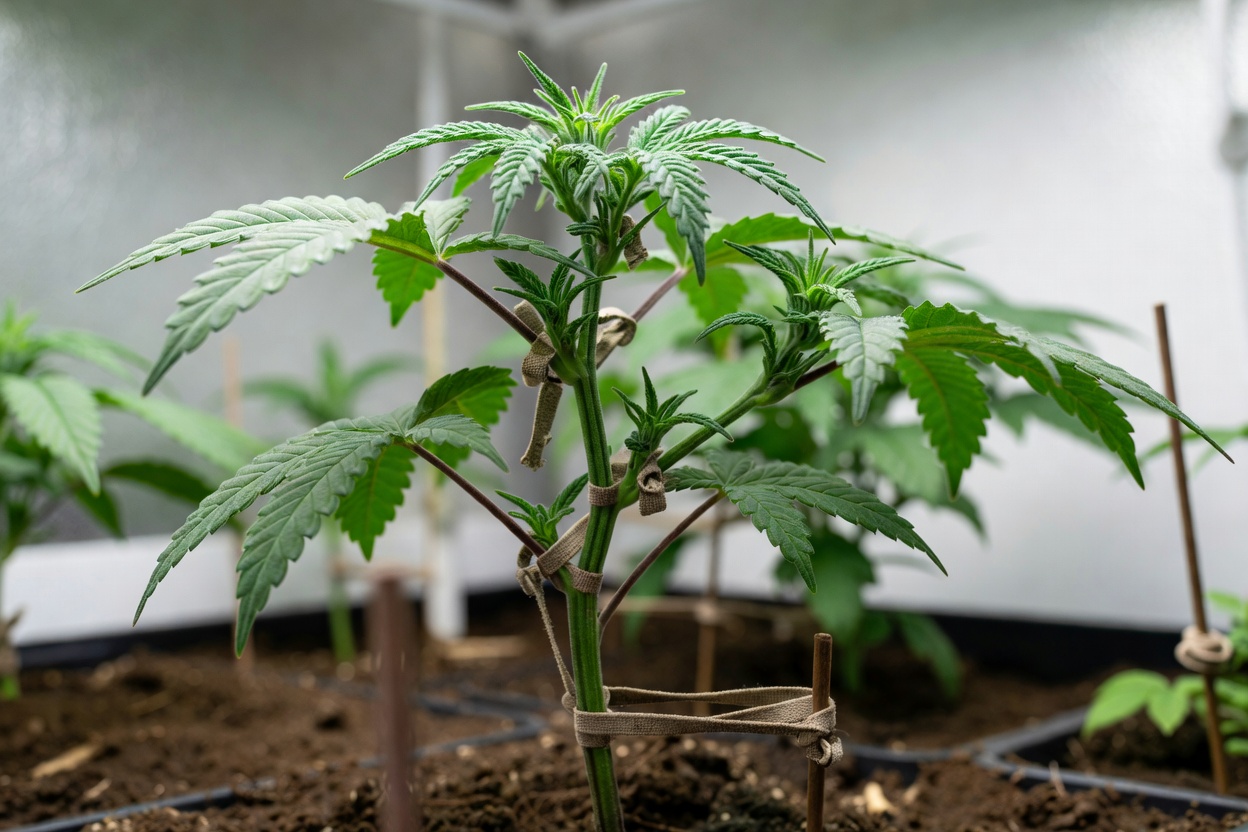
After the initial training, continue adjusting ties as new growth emerges to maintain the desired shape. By week 7, the same Sour Diesel example might show twelve colas positioned at roughly the same height, each receiving 600–800 µmol/m²/s of light from an overhead LED array positioned 20 inches above the canopy.
- Week 3–4: First bends on the main stem
- Week 5–6: Spread side branches and secure outer edges
- Week 7+: Fine-tune canopy and remove shaded lower shoots
Avoiding Hermaphroditism Through Gentle Techniques
Feminized plants can express male flowers under excessive stress. LST minimizes this risk because it avoids cutting or breaking tissue. Always work with moist soil and healthy plants, and never train during temperature extremes or after major environmental changes. If any plant shows signs of stress, pause training and provide 24–48 hours of recovery under optimal conditions before resuming. Keeping daytime temperatures between 72–78 °F and nighttime temperatures no lower than 65 °F helps maintain steady growth without triggering defensive responses that could lead to hermaphroditism.
Best practice in 2026 includes using full-spectrum LEDs that reduce heat stress and maintaining stable humidity between 50–60% during vegetative growth. These controlled environments further protect genetic stability while allowing aggressive yet low-impact training. Growers who combine LST with weekly applications of beneficial microbes report faster recovery times and stronger stems capable of supporting heavier colas later in flower.
2026 Indoor and Outdoor Best Practices
Indoor growers benefit from LST combined with SCROG nets for maximum light penetration. Position lights 18–24 inches above the canopy and adjust height weekly as plants fill out. Outdoor cultivators can apply LST to keep plants shorter and more discreet while increasing cola count before the natural flowering trigger of shorter days. In a 10-gallon outdoor container, for example, a trained plant may stay under 4 feet tall yet produce as many flowers as an untrained 6-foot specimen, making it easier to conceal behind fencing or among ornamental shrubs.
Both setups benefit from organic nutrients and beneficial microbes that support rapid recovery after training. Yield comparisons from 2025–2026 grow cycles show trained feminized photoperiod plants averaging 450–600 g/m² indoors versus 300–400 g/m² for untrained controls under identical conditions. Outdoor results often reach 600–800 grams per plant when LST is paired with proper spacing and consistent watering schedules that keep root zones oxygenated.
Conclusion
Low-stress training remains an essential skill for any grower working with feminized photoperiod cannabis in 2026. By following the timing, tools, and gentle techniques outlined above, cultivators can achieve dramatically bushier plants and higher-quality harvests without risking hermaphroditism. Consistent application during the vegetative stage, combined with modern environmental controls, delivers reliable results for both indoor tents and outdoor gardens. With patience and daily observation, even first-time growers can master LST and enjoy the improved yields and plant health that come from a well-managed, evenly lit canopy.