
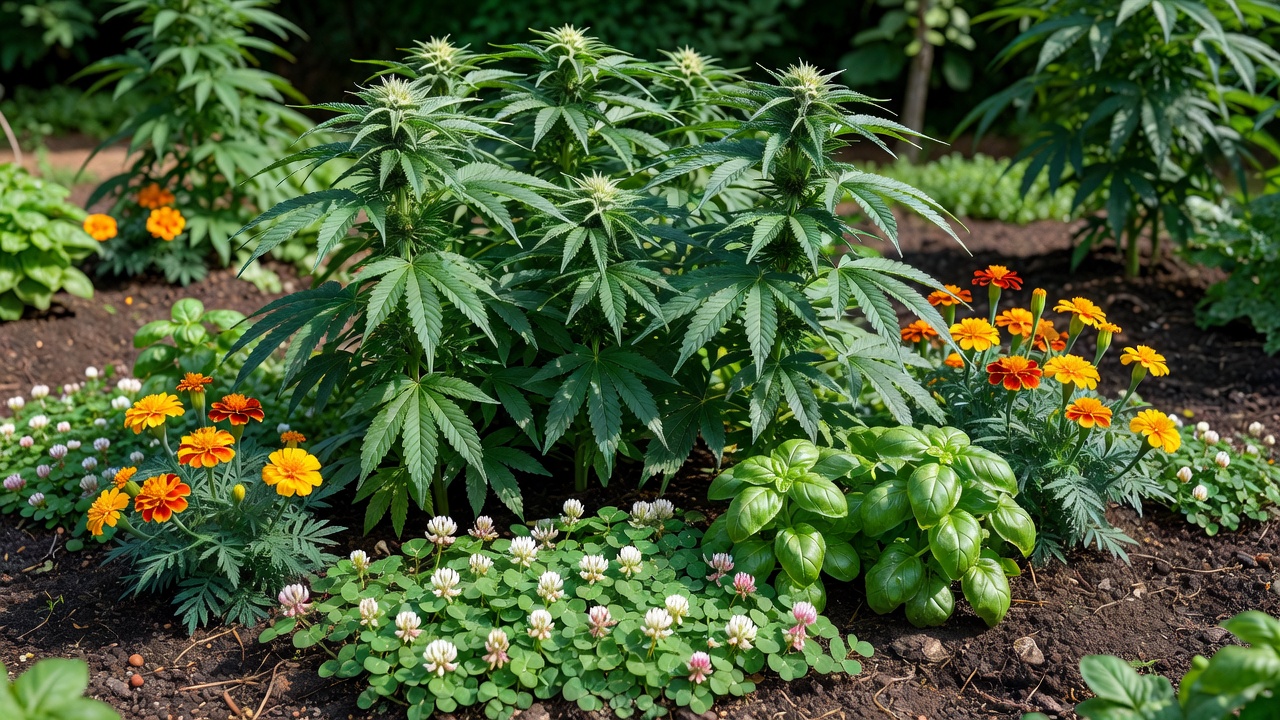
Companion planting offers home growers a natural way to support cannabis from seed through harvest. By strategically pairing cannabis with beneficial species, cultivators can reduce pests, enrich soil, and enhance overall plant health without relying heavily on synthetic inputs. This approach works equally well in indoor grow tents and outdoor gardens, adapting to the unique needs of each environment while aligning with 2026 best practices that emphasize sustainability and biodiversity. For instance, a beginner might start by adding just two or three companion species to a small plot to observe how the system responds before scaling up.
Benefits of Companion Planting for Cannabis
Integrating companion plants into cannabis cultivation creates a balanced ecosystem that mimics natural environments. These plants attract pollinators and predatory insects, deter harmful pests, and improve nutrient cycling in the soil. For cannabis specifically, companions help manage common issues like spider mites and nutrient deficiencies while potentially increasing resin production and yields through reduced stress. Growers often notice fewer outbreaks when marigolds draw ladybugs that consume mites before populations explode.
Growers report stronger root systems and better resistance to disease when using this method. In 2026, with increasing focus on organic methods, companion planting aligns with regulations promoting reduced chemical use. It also supports biodiversity, which strengthens the grow space against climate variability and pest outbreaks. A practical example involves tracking soil moisture weekly; companions like clover maintain more consistent levels, preventing the dry spells that weaken cannabis roots.
Top Companion Plants for Pest Control
Marigolds stand out as a primary choice for repelling nematodes and aphids around cannabis roots. Their strong scent masks the cannabis aroma while drawing beneficial insects like ladybugs. Basil planted nearby deters thrips and flies, common indoor pests, and its aromatic oils contribute to a healthier microclimate. Chrysanthemums provide natural pyrethrin compounds that target mites and beetles without harming cannabis. In outdoor setups, nasturtiums act as a trap crop for aphids, keeping them away from the main plants. Growers should rotate these companions seasonally to prevent pest adaptation, a key 2026 practice for long-term success.
- Marigolds: Plant densely around the base for root protection, spacing seedlings six inches apart and refreshing them every eight weeks.
- Basil: Interplant in rows for airflow and scent barriers, trimming leaves weekly to boost oil production and deter flying insects.
- Nasturtiums: Use as border plants in outdoor beds, allowing them to sprawl and lure aphids to sacrificial leaves that can be removed easily.
Plants for Soil Improvement and Nutrient Boost
Legumes such as clover and beans fix nitrogen in the soil, reducing the need for added fertilizers during the vegetative stage. Their root systems break up compacted earth, improving drainage and aeration critical for cannabis roots. Comfrey serves as a dynamic accumulator, drawing up deep minerals that become available when leaves are chopped and dropped as mulch. In practice, chop comfrey every three weeks and lay the cuttings directly around cannabis stems to release potassium gradually.
In 2026 best practices, incorporating these plants supports regenerative growing by building living soil. Yarrow attracts predatory wasps while adding potassium to the topsoil. Regular incorporation of these species leads to measurable yield increases through enhanced nutrient availability and microbial activity. Test a small patch first: mix clover into one corner of the bed and compare growth against untreated areas after four weeks.
Indoor vs Outdoor Companion Planting Setups
Indoor growers benefit from compact companions like oregano and thyme in grow tents, where space is limited. These herbs improve air quality and deter mold while fitting alongside cannabis in hydroponic or soil systems. LED lighting allows year-round pairing, but ventilation must be adjusted to accommodate extra foliage. Aim for 20 percent extra airflow when adding herbs to prevent humidity spikes that encourage mildew.
Outdoor setups allow larger plants such as sunflowers for shade and windbreaks during hot summers. Garlic planted in fall protects against overwintering pests. Both environments require monitoring pH and moisture levels when adding companions, as they can alter soil dynamics differently than cannabis alone. Outdoor growers should check pH monthly after planting legumes, since nitrogen fixation can shift levels slightly upward.
Practical Planting Layouts and Designs
A simple three-row layout works well for outdoor beds: cannabis in the center row, marigolds and basil alternating on sides, with clover as ground cover. This design maximizes pest control while allowing easy access for pruning. In containers, place one companion per cannabis plant in shared 5-gallon pots for small spaces. For example, pair one basil seedling with each cannabis plant and water both at the same time to keep moisture even.
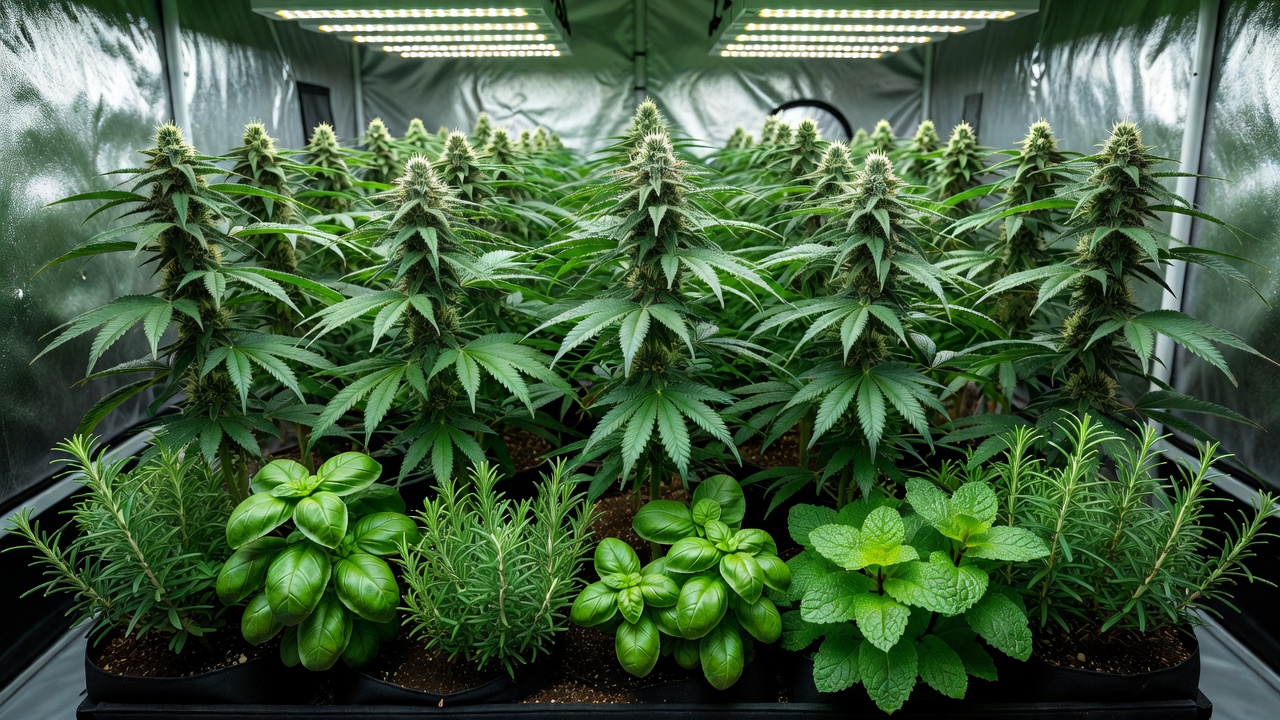
For indoor vertical grows, train cannabis upward and tuck low-growing herbs at the base. 2026 layouts emphasize polyculture patterns that rotate companions every cycle to maintain soil vitality. Always leave adequate spacing—minimum 18 inches between cannabis and taller companions—to prevent light competition. Rotate oregano and thyme positions each harvest to avoid localized nutrient depletion.
2026 Best Practices and Tips for Success
Start companions from seed alongside cannabis for synchronized growth cycles. Test soil amendments derived from companions before full-scale use. Integrate beneficial insects early and avoid overwatering shared beds. Resources like the USDA Natural Resources Conservation Service provide soil health guidelines adaptable to cannabis. Monitor for allelopathic effects, where certain plants may inhibit neighbors, and adjust layouts accordingly. Sustainable sourcing of seeds and avoidance of invasive species remain priorities. These methods deliver healthier plants and higher-quality harvests when followed consistently. Keep a simple journal noting companion performance each week to refine future cycles.
Conclusion
Companion planting transforms cannabis cultivation into a more resilient and productive practice. By selecting the right species for pest management, soil enhancement, and environmental fit, home growers achieve superior results in both indoor and outdoor settings. Applying these 2026-informed strategies ensures thriving gardens from seed onward while promoting ecological balance. With careful observation and gradual expansion, even first-time cultivators can enjoy stronger plants and reduced reliance on external inputs.