
Introduction to Lighting for New Cannabis Growers
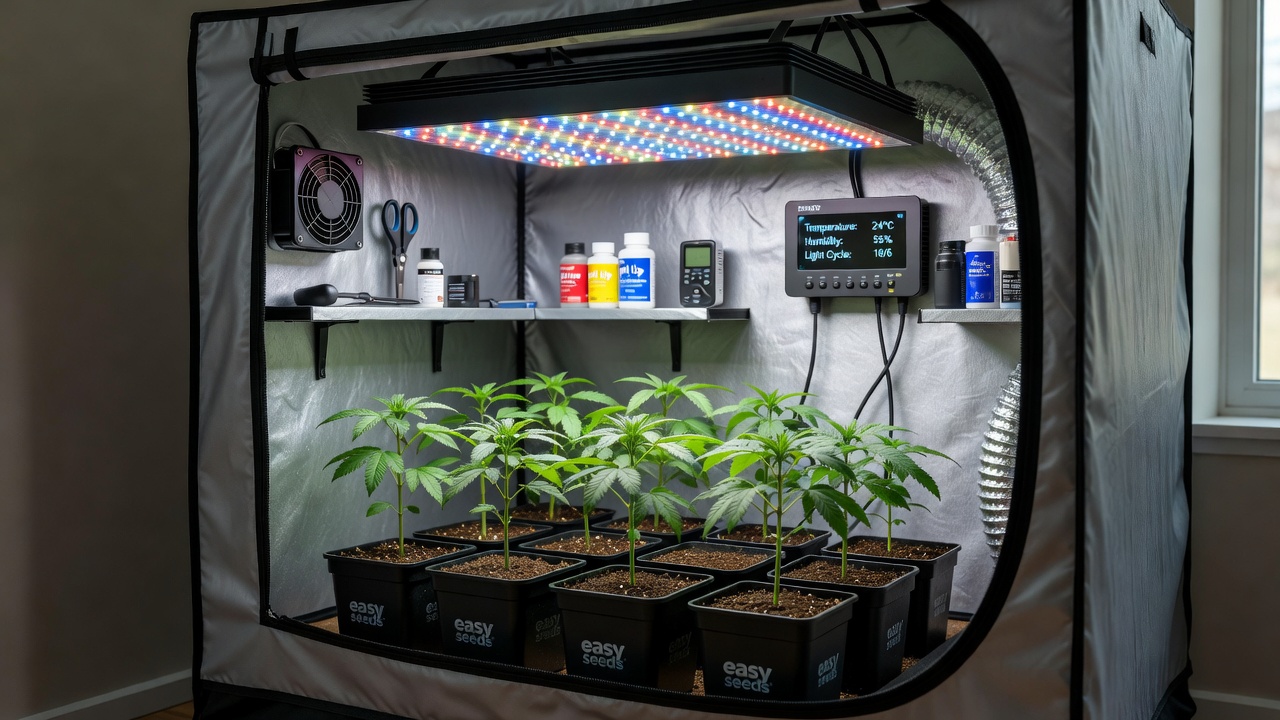
Starting your first indoor cannabis grow with easy seeds is an exciting step into cultivation. Proper lighting forms the foundation of healthy plant development, directly influencing growth rates, yields, and overall success. For beginners, selecting the right lights means balancing simplicity, energy use, and results without overwhelming complexity. Easy cannabis seeds, often autoflowering or resilient photoperiod strains, tolerate minor lighting inconsistencies better than finicky varieties. In 2026, indoor setups benefit from advanced yet affordable LED technology that reduces electricity costs while delivering full-spectrum light tailored to cannabis needs. This guide walks through practical choices aligned with a beginner grow guide approach. New growers should consider how light affects photosynthesis, the process by which plants convert light into energy for building roots, stems, and buds. With easy seeds, you gain forgiveness during the learning curve, allowing focus on mastering light placement rather than constant adjustments.
Concrete examples help illustrate the impact. A beginner using a basic 100W LED in a small tent can achieve robust vegetative growth within weeks, whereas inadequate lighting leads to leggy stems and sparse foliage. Always start with reliable equipment suited to your space size.
Understanding Cannabis Light Requirements by Growth Stage
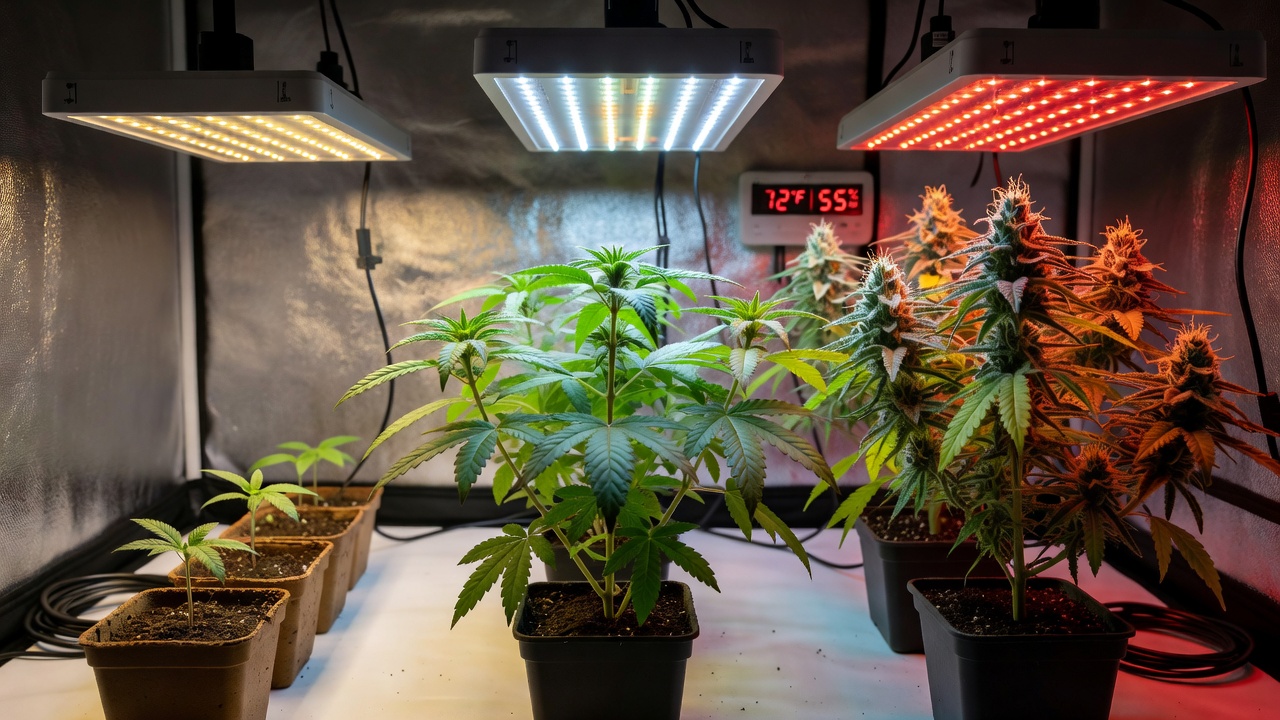
Cannabis plants demand varying light intensity and duration across stages. Seedlings require gentle, low-intensity light to avoid stress, typically 18-24 hours daily. During vegetation, plants thrive under 18 hours of strong blue-spectrum light to promote leafy growth and sturdy stems. The flowering stage shifts to 12 hours of red-dominant light to trigger bud production. Easy seeds simplify this transition, especially autoflowers that flower regardless of light cycles. Always monitor for signs of light burn or deficiency, adjusting distance and intensity accordingly. For instance, if leaves curl upward or show bleached spots, raise the light fixture immediately or dim its output.
Practical guidance includes tracking daily light integrals with affordable smartphone apps or basic PAR meters. In the seedling phase, position lights higher to prevent scorching tender leaves. Vegetative plants benefit from consistent blue light wavelengths around 450 nanometers, encouraging compact growth ideal for indoor constraints. During flower, red light near 660 nanometers boosts bud sites. Autoflowering easy seeds often complete cycles in 8-10 weeks under fixed 18-hour schedules, reducing the need for cycle switches.
Recommended Daily Light Integrals
- Seedling stage: 200-400 PPFD for 18+ hours
- Vegetative stage: 400-600 PPFD for 18 hours
- Flowering stage: 600-900 PPFD for 12 hours
These values guide intensity without overwhelming beginners. A practical example is starting seedlings at 250 PPFD for 20 hours daily, then ramping up to 500 PPFD once true leaves form. Exceeding 900 PPFD in flower risks heat stress even with LEDs.
Comparing Lighting Options for 2026 Indoor Setups
LED grow lights dominate beginner recommendations due to their efficiency and low heat output. Full-spectrum LEDs mimic sunlight and support all stages with minimal adjustments. In 2026, models with smart controls and improved diodes offer even better value than previous years. Many include app-based dimming and scheduling, simplifying management for new growers using easy seeds. Compare options based on wattage, coverage area, and lifespan. LEDs typically last 50,000 hours, making them ideal for repeated grows with easy seeds.
CFL bulbs serve as an ultra-budget entry point for small spaces but lack intensity for larger yields. A single 23W CFL might suffice for one or two seedlings but fails to deliver uniform coverage across a full tent. HPS systems provide powerful flowering light yet generate excess heat, raising electricity and cooling costs. Most new growers avoid HPS now in favor of LEDs for easier temperature management. For a 3×3 foot area, a 200W full-spectrum LED provides balanced output across all stages while consuming under 250 watts at the wall.
Real-world comparisons show LEDs cutting energy use by 40 percent compared to older fluorescents. In 2026, entry-level models start at 100W with quantum board designs that spread light evenly, minimizing hotspots common in cheaper panels.
Practical Setup Tips and Cost Efficiency
Position lights 12-24 inches above seedlings, raising them as plants mature to maintain optimal intensity. Use timers for precise cycles and reflective materials like Mylar to maximize light distribution in small tents. For a 2×2 foot space, a 100-150W LED suffices for beginners. In larger 4×4 setups, consider two 150W LEDs hung at staggered heights to ensure even PPFD readings across the canopy. Measure distance weekly as plants stretch during early flower.
Costs in 2026 range from $50 for basic LEDs to $200 for premium models with daisy-chaining. Factor in electricity at roughly $0.15 per kWh; efficient LEDs consume 30-50% less power than older tech. A 150W LED running 18 hours daily adds about $12 monthly to bills, versus double that for equivalent HPS output. Check local rebates for energy-efficient equipment through utility programs. Energy.gov lighting guides provide updated comparisons for home growers seeking savings. Pairing lights with oscillating fans prevents microclimates that amplify heat under fixtures.
Additional tips include hanging adjustable ratchet ropes for easy height changes and using light meters to verify coverage. Beginners often start with one fixture and expand later, tracking yields to refine future purchases.
Common Lighting Mistakes and How to Avoid Them
Overlighting seedlings causes stretching or burn; always start dim and increase gradually. Underlighting during flower reduces bud density, so invest in adequate coverage from the start. Ignoring spectrum quality leads to weak plants even with easy seeds. A common error is leaving lights at fixed height throughout the cycle, resulting in uneven growth where lower branches receive insufficient light.
Regularly clean fixtures and check connections. Combine lights with proper ventilation to prevent heat stress, especially in compact indoor environments common among beginners. Another pitfall involves mismatched timers that drift by 30 minutes weekly, disrupting autoflower schedules. Test setups with a simple lux app before introducing plants, and log adjustments in a grow journal for consistent results across multiple easy seed cycles.
Conclusion and Next Steps for Your Grow
Choosing suitable lighting sets the stage for rewarding harvests from easy cannabis seeds. Focus on efficient LEDs suited to your space and budget while following stage-specific schedules. With 2026 technology, beginners achieve professional results at home with lower ongoing costs. Experiment safely, track your setup’s performance, and scale up as experience grows. Reliable resources like EPA energy efficiency tools help refine your approach over time. Start small, observe plant responses closely, and adjust based on visual cues such as leaf color and internode spacing. Over successive grows, these lighting fundamentals compound into higher yields and healthier plants.