

Introduction to Cloning from Feminized Seeds
Cloning female plants from feminized seeds offers home growers a reliable way to preserve desirable genetics in photoperiod cannabis. By selecting strong mother plants and mastering rooting methods, cultivators achieve consistent results without the variability of seed germination. This approach maintains the all-female trait while allowing multiple identical copies for optimized harvests. In 2026, with advanced home setups, success rates exceed 90 percent when environmental factors are controlled precisely.
Understanding the process starts with recognizing that feminized seeds produce female plants with high probability. Cloning extends this by replicating proven performers. Growers avoid introducing male pollen risks and focus on traits like potency, yield, and resilience. Proper technique prevents stress that might affect future seed production if breeding is considered later. For example, a grower starting with a pack of feminized photoperiod seeds can identify a standout plant that finishes in nine weeks with dense, resinous buds and then create 20 clones that all mirror that exact profile, eliminating the 50/50 male-female gamble common with regular seeds.
Selecting the Ideal Mother Plant
Choosing the right mother plant forms the foundation of successful cloning. Look for vigorous growth, dense branching, and resistance to pests or diseases in your feminized seed stock. Observe plants during vegetative stage under 18 hours of light, noting those with strong stems and vibrant green foliage. Avoid any showing signs of hermaphroditism or nutrient deficiencies, as these traits can transfer to clones.
Take cuttings only from healthy, mature plants at least eight weeks old. Document phenotypes across multiple feminized seeds to identify top performers. This selection ensures genetic consistency across clones, delivering uniform buds at harvest. Home enthusiasts benefit from keeping mothers in dedicated spaces separate from flowering areas. A practical example involves labeling three separate feminized plants as Mother A, B, and C, then tracking internode spacing and leaf size for two weeks before choosing the one with the shortest node gaps and darkest green color as the primary donor.
Key Selection Criteria in Practice
- Measure stem diameter at the fourth node; anything under 4 mm is too thin for reliable cuttings.
- Check for even branching symmetry rather than one-sided growth that indicates light stress.
- Test soil pH weekly on candidate mothers to confirm they maintain 6.0-6.5 without constant correction.
Essential Tools and Preparation Steps
Gather sterilized tools including sharp scalpels, rooting hormone, and clean containers before starting. Work in a sanitized environment to minimize contamination risks. Prepare cloning gel or powder with auxins to stimulate root development on feminized cuttings. Label each clone with the mother plant details for tracking.
Make clean 45-degree cuts below nodes on lower branches. Remove lower leaves to reduce transpiration while retaining a few upper ones for photosynthesis. Dip stems immediately in hormone solution. This preparation maximizes rooting speed and reduces failure rates common in rushed attempts. A typical home setup uses a dedicated 2×2 ft cloning station with a plastic tray, 10 scalpels soaked in 70 percent isopropyl alcohol, and pre-mixed cloning solution changed every 48 hours.
Step-by-Step Preparation Checklist
- Sanitize all surfaces with a 10 percent bleach solution and allow to air dry.
- Fill propagation trays with fresh water or pre-soaked medium at the correct pH.
- Prepare labels using waterproof tape and a permanent marker noting mother ID and cutting date.
- Have a spray bottle of pH-adjusted water ready to mist leaves immediately after cutting.
Rooting Methods for High Success Rates
Water cloning provides a simple entry point for beginners using feminized genetics. Submerge stems in oxygenated water with pH balanced to 5.8-6.2, changing solution every few days. Roots typically emerge in 7-14 days under indirect light.
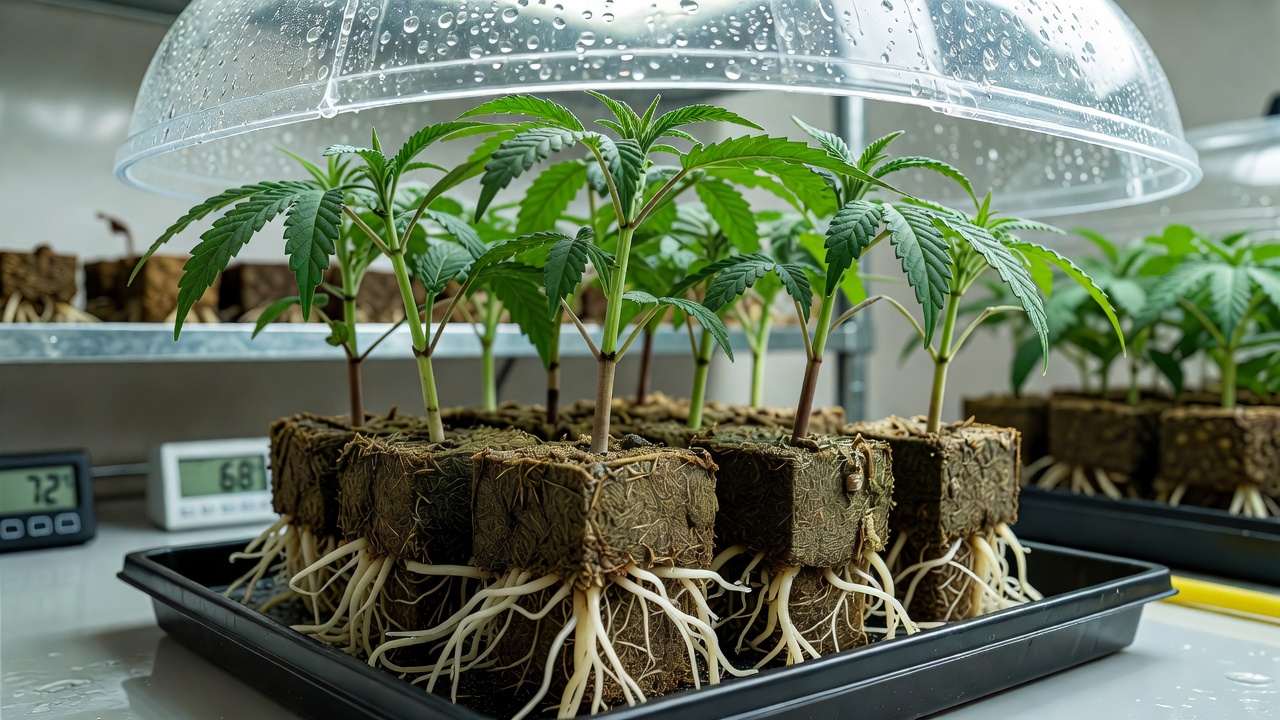
Rockwool or soil-based methods offer more stability for photoperiod plants. Insert cuttings into pre-soaked cubes or light soil mixes, maintaining high humidity with domes. Monitor for root protrusion through drainage holes as a success indicator. Combine these approaches based on available equipment for optimal outcomes. One experienced grower alternates between water cloning for the first five days then transfers to rockwool once white root nubs appear, achieving 95 percent success across 30 clones from a single feminized mother.
Comparing Rooting Mediums
- Water: Easiest observation of root growth but requires daily oxygenation via air stone.
- Rockwool: Excellent moisture retention yet demands careful pH flushing before use.
- Soil or coco: Most forgiving for beginners but slower to show root development.
Environmental Controls to Maximize Results
Maintain temperatures between 72-78°F with 70-80 percent humidity during the initial rooting phase. Use LED or fluorescent lights at low intensity to avoid heat stress on clones from feminized mothers. Ensure gentle airflow without direct drafts that could dry leaves.
Track pH and EC levels daily in hydro setups. Introduce beneficial microbes to support root health naturally. Transition successful clones to vegetative conditions gradually after two weeks. These controls preserve the genetic integrity of feminized lines by minimizing shock. For instance, placing clones under 20W LED panels set 18 inches above the canopy and using a small oscillating fan on low speed prevents both heat buildup and stagnant air pockets.
Avoiding Stress and Preserving Genetics
Stress during cloning can lead to reduced vigor or unwanted traits in future generations. Handle cuttings gently and avoid over-fertilizing young roots. Provide consistent conditions to replicate the mother’s healthy profile across all clones. This preserves the benefits of feminized seeds for reliable all-female crops.
Document every step and adjust based on observed results. Regular observation helps catch issues early, such as wilting or mold. Long-term, this method allows perpetual harvests from top feminized genetics without repeated seed purchases. A common mistake is exposing fresh cuttings to full-strength nutrients; instead, use plain pH-adjusted water for the first 10 days until roots reach 2 inches long.
Conclusion
Cloning female plants from feminized seeds empowers home growers with consistent, high-quality photoperiod cannabis. Through careful mother selection, precise rooting, and controlled environments, success becomes repeatable. Apply these techniques to expand your garden while safeguarding genetic excellence for years ahead. For further reading on cannabis best practices, visit norml.org and leafly.com.