
Introduction to Proper Cannabis Watering
Watering is one of the most critical yet commonly mishandled aspects of cannabis cultivation. Whether you are starting from seed in soil, coco coir, or a hydroponic system, understanding how much water to give and when to give it directly impacts root development, nutrient uptake, and final yields. In 2026, home growers have access to better tools than ever for monitoring moisture levels, yet the fundamentals remain the same: cannabis plants require consistent but not excessive moisture tailored to their growth stage, medium, and environment. This guide covers optimal practices for both indoor and outdoor setups, helping you avoid overwatering, underwatering, and related diseases while maximizing plant health.
Successful watering begins with observing your plants rather than following a rigid schedule. Factors such as temperature, humidity, pot size, and medium type all influence how quickly water is used. Indoor growers often deal with controlled environments where evaporation rates differ from outdoor conditions influenced by wind and sun. By learning to read the signs your plants give, you can fine-tune your approach for healthier roots and bigger harvests.
Watering Fundamentals Across Different Mediums
Cannabis adapts well to various growing mediums, but each demands a slightly different watering strategy. In traditional soil mixes, water is retained longer, allowing for less frequent irrigation compared to fast-draining coco coir. Hydroponic systems like deep water culture require constant oxygenation and nutrient solution changes rather than traditional watering. Always use pH-balanced water between 6.0 and 7.0 for soil and 5.5 to 6.5 for coco or hydro to prevent nutrient lockout.
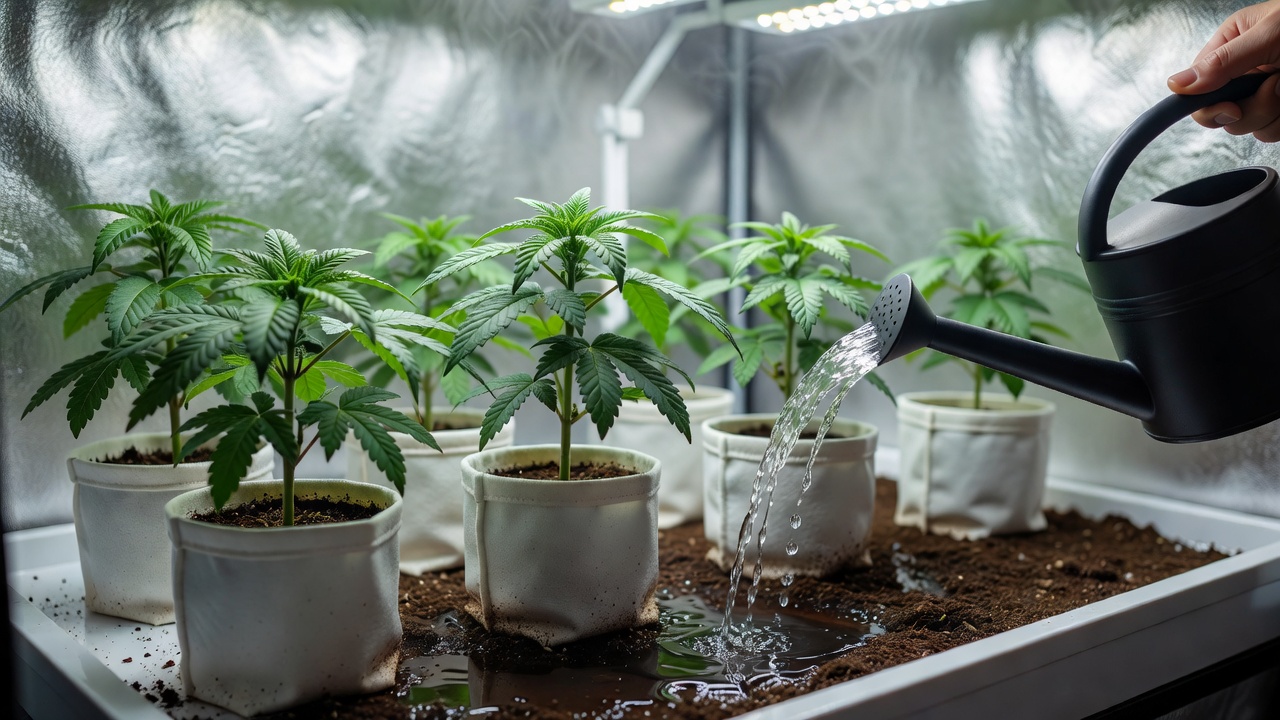
A general rule is to water until 10-20% runoff appears from the bottom of the container. This flushes excess salts while ensuring the entire root zone receives moisture. For outdoor plants in the ground, focus on deep, infrequent watering to encourage strong taproots. Indoor container grows benefit from lifting pots to gauge weight as a moisture indicator. Never let pots sit in standing water, as this quickly leads to root rot.
Seedling Stage Watering Techniques
From the moment your cannabis seeds sprout, delicate seedlings need careful moisture management. Use a spray bottle or gentle pipette to keep the top layer of medium lightly damp without creating puddles. Overwatering at this stage is a leading cause of damping-off disease. Aim to water every 1-2 days or when the surface begins to dry, providing just enough to support the small root system.
Seedlings in rockwool or starter plugs require misting rather than soaking. Transition to larger pots once true leaves develop, gradually increasing water volume. Monitor for drooping leaves, which can signal either too much or too little water. Consistent warmth around 70-75°F helps maintain proper uptake during this vulnerable period.
Vegetative Stage Watering Strategies
During the vegetative phase, cannabis plants experience rapid growth and require more frequent watering as root systems expand. In soil, water every 2-4 days depending on pot size and environment. Coco coir dries faster, often needing water every 1-3 days. Increase amounts gradually, ensuring full saturation of the root zone while allowing the medium to dry to about 50-60% capacity between sessions.
Outdoor plants in larger containers or in-ground beds can handle deeper watering sessions every 3-5 days. Use mulch to retain moisture in hot climates. Indoor growers should adjust for grow lights that increase transpiration rates. Watch for yellowing lower leaves or slowed growth, classic signs of inconsistent watering. Incorporating beneficial microbes in your water can improve nutrient absorption and root health throughout this stage.
Flowering Stage Watering Best Practices
Flowering demands precise control to avoid bud rot and maximize resin production. Reduce watering frequency slightly as plants mature, allowing the medium to dry more between sessions. Soil grows may shift to every 4-7 days, while coco might still need attention every 2-4 days. Always water in the morning to allow foliage to dry before lights-out or nighttime humidity rises.
Flush plants with plain pH-balanced water in the final 1-2 weeks to improve flavor and smoothness. Monitor trichome development alongside moisture levels to time harvests correctly. Overwatering during flower can cause swollen calyxes and reduced potency, while underwatering stresses plants and lowers yields.
Tools and Techniques for Monitoring Moisture
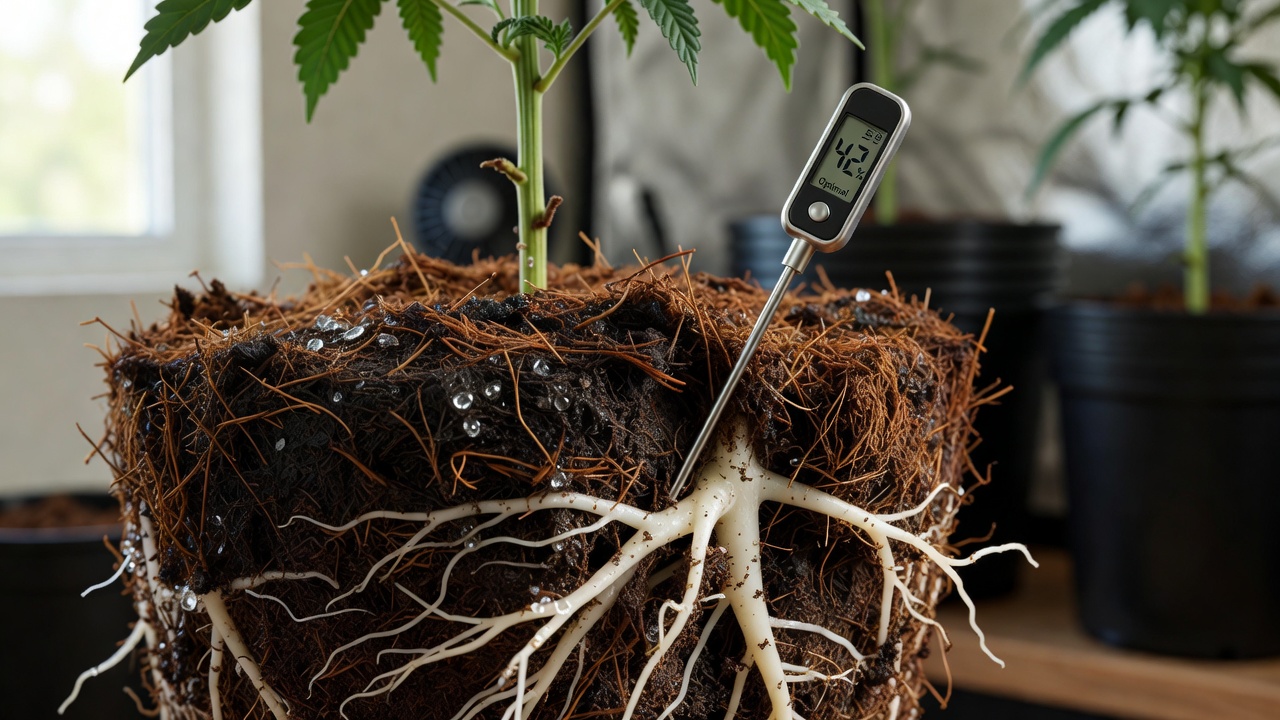
Modern growers rely on reliable tools to remove guesswork. Soil moisture meters provide instant readings at various depths, while smart sensors connected to apps track data over time. Simple methods like the finger test or pot lifting remain effective for small-scale grows. For hydro setups, EC and pH meters ensure nutrient solutions stay optimal.
Outdoor enthusiasts can use rain gauges and soil tensiometers. Keep a journal logging watering dates, amounts, and plant responses to identify patterns. These practices help prevent common issues like nutrient burn from dry pockets or fungal problems from constant saturation. Authoritative resources such as usda.gov offer additional insights into soil moisture management that apply to cannabis cultivation.
Common Watering Problems and How to Fix Them
Overwatering leads to droopy leaves, stunted growth, and root rot with a foul smell. Remedy by allowing longer dry periods and improving drainage with perlite or fabric pots. Underwatering causes crispy leaf edges and wilting that recovers slowly after watering. Increase frequency or volume while checking for hydrophobic soil that repels water.
Signs of pH imbalance from improper watering include spotting and twisted growth. Always test runoff water. For both indoor and outdoor setups, maintain airflow to aid evaporation. Consistent application of these fixes helps avoid yield losses and supports vigorous plants through harvest.
Conclusion
Mastering cannabis watering from seed to harvest requires observation, patience, and the right tools. By tailoring frequency and amounts to each growth stage and medium, you can prevent problems and achieve impressive results whether growing indoors or outdoors. Track your plants closely, adjust based on environmental cues, and your efforts will reward you with healthy, high-yielding crops year after year.